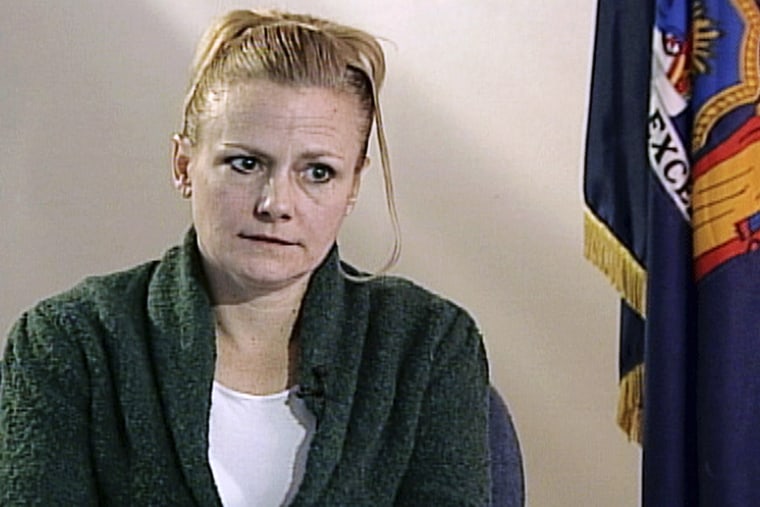
Lawyers for Pamela Smart, serving a life sentence for her role in her husband’s murder, hope a New Hampshire judge will consider her latest petition for a new trial. Smart, then 22, was a high school media coordinator when she had an affair with a 15-year-old student. The student later shot her husband, Gregory Smart, in Derry.
The shooter was released in 2015 after serving 25 years. Although Smart denied knowledge of the plot, she was convicted as an accomplice to first-degree murder and sentenced to life without parole. In January, her petition for habeas corpus relief was filed, alleging several constitutional violations.
Smart, now 58, will attend the hearing remotely from Bedford Hills Correctional Facility for Women in New York. A previous interview shows her at the facility in 2010.
Transcripts During Trial
Smart’s lawyers argue that inaccurately transcribed recordings misled the jury. Words such as “killed,” “busted,” and “murder” appeared in transcripts without audible confirmation on the tapes.
Modern science confirms what common sense has always told us: when people are handed a script, they inevitably hear the words they are shown,said Smart’s attorney, Matthew Zernhelt.
Zernhelt contends jurors were not independently evaluating the recordings and were directed toward a specific verdict. Her legal team further claims media attention and faulty jury instructions influenced the trial’s outcome. They argue jurors were told Smart acted with premeditation without focusing solely on trial evidence.
The mandatory life sentence for her role as an accomplice to first-degree murder is also contested, as New Hampshire law did not mandate such a sentence for her charge.
State’s Response
The state’s lawyers request dismissal of Smart’s petition. They argue the claims were already addressed by the New Hampshire Supreme Court or could have been raised previously. During Smart’s trial, the defense had only expressed concerns over transcription accuracy regarding overlapping voices. Jurors were instructed to follow the tapes if discrepancies arose.
The New Hampshire Supreme Court noted Smart’s lawyers showed no specific inaccuracies or prejudice resulting from transcription errors. Other claims such as ineffective assistance of counsel and the choice of trial location are deemed unproven by the state.
Smart’s legal avenues remain narrow. Repeated efforts for a sentence reduction hearing with an elected state council have failed. Appeals to the state Supreme Court were dismissed, underscoring limited options.
Her most recent petition followed New Hampshire Gov. Kelly Ayotte’s refusal to revisit the case. Ayotte determined the matter did not warrant council review.
Admission of Responsibility
In 2024, Smart accepted full responsibility for her husband’s death, acknowledging years of deflecting blame as a coping mechanism. The trial was America’s first high-profile case involving a school employee’s affair with a student.
William Flynn, the student involved, claimed Smart told him she needed her husband dead to avoid losing everything in a divorce. She allegedly threatened to end their relationship if he did not commit the murder. Flynn and three teens cooperated with prosecutors and have been released after serving their sentences.
Flynn and Patrick Randall broke into the Smarts’ home, held Gregory to his knees, and executed him. Both pleaded guilty to second-degree murder and were paroled in 2015 after serving time.
The case inspired Joyce Maynard’s book “To Die For” and its film adaptation starring Nicole Kidman and Joaquin Phoenix.
Leave a Reply