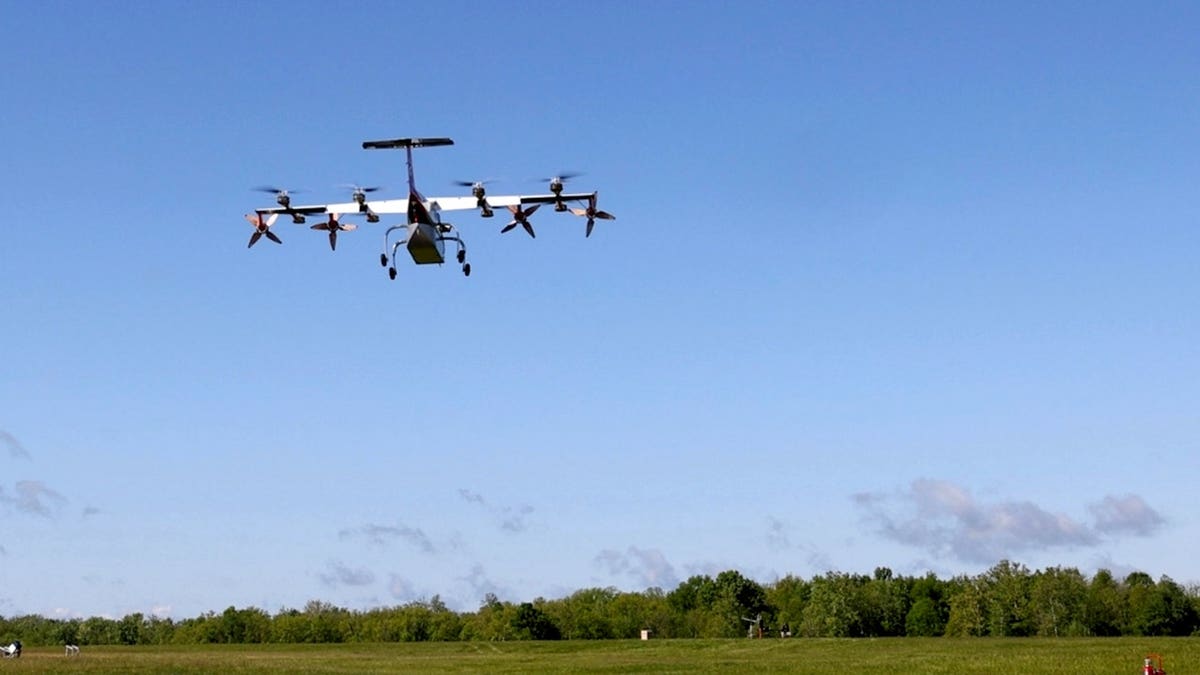
Testing of a medical drone is underway to improve the speed of delivering essential healthcare supplies. This initiative focuses on quick transportation of lab samples, blood, and donor materials between small communities and major hospitals. Prompt delivery can significantly affect diagnoses and treatments for rural patients who usually endure longer travel for medical care. The developers plan to extend this technology to transport transplant materials in the future.
Delivering vital resources poses challenges, especially after emergencies like hurricanes. The Federal Aviation Administration (FAA) explored a possible solution with a test of a hybrid-electric cargo aircraft capable of vertical takeoffs and flights without an onboard crew. This was in collaboration with Elroy Air and the Louisiana Department of Transportation and Development at Houma-Terrebonne Airport in Louisiana. This marked the first remotely piloted aircraft test under the FAA’s electric vertical takeoff and landing (eVTOL) Integration Pilot Program (eIPP).
Impact of Pilotless Cargo Aircraft
The ongoing test flights, part of the FAA program, could change cargo movement across the country. The Chaparral, a pilotless cargo aircraft, can carry over 500 pounds, far more than typical delivery drones. In December 2025, Chaparral autonomously transported 213 pounds over a 2.6-mile distance. The recent tests are not mere demonstrations; they are attempts to integrate advanced aircraft into national airspace while generating valuable data.
Design and Operation of Chaparral
The Chaparral’s electric propulsion allows it to take off and land vertically. Once airborne, it switches to winged flight for longer journeys. A hybrid-electric powertrain extends its range to 450 miles, accommodating a payload exceeding 500 pounds. Its modular pod system enables the quick loading and unloading of cargo. Because it can operate without traditional runways, Chaparral is suitable for remote or challenging sites.
Role of Human Oversight
The term ‘pilotless’ doesn’t mean absence of human involvement. While Chaparral conducts flights autonomously, human oversight remains critical. Regulatory bodies like the FAA will assess how much supervision is necessary and how to manage potential disruptions like weather changes or communication failures.
Potential Uses and Future Plans
Chaparral isn’t intended for consumer deliveries like dropping off a package on your lawn. It targets logistical challenges of the ‘middle mile,’ transporting cargo between major points rather than individual homes. Applications include serving energy operations and aiding in disaster response where roads may be damaged. Heavy cargo movement between remote energy facilities and disaster-stricken zones stands to benefit first.
Insights for the Broader Delivery Landscape
While delivery drones from companies like Amazon specialize in lightweight packages, Chaparral is designed for substantial freight. The FAA’s testing involves setting protocols for safe shared airspace operations. The outcomes could influence how autonomous delivery services integrate into communities, potentially reshaping supply chains and emergency responses.
Key Considerations for the Future
Chaparral roster potential in bridging logistical gaps without requiring significant infrastructure. However, the broader implications on noise levels, flight paths, and safety will continue to be critical questions. The FAA’s stringent assessments are crucial as these aerial vehicles may carry multiple implications including speeding up supplies to hard-to-access areas.
Leave a Reply