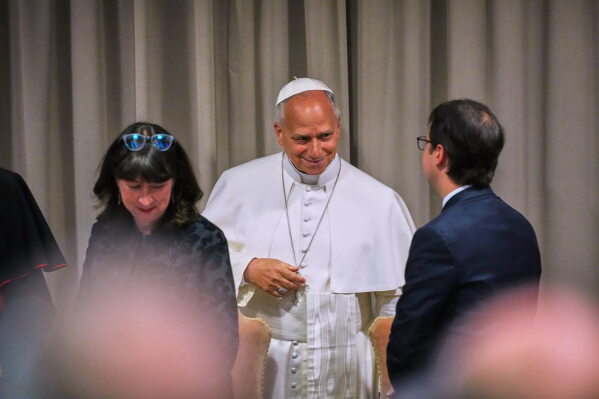
Pope Leo XIV has issued a call for stringent regulation of artificial intelligence (AI), urging developers to prioritize the common good over profit. This announcement came with the release of his first encyclical, ‘Magnifica Humanitas,’ which emphasizes the need to protect humanity as AI influences various aspects of life, such as work and warfare.
AI and the Culture of Power
Leo criticized the ‘culture of power’ driving AI development, particularly in creating advanced remote warfare technologies. He stated that allowing AI to make irreversible, lethal decisions is unacceptable, creating tension with the Trump administration, which favors AI deregulation.
In a Vatican presentation, the pope stated, ‘Artificial Intelligence now demands to be disarmed, freed from logics that turn it into an instrument of domination, exclusion, and death.’
An Influential Document for AI Debate
The encyclical is expected to become a pivotal reference point in discussions surrounding AI. As AI development continues to spark concerns about job displacement and human intelligence, experts believe this document will guide policymakers and researchers.
‘It lends itself to people who are at the forefront of these tools and able to see the incredible things that they’re able to do, to have questions about their own identity,’ said Taylor Black, a Microsoft AI executive.
Vatican’s Engagement with AI Companies
The Vatican event included input from Anthropic’s co-founder, who is involved in a legal dispute with the Trump administration. Despite criticism, the Vatican has involved Anthropic to foster dialogue between Silicon Valley and the Vatican over AI’s human impact.
Leo’s text highlights the concentration of power and data in a few private sector hands as a threat, urging strict regulation of AI development. ‘A more moral AI is not enough if that morality is determined by a few,’ the pope wrote.
Ethical Guidelines for AI Development
Pope Leo encouraged AI developers and politicians to slow down and consider ethical and spiritual guidelines. Christopher Olah, Anthropic co-founder, supported these checks, emphasizing that a lack of oversight could result in significant human labor displacement.
‘We need informed critics and moral voices that the incentives cannot bend,’ Olah said.
Tracing Catholic Social Teaching in AI
With a background in mathematics, Pope Leo traced the history of the Catholic Church’s social teachings, applying concepts like justice and solidarity to the digital revolution. His text reflects on AI’s role in normalizing war, calling for transparency and accountability in AI decision-making processes.
Leo declared the Catholic Church’s ‘just war’ theory outdated due to technological advances, challenging traditional criteria for justified force.
A Historic Apology and Dialogue
On the anniversary of ‘Rerum Novarum,’ Leo issued an apology for the Catholic Church’s past role in legitimizing slavery. This encyclical marks a continuation of adapting the Church’s teachings to address modern social issues.
Critics questioned involving Anthropic, which is embroiled in a legal battle with the U.S. government. Still, experts like Brian Boyd view it as recognition of the firm’s influence, not an endorsement.
Leave a Reply