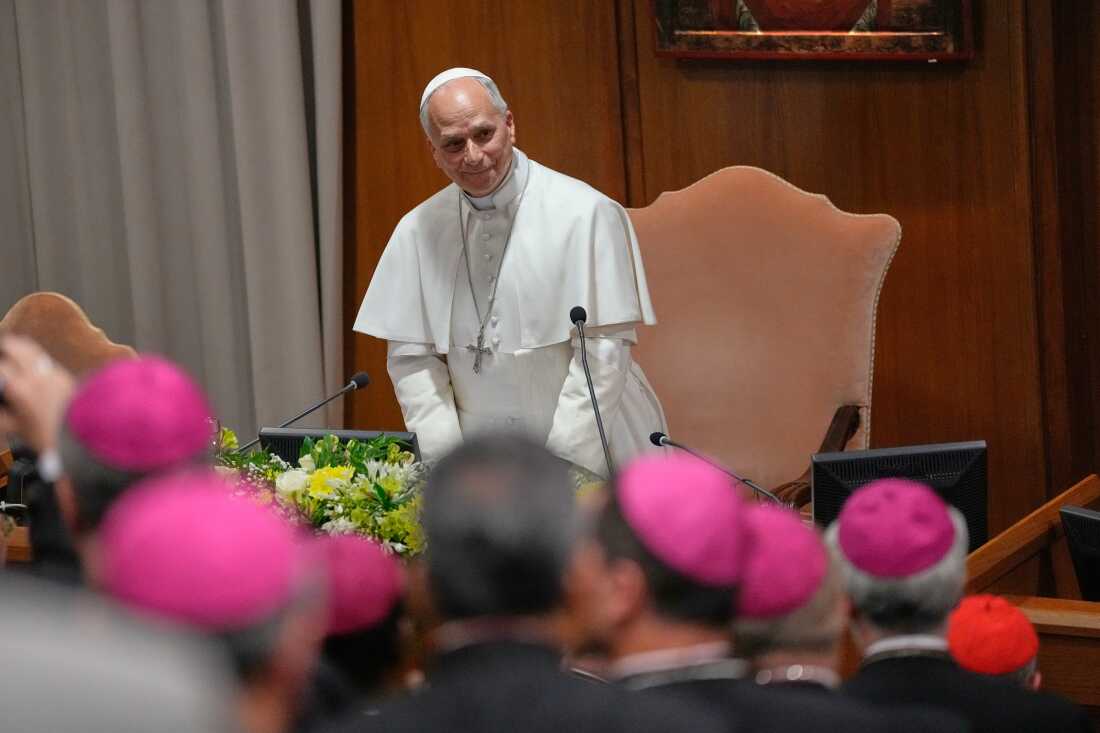
Pope Leo XIV introduced his first encyclical, “Magnifica Humanitas,” during a presentation at the Vatican on May 25, 2026. This document addresses the influence of artificial intelligence (AI) and warns against the widening inequality and weakening of democracy it may cause. The pope’s message calls for the ‘disarming’ of AI, suggesting a separation from military and economic interests. He urges stricter regulations on AI companies and greater involvement of communities in AI’s future development.
Addressing Big Tech
Pope Leo XIV highlights concerns about the influence of wealthy individuals and corporations on humanity’s future. He warns that AI might increase inequality by amplifying the power of those with economic resources and access to data. This concentration of power allows small groups to shape information and economic dynamics to their advantage, undermining social justice.
A Call for Disarmament
The encyclical suggests that disarming AI does not mean renouncing technology. Instead, it involves preventing AI from dominating humanity. The pope emphasizes that regulation alone is insufficient. AI must become welcoming and accessible, allowing broad participation in its development.
Concerns on Human Interaction
Leo XIV emphasizes that human dignity should always take precedence over AI. He cautions against excessive reliance on AI for decision-making, which could diminish creativity and judgment. The document recognizes the potential benefits of AI but also warns of its risks, including the concentration of technological power in a few hands.
Ethical Guidelines for AI
The pope argues for the application of moral principles in AI development. Ethical considerations must be integrated from the design phase to its usage. Such responsibility should be clearly established at every stage of AI’s lifecycle.
Warnings Against Transhumanism
Leo XIV criticizes philosophies like transhumanism and posthumanism, which propose surpassing human limitations. He stresses the importance of embracing human limitations, arguing that they play a crucial role in human flourishing. Efforts to eliminate challenges such as illness and vulnerability are viewed as misguided.
Addressing Social Justice
Pope Leo XIV underscores the need for social justice and the distribution of AI benefits. He advocates for equitable tax systems that ease the burden on the vulnerable while ensuring transparency in technological innovation. The pontiff also reminisces about historical church positions on slavery, seeking forgiveness for past actions.
AI and Colonialism
The pope identifies a “new face” of colonialism in data appropriation and manipulation by powerful entities. He stresses the moral challenge of ensuring that shared knowledge becomes a common good, not a tool for dominance. He warns of AI’s potential to create new dependencies and inequalities.
War and AI
Leo XIV criticizes the military use of AI. He stresses the importance of human oversight and ethical constraints in decision-making related to warfare. The pope advocates for international laws to govern automated weapons, emphasizing human responsibility.
Solidarity and the Common Good
The encyclical draws from Catholic social teaching, highlighting human dignity and solidarity. Leo XIV stresses the importance of educating people, especially youths, about AI. He expresses concern over technological advances displacing workers and affecting employment opportunities.
In conclusion, Pope Leo XIV’s encyclical serves as a call to rethink AI’s role in society. He seeks to ensure that AI development aligns with human dignity and serves the common good, integrating ethical considerations from inception to application.
Leave a Reply