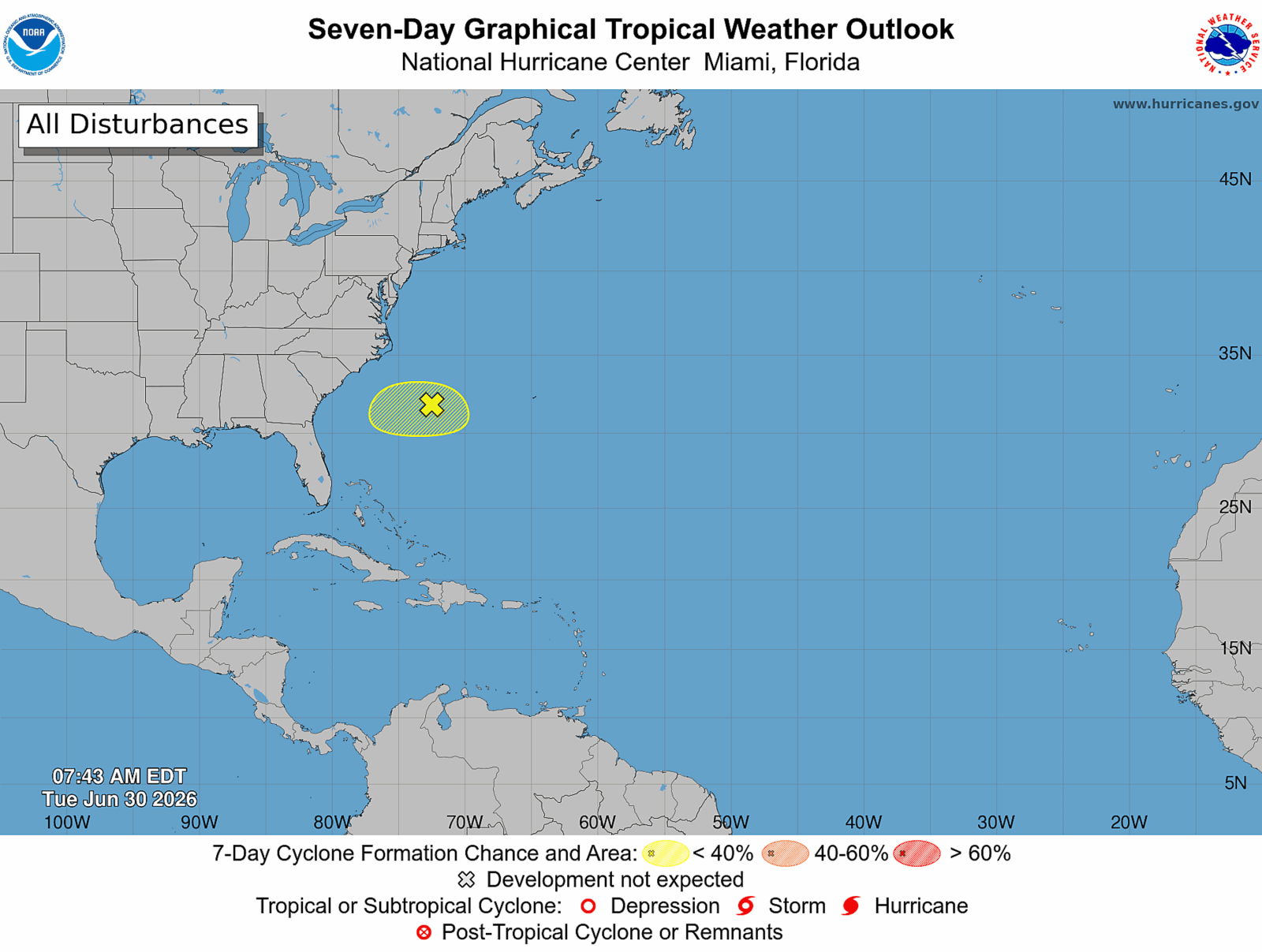
A developing weather system off the southeastern U.S. coast might become Tropical Storm Bertha as it approaches Florida later in the week. Meteorologists are observing a brief period for potential tropical development. According to the latest Tropical Weather Outlook from the National Hurricane Center (NHC), this disturbance is situated offshore and is poorly organized, with just a 10 percent chance of developing into a tropical system within the next 48 hours.
Forecasters noted the environmental conditions are less conducive to strengthening as the system nears Florida. However, if it gains sufficient circulation and receives a name, it would become Bertha, marking the second named storm of the 2026 Atlantic hurricane season. The NHC reported that the disturbance was moving south and is anticipated to turn westward later in the week. AccuWeather Lead Hurricane Expert Alex DaSilva stated that any tropical development is most likely by Wednesday or Thursday, making this a crucial period to determine if the system evolves into a tropical depression or storm before reaching Florida.
If formed, Bertha would be the second named storm in what the National Oceanic and Atmospheric Administration (NOAA) predicts will be a relatively mild Atlantic hurricane season. Earlier this year, NOAA projected eight to 14 named storms, including three to six hurricanes and one to three major hurricanes, stressing that even a below-average season can still result in destructive landfalls. The agency estimated a 55 percent chance of a below-normal season, mainly due to El Niño conditions that are expected to heighten wind shear over the Atlantic, hindering the organization of tropical systems.
Successful hurricane development requires a relatively stable, vertically organized atmosphere. However, increased upper-level winds linked to El Niño can disturb thunderstorms, tilt developing storms, and prevent tropical cyclones from forming into hurricanes. Consequently, El Niño years generally record fewer Atlantic storms, hurricanes, and major hurricanes.
DaSilva informed Newsweek that wind shear is not significantly strong in the current developing disturbance. “There’s not a lot of wind shear, but dry air connected to the cold front will stop development,” DaSilva commented. Additionally, a heat dome sweeping across the Midwest and East Coast, bringing extreme temperatures to millions, could be injecting dry air into the system and compressing it, DaSilva explained. As the disturbance is projected to move close to the Gulf Stream in the upcoming days, any tropical depression that develops would likely do so here.
“We need to remain vigilant,” DaSilva stated. “Storms often shift unexpectedly off the East Coast, gaining energy that can lead to the formation of a tropical depression or other systems,” he added. DaSilva also highlighted that AccuWeather has not excluded the possibility of development.
Should a tropical depression materialize, it would occur on July 1 or 2, when the disturbance encounters the warmer waters of the Gulf Stream. However, there is minimal moisture associated with the disturbance. The main threats are likely to be increased rip currents affecting beaches from Florida’s eastern coast up to the Carolinas, with potentially elevated surf starting as early as Tuesday afternoon. As people head to the beach amid the heatwave, DaSilva advised them to adhere to ocean safety protocols due to the elevated rip current risks.
In addition to the Atlantic disturbance, the NHC is monitoring another disturbance in the Pacific Ocean, which has an 80 percent likelihood of developing within the next 48 hours.
Leave a Reply