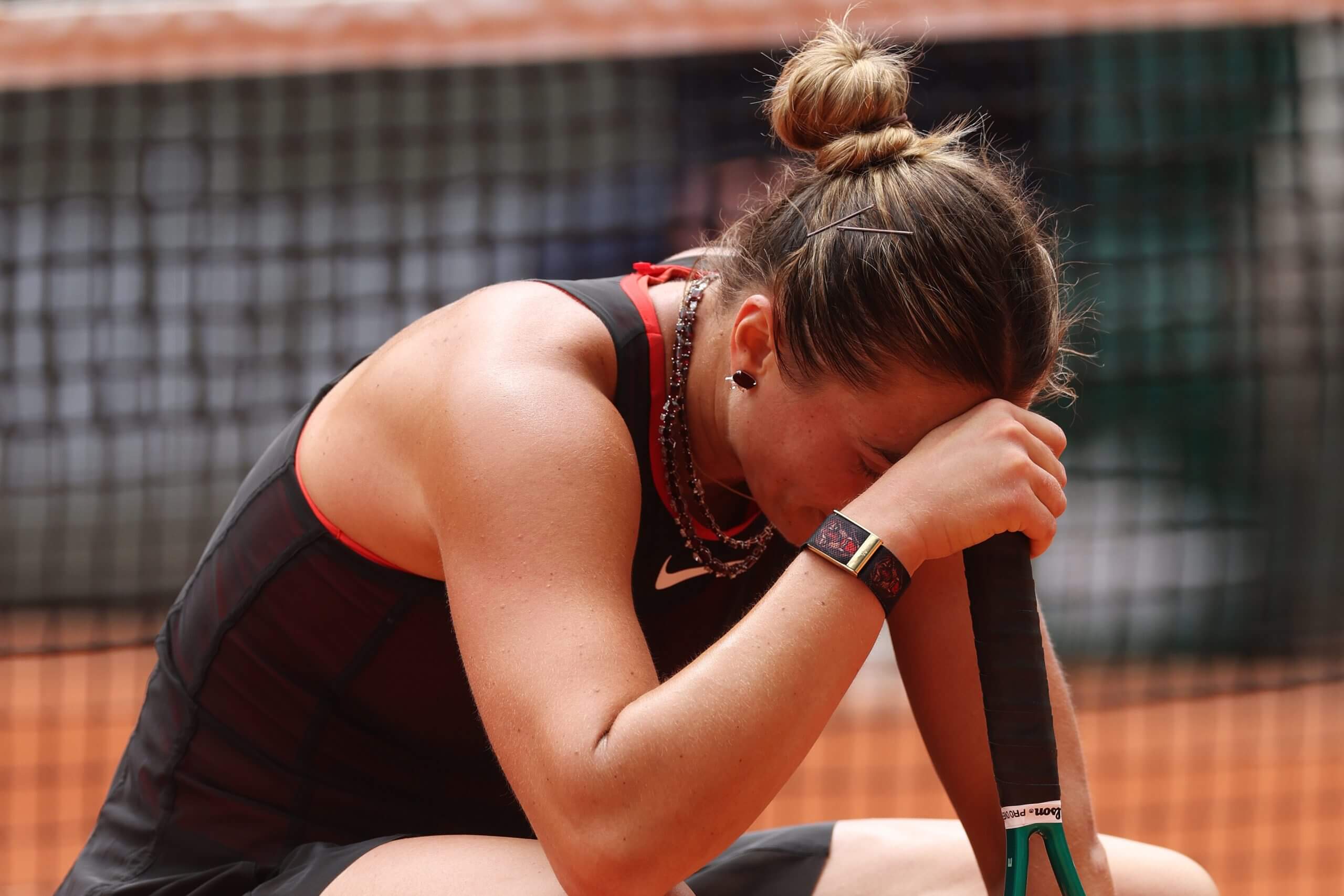
Aryna Sabalenka knows the routine of overcoming Grand Slam setbacks all too well. Following her dramatic loss to Diana Shnaider at the French Open, Sabalenka went through the usual process. She managed her media obligations and plunged into a detailed psychological analysis with her closest advisors.
In a heartbreaking match where she was on the verge of a comfortable victory, Sabalenka let slip the opportunity and lost the last 10 games. Afterward, speaking candidly at a press conference, she expressed her harsh sentiment, saying, “Right now I just want to quit tennis.”
Quitting wasn’t an option. The relentless tennis schedule doesn’t offer much downtime, and with Wimbledon on the horizon, Sabalenka and her team had to quickly regroup. It was a situation they knew well, having been in similar circumstances a year ago.
Jason Stacy, her mental and physical performance coach, notes that these episodes happen less frequently now. However, the pattern remains unchanged. The group routinely conducts thorough reviews, asking the same set of critical questions such as what emotions were involved, any missed signs, and what different strategies could be employed.
After major tournaments, a brief respite follows. Sabalenka and her fiancé, Georgios Frangulis, opted for a visit to Vienna. Her coach Dubrov took a break in Germany, while Stacy returned to his home in the Pacific Northwest. It’s a time to disconnect from the team’s constant discussions and to clear their minds before refocusing.
Stacy emphasizes that a successful athlete must tailor mental strategies that truly resonate with them. He believes that the strength of positive thinking lies in genuine belief. Sabalenka’s come-back performance, a straight-sets victory against Teodora Kostović at Wimbledon, showed signs of effective application of these methods.
Sabalenka’s protocol after loss includes seeking psychotherapy to clear her thoughts, especially as she prepares for major matches. She speaks highly of her close-knit team, which provides emotional and professional support without unnecessary drama.
Her journey in tennis has been marked by notable highs and baffling lows. After her struggles at the French Open, Sabalenka and her team don’t panic but rather focus on learning from each experience. While challenging cycles are common, the collective effort is directed towards continuous improvement.
The team also acknowledges the physical challenges Sabalenka faces. Her hip and lower back issues periodically resurface. Playing on clay and grass presents additional physical demands, such as the need for sliding and bending, which could strain her physical condition.
Despite these hurdles, Sabalenka’s support system stays consistent. The team’s long-term collaboration provides a stable foundation. Stacy and Dubrov, along with physiotherapist Helen Murawska, keep evolving strategies without overhauling the core approach.
Leave a Reply