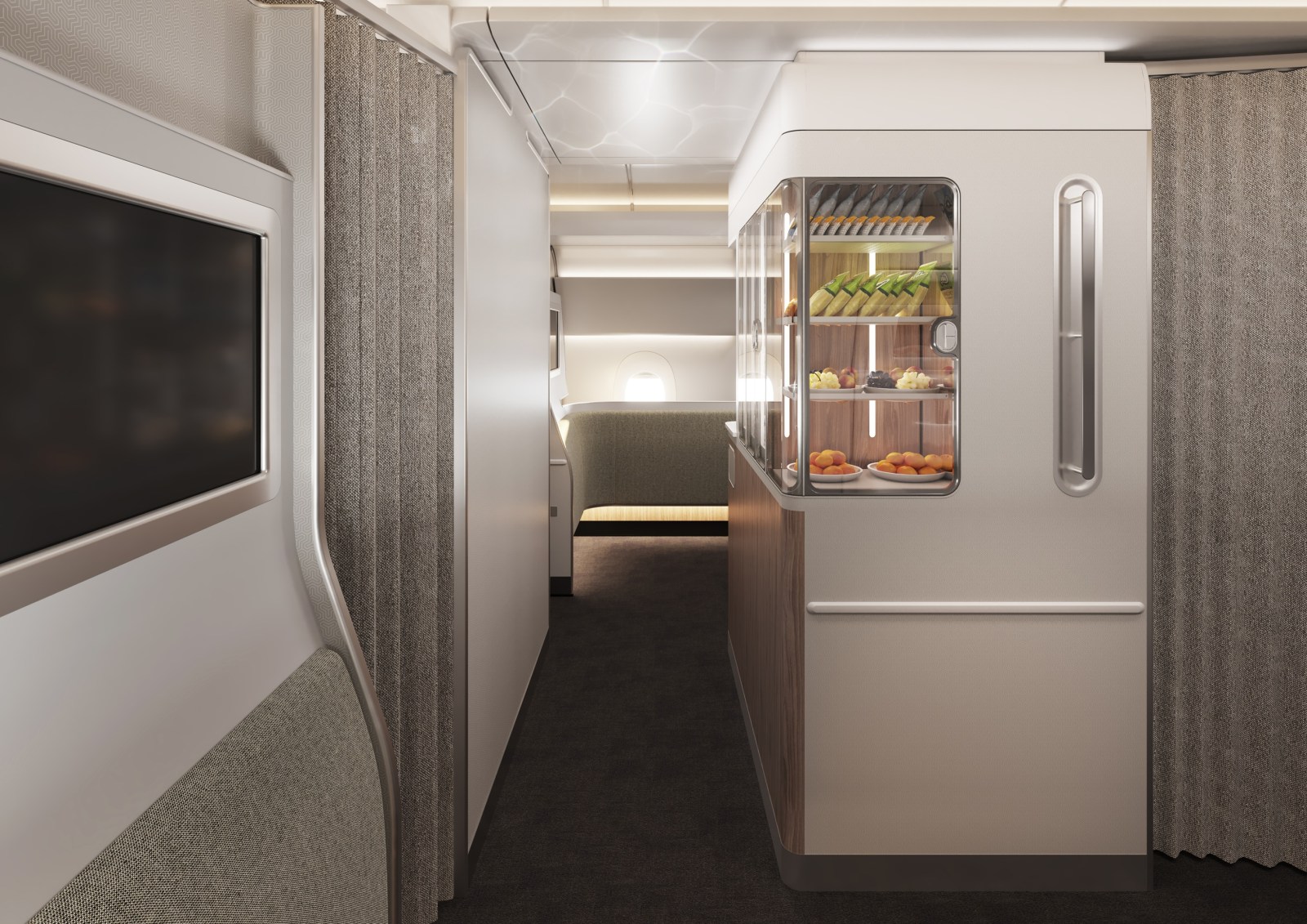
Qantas, Australia’s premier airline, plans to initiate a revolutionary travel experience with the introduction of direct flights between Sydney and London, followed by Sydney and New York. These routes will feature the first-ever dedicated in-flight ‘Wellbeing Zone.’
The airline first revealed Project Sunrise in 2017, aiming to directly connect Australia’s east coast to significant global destinations. Sarah Udy, Qantas’s executive manager of product and service, highlighted the project’s focus on improving the overall customer experience, with the ‘Wellbeing Zone’ being a key innovation in cabin design.
The Sydney-London flights are set to commence in October 2027, potentially reducing travel time by up to four hours compared to current one-stop journeys. The Sydney-New York route will follow later. These flights will utilize modified Airbus A350-1000ULR aircraft, capable of traveling over 16,000 kilometers (approximately 10,000 miles) nonstop for up to 22 hours.
Qantas’s Wellbeing Zone is part of a wider trend where airlines explore new methods to enhance long-haul passenger comfort. Innovations from other airlines include business and first-class suites with sliding doors, cabin lighting optimized to reduce jet lag, AI-powered digital services onboard, and new cabin layouts providing areas for work or socialization during lengthy flights.
Airlines such as Qatar Airways, Cathay Pacific, Lufthansa, and United have introduced advanced premium cabins, focusing on privacy, comfort, and wellbeing. This reflects the industry’s efforts to make extended flights less taxing physically.
The timing of Project Sunrise aligns with challenges in the aviation industry, including increased fuel prices influenced by ongoing Middle Eastern turmoil. A report from the International Air Transport Association (IATA) in July indicated a global air passenger demand drop of 1.7 percent in June 2026 compared to June 2025. This decline was attributed to weakened domestic markets in China, the United States, and Japan, along with decreased international demand for Middle Eastern carriers.
The U.S. Travel Association reported in May 2026 that total travel spending in the U.S. is projected to hit $1.37 trillion in 2026 and $1.42 trillion in 2027, with international travel expected to resume growth.
Innovative Design
The Wellbeing Zone’s creation is partly attributed to the aircraft’s spacious design. Qantas’s A350-1000ULR jets will have a total of 238 seats spread over four cabins, marking the lowest-density configuration for Airbus A350 aircraft globally. This lower passenger count allows for increased personal space and room for the wellness area.
While many carriers have upgraded to premium suites and enhanced business-class offerings on long-distance routes, Qantas claims to be the first airline introducing ‘a purpose-built in-flight Wellbeing Zone.’ This reflects the industry’s growing focus on minimizing long-haul travel’s physical impacts through improved cabin design, lighting, sleep management, and wellness initiatives.
Project Sunrise-specific aircraft feature an additional 20,000-liter fuel tank enabling extended-distance flights. Qantas has stated it will procure 12 A350 aircraft.
Cost of Project Sunrise Flights
Qantas has not yet released official fares for Project Sunrise. However, Qantas International CEO Cam Wallace mentioned to Executive Traveller that ticket prices might carry about a 20 percent premium compared to current one-stop services.
According to Executive Traveller’s estimates, economy fares for one-way journeys may start at AU$1,600 (around US$1,130), while first-class suites might exceed AU$14,000 (around US$9,885) one way.
Wallace noted customers traditionally pay a premium for direct ultra-long-haul services, refering to the successful performance of Qantas’s Perth-London route. Tickets for the initial Sydney-London Project Sunrise flights will likely be available for purchase in February, preceding the October 2027 launch.
Leave a Reply