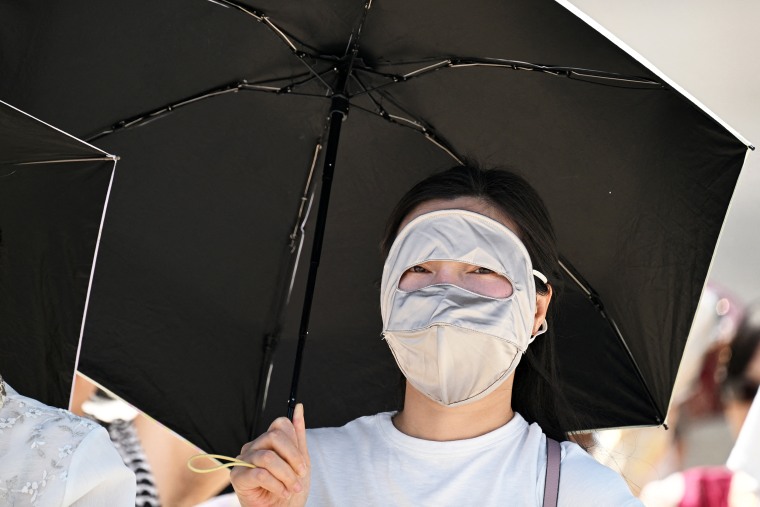
On August 4, 2026, a severe heat wave has engulfed large regions of East Asia, setting a new record for the highest temperature ever observed in South Korea and hindering earthquake recovery efforts in Japan.
South Korea’s Temperature Crisis
Since mid-May, the extreme heat has been blamed for 19 fatalities in South Korea. President Lee Jae Myung has declared the heat wave a national disaster, highlighting the need for a comprehensive overhaul of the national crisis management system due to the increasing frequency of such extreme weather conditions.
On Sunday, temperatures soared to 42.5 degrees Celsius (108 Fahrenheit) in Yangsan, marking the highest temperature since record-keeping began 122 years ago.
The intense heat, initially concentrated in the southern regions, has recently moved northward towards Seoul. On Tuesday, the Korea Meteorological Administration issued its first-ever “severe” heat wave warning for all of Seoul. This warning is triggered when maximum perceived temperatures reach at least 38 degrees Celsius (100.4 F).
Residents in the Seoul metropolitan area, accommodating over 26 million people, have been advised to remain indoors, stay hydrated, and support vulnerable communities.
North Korea and Disaster-Affected Japan
North Korea is also grappling with significant temperature increases. The state newspaper, Rodong Sinmun, has cautioned citizens to limit outdoor activities and encouraged farmers to safeguard their crops from the excessive heat.
The heat has complicated disaster relief operations in Japan, where temperatures have surpassed 100 degrees Fahrenheit following a 7.1-magnitude earthquake in Kumamoto prefecture on July 28. NHK reports over 40,000 households remain without water. Thousands are housed in emergency shelters, while others seek refuge in their cars, fearing further tremors.
A recent tragedy involved a woman in her 70s, suspected to have succumbed to heat stroke while sheltering in her car post-quake. This incident raised the death toll to 38.
Kumamoto Governor Takashi Kimura described the woman’s death as “heartbreaking” and urged evacuees to use air-conditioning in their cars or relocate to air-conditioned facilities. Prime Minister Sanae Takaichi emphasized on the “continuous supply” of essential services at evacuation sites and promised expedited restoration of utilities.
Impact on Wildlife
The Tama Zoological Park outside Tokyo reported the deaths of three lions within a week due to suspected heat-related issues. Of the 16 lions, 10 exhibited signs of distress such as reduced activity and appetite. Despite measures to manage their body temperatures, three female lions aged between 3 and 15 years succumbed, suffering from dehydration and multiple organ failure.
Four lions are recovering, while three remain unwell. Officials have prioritized the animals’ health and removed them from public view.
In response to extreme heat conditions, the Japan Meteorological Agency introduced the term “kokushobi” or “cruelly hot day” for days when temperatures exceed 40 degrees Celsius (104 F). This term emerged following 200,000 votes in a public survey. The first series of kokushobi were recorded last month over five consecutive days.
Japan’s previous highest temperature was recorded at 41.8 degrees Celsius (107.2 F) in Isesaki last August.
Leave a Reply