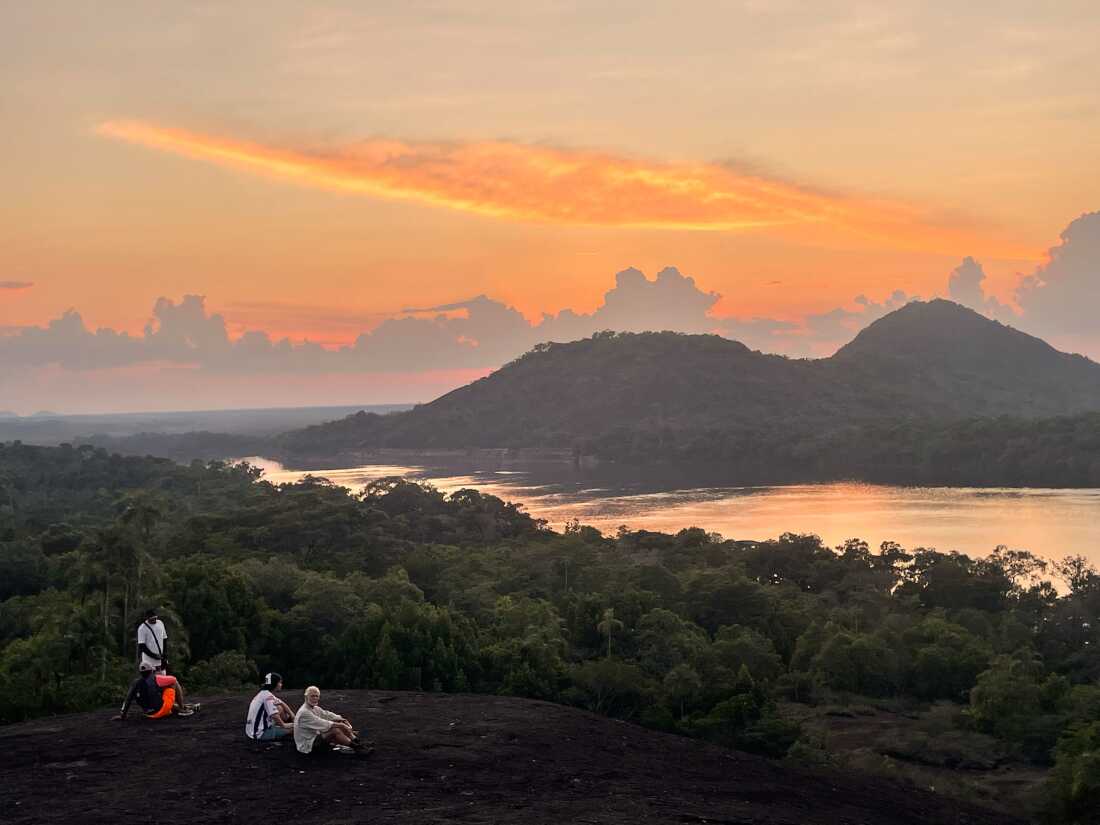
As the sun sets over Mavecure in Colombia, the region’s stunning landscapes come to life with towering rock formations nestled within the lush Amazon jungle. As dawn breaks, the sound of wildlife fills the air, heralding a new day in this remote part of eastern Colombia, close to the Venezuelan border.
Amid the seemingly endless green expanse, the Mavecure Mountains rise dramatically, offering breathtaking views. These formations are the Cerros de Mavecure, consisting of sandstone, shale, and quartz, echoing the shape of Sugarloaf Mountain in Brazil. The name ‘Mavecure’ derives from indigenous poison-dart blowguns, a testament to the area’s rich cultural heritage. Local tribal groups such as the Puinave and Curipaco Indians hold the site as sacred, often leaving offerings to honor the spirits.
Marcela Sánchez, an industrial engineer from Cali, summarized the view as ‘divine.’ However, scaling the smallest peak involves a challenging two-hour trek in intense heat, requiring ropes and ladders to navigate. Yet the effort pays off with panoramic views that rival iconic destinations like Machu Picchu. This region showcases Colombia’s tourism potential, with its diverse attractions ranging from vibrant jungles to breathtaking coastlines and mountains.
Colombia boasts a rich birdlife, home to 1,900 avian species. Factors like past guerrilla conflicts and drug cartel violence deterred tourism previously, but peace efforts in 2016 began reversing these trends. The improved political climate led to a surge in international visitors, hitting 3.1 million in the first eight months of 2025.
Tourism is now the main engine of the local economy,
says Delio Agapito, Remanso village’s mayor. Locals now thrive on tourism, moving away from environmentally harmful gold mining and focusing on sustainable economic opportunities. Fabio Pérez, a former miner, now runs a hostel and apiary project, appreciating the positive impact tourism has had on his family’s life.
Despite being less frequented than destinations like Cartagena or Medellín, Mavecure remains appealing. Challenges include lack of road connections, sporadic airport flights, and rustic accommodations. Fernando Carrillo from Aroma Verde, an environmental foundation, highlights the area’s small-scale tourism potential.
The journey up the mountain involves navigating thorny plants and avoiding snakes, though the dry season turns out to be reptile-free. On reaching the summit, climbers enjoy spectacular views of the jungle and the Inírida River, framed by taller peaks.
During the climb, some tourists experience the unique flavors of rainforest ants. Sebastian Rivera describes them as having a ‘lemon taste,’ adding an unexpected twist to the adventure.
Catalina Laverde, who hiked with friends, found the experience dreamlike. Meanwhile, Rivera appreciates the region’s solitude, valuing the natural wonders over conventional resort comforts.
Leave a Reply