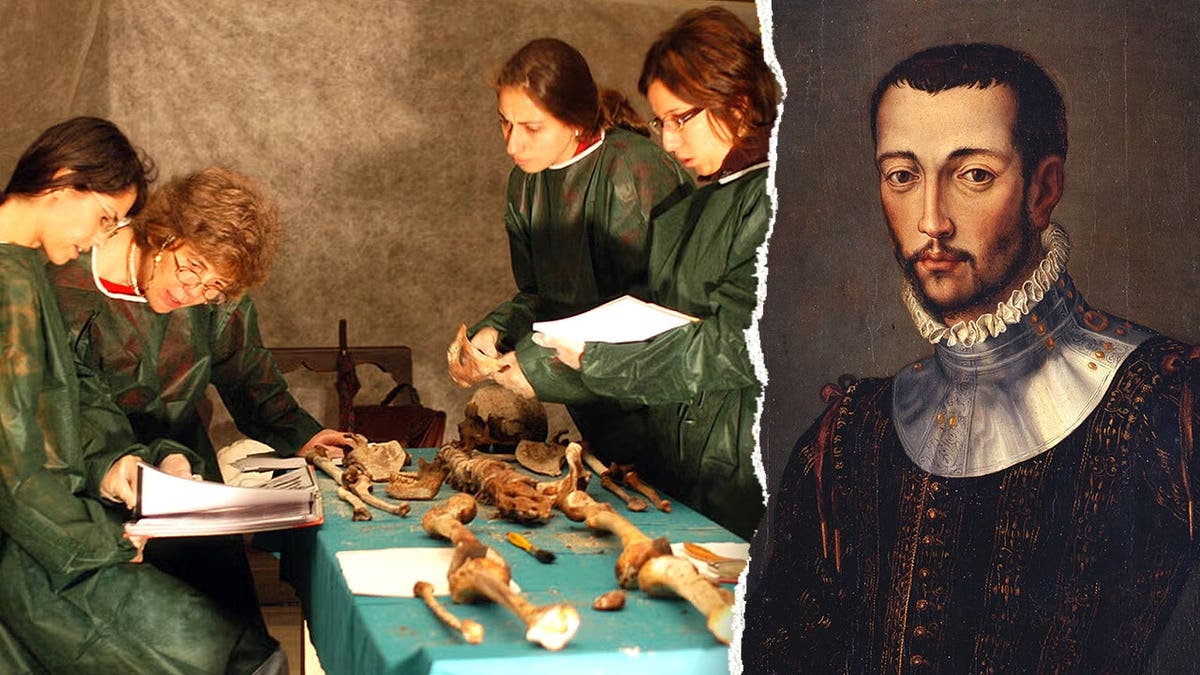
Researchers at Yale University have made strides in solving a centuries-old mystery about the death of Grand Duke Francesco I de’ Medici, a prominent Renaissance ruler of Tuscany. Their work, published in the journal iScience, provides new insights into his sudden death in 1587.
Francesco I de’ Medici and his wife, Bianca Cappello, both died within a day of each other after experiencing symptoms of intermittent fevers at a villa known for its mosquito population. Speculation about their deaths involved rumors of poisoning.
Experts have finally solved the mystery of a teenage Revolutionary War soldier 246 years after his death.
The Yale team, collaborating with paleopathologists from the University of Pisa, extracted DNA from the ribs of Francesco I de’ Medici and his younger brother Giovanni, who died from malaria 25 years earlier. The study was led by Serena Tucci, an assistant professor of anthropology at Yale, who highlighted this work in a press release on June 30.
The research used ancient DNA to detect malaria parasites in the remains of the Grand Duke. This discovery challenges the long-held belief that he was poisoned. Researchers found genetic traces of Plasmodium falciparum in both brothers, a parasite known for causing the deadliest form of malaria.
The research confirms that both Francesco and Giovanni de’ Medici died of malaria. Historical accounts had described symptoms aligning with malaria, termed “febbre terzana” by central Italians during the Renaissance, but lack of scientific evidence had fueled persistent rumors of poisoning.
The researchers also detected molecular traces of a second malaria species, P. malariae, in Francesco’s remains. These findings debunk the theory that their deaths were orchestrated through poison by Francesco’s rival brother, Cardinal Ferdinando de’ Medici.
Historical records described treatments such as bloodletting, which often worsened the condition of the patients. These treatments, along with their symptoms, have now been scientifically linked to malaria.
Serena Tucci pointed out that while poisoning cannot be completely ruled out, malaria is the most likely cause. The absence of genetic proof previously left room for speculation about arsenic poisoning.
Gisella Caccone, a senior research scientist at Yale, noted that the methods used in this study have broader implications. The same genetic analysis techniques could apply to other historical inquiries. Understanding the evolution of the malaria pathogen could improve disease control methods.
DNA from ancient remains not only sheds light on historical mysteries but also guides future scientific research. This approach promises new directions for understanding past and present health challenges.
Leave a Reply