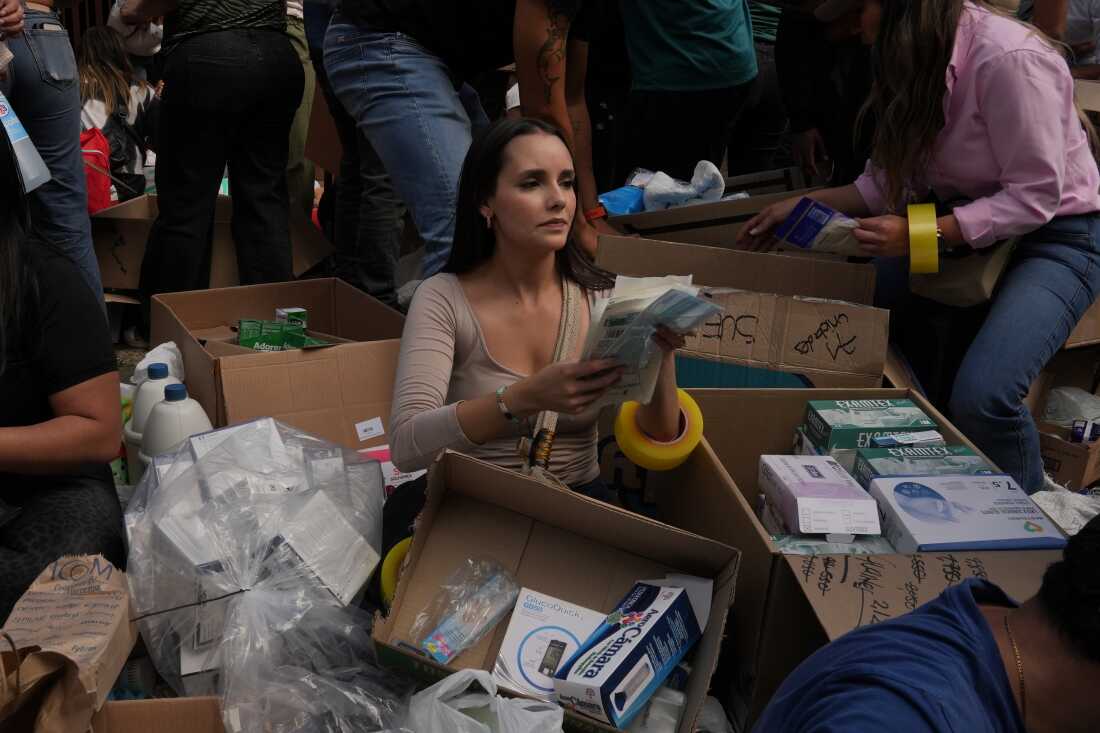
Outside a community center in Bogota, volunteers are diligently loading boxes of clothes and food onto a truck, preparing to send supplies to those affected by the recent earthquake in Venezuela.
President’s Pledge
In the aftermath of the powerful double earthquake, President Delcy Rodríguez has emphasized the urgency of rescuing as many people as possible. She has called for unity as the death toll continues to rise, marking one of the country’s most devastating earthquakes in over a century. Current reports indicate that more than 1,400 individuals have perished, with over 3,200 injured, and numerous people still missing. Thousands remain homeless, taking refuge in public areas such as squares, shelters, and parks.
Challenges on the Ground
Frustration is mounting due to what many perceive as a sluggish and uncoordinated response. Although international teams are arriving to aid the situation, the relief effort is hindered by a lack of equipment and an overstretched healthcare system. In several severely affected regions, rescue operations are hampered by the absence of heavy rescue tools, leaving residents to excavate rubble manually.
Colombia’s Support Efforts
In Colombia, where many Venezuelans live, the local population is mobilizing to help. Hundreds have gathered at community centers to donate items such as non-perishable food, hygiene products, clothing, and pet supplies. Humanitarian organizations across Colombia and neighboring countries are rapidly collecting essential items to support the survivors in the coming weeks.
An example of this support can be seen in the actions of Isabel Mendoza, a Venezuelan street vendor residing in Colombia. She contributed clothes, gloves, face masks, and toilet paper. Despite her family in Maracaibo being unaffected, she expressed her heartbreak over the disaster’s impact on Venezuelans.
Similarly, Mariana Godoy, a logistics specialist, rallied behind the cause by donating bottled water, energy drinks, cookies, deodorants, and sanitary products. Her relative, a doctor in Caracas, is now unable to return home due to building damages and is temporarily residing in his office with his family.
“Our country is experiencing a difficult period, so we must contribute however we can,” Godoy remarked.
Long-term Crisis Management
Gisella Serrano, a humanitarian worker, highlighted the enduring nature of the crisis. Her foundation collaborates with other groups to organize supplies in warehouses for eventual transport to Venezuela, supported by Colombian airlines. However, aid groups face challenges in delivering donations due to governmental protocols requiring negotiation of permits with Venezuelan authorities.
Historically, government reluctance to accept aid from certain private organizations, especially those linked to opposition, has led to accusations of hampered relief efforts within Venezuela. In some instances, donations have reportedly been seized by authorities.
“This crisis will persist for an extended period,” Serrano stated, acknowledging the complexity of resolving the situation swiftly.
Leave a Reply