Event Overview
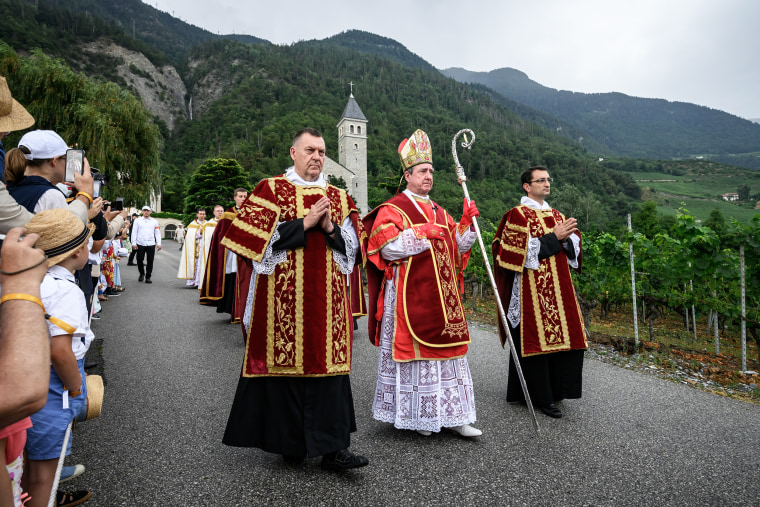
On July 3, 2026, a significant event unfolded in a scenic Swiss settlement. This act shook the foundations of the Catholic Church. An ultraconservative Catholic society consecrated four new bishops in a five-hour ceremony. The ceremony defied the Church’s canon law and disregarded Pope Leo XIV’s calls for unity.
After the ceremony, attended by around 15,000 people, the Vatican excommunicated the Society of St. Pius X’s six bishops. The consecration itself was streamed globally, showing the ceremony’s scope and significance.
Details of the Ceremony
During the ceremony, SSPX consecrated Pascal Schreiber from Switzerland, Michael Goldade from the United States, and Michel Poinsinet de Sivry and Marc Hanappier from France as bishops. Bishop Alfonso de Galarreta performed the consecrations. This ritual highlights a bishop’s role as a successor to the apostles.
In the Catholic Church, consecrating a bishop without papal approval causes automatic excommunication. Pope Leo XIV had advised SSPX’s superior, Davide Pagliarani, to delay the ceremony, fearing its divisive impact and its violation of canon law. SSPX ignored these warnings.
Background of SSPX
Founded in 1970, the Society of St. Pius X opposes the reforms from the Second Vatican Council. Named after Pope Pius X, the society rejects theological modernism. Archbishop Marcel Lefebvre started SSPX to resist changes like Mass in local languages, favoring the Latin Tridentine Mass.
The society’s growth continued despite Vatican efforts to curtail it. SSPX now operates globally, running seminaries, schools, retreat centers, and chapels. SSPX’s history of consecrating bishops without papal consent dates to 1988 when Lefebvre was excommunicated for similar actions.
Reaction to New Consecrations
Gemma Simmonds from the Margaret Beaufort Institute of Theology suggests SSPX knowingly caused provocation by consecrating new bishops. SSPX effectively excommunicated itself by rejecting church teachings in favor of tradition.
Pope Benedict XVI’s attempt to reconcile with SSPX by lifting excommunications in 2009 faced issues due to SSPX Bishop Richard Williamson’s controversial views. Pope Francis later authorized SSPX priests to hear confessions and celebrate marriages, but these were revoked after recent events.
Schisms in Church History
The Catholic Church has experienced several schisms, including the East-West Schism of 1054. Efforts to reconcile failed, creating the long-standing division between the Catholic Church and the Eastern Orthodox Church.
In the 16th century, the Protestant Reformation further divided Christianity. Led by Martin Luther and John Calvin, it became the foundation for Protestantism, illustrating historical challenges to Church unity.
Leave a Reply