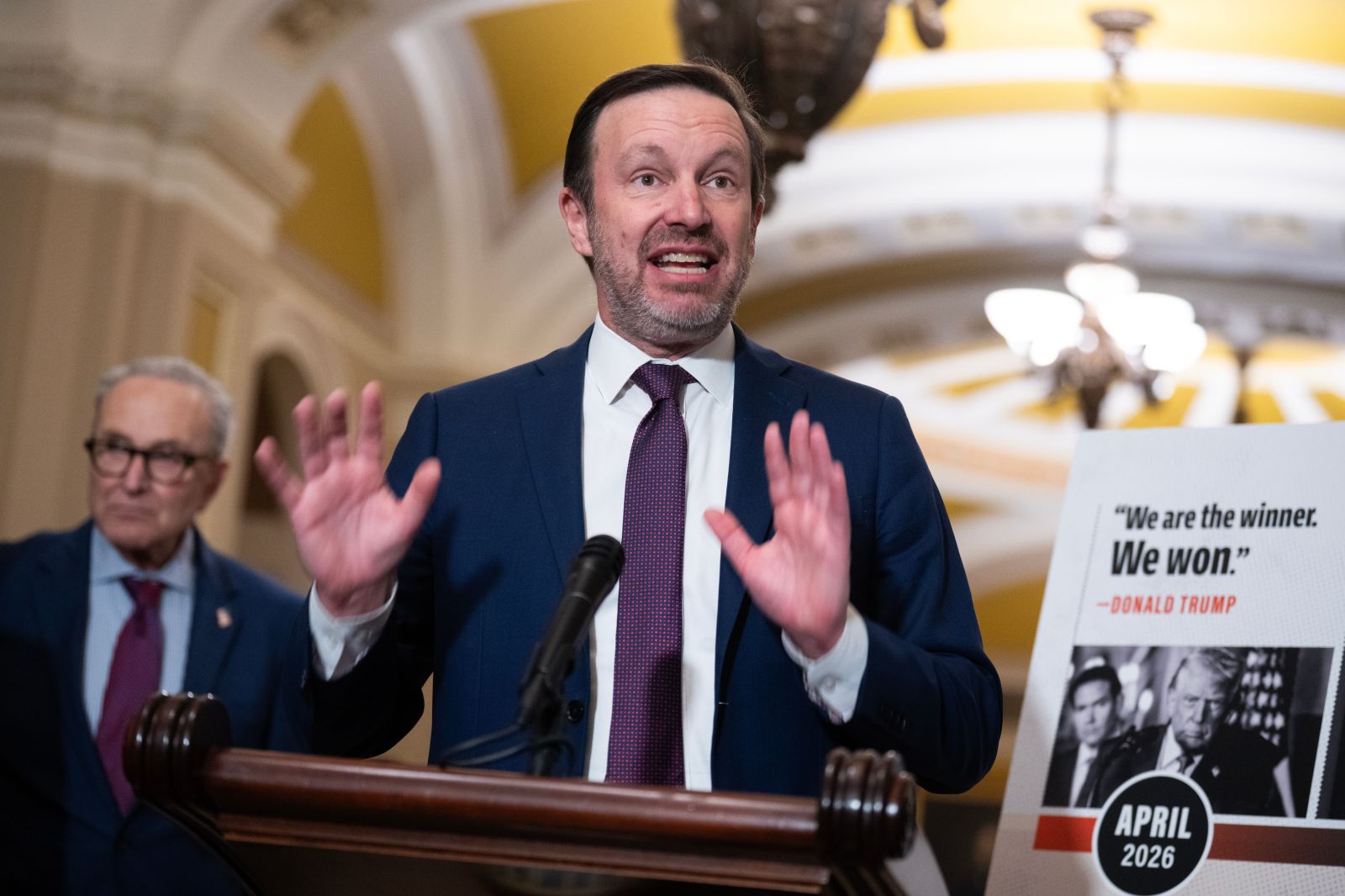
Senator Chris Murphy suggested on Sunday that raising the federal minimum wage could help rebuild the Democratic coalition, particularly by attracting working-class voters who previously supported Donald Trump. In an interview on ‘Meet the Press,’ the Connecticut senator discussed a proposal to increase the federal minimum wage to $25 per hour, describing it as a unifying issue that might appeal across party lines.
Murphy stated, “People believe capitalism hasn’t worked in its current form. With 40 percent of full-time workers lacking emergency savings for a car repair, we must address this.” The federal minimum wage has been stagnant at $7.25 per hour since 2009. Murphy’s plan highlights a continuing debate within the Democratic Party about aligning progressive economic policies with electoral appeal, especially with elections on the horizon.
A Proposal for a ‘Living Wage’
Murphy introduced the “Living Wage for All Act,” proposing a gradual increase in the federal minimum wage to $25 over several years. Large employers would be required to meet this benchmark by 2032, whereas smaller businesses would have until 2039 for compliance. The plan would first raise the current wage to $12 immediately after enactment.
No U.S. state currently mandates a $25 minimum wage. Washington state leads with a $17 minimum, while many adhere to the federal baseline. Murphy argued, “If you raise the minimum wage to $25, more jobs will emerge than disappear.” He referred to public opinion, noting Democrats generally support a $27 minimum wage, while Republicans and independents favor $26. “$25 is what’s necessary to cover basic expenses nationwide,” he asserted.
Economists and business groups have voiced concerns about significant wage increases, warning about reduced hiring, automation, and higher consumer costs. Small businesses could struggle with narrow profit margins, potentially leading to job cuts or closures. Research presents mixed findings, showing varied employment impacts depending on the scale and pace of increases. The legislation proposes ongoing adjustments, linking the minimum wage to two-thirds of the national median wage once the $25 goal is reached.
Targeting Disaffected Trump Voters
Murphy’s proposal comes as Democrats reevaluate strategies to win back working-class voters who supported Trump in prior elections. He argued these voters are driven by economic concerns more than partisan loyalty. “Many Trump voters see the economy as rigged and initially believed Trump would fix it. They now view him as a false populist and might entertain Democratic narratives advocating for wage hikes and corporate regulation,” Murphy stated.
Murphy emphasized the importance of prioritizing economic issues like wage increases and union influence, recommending flexibility on social concerns to enlarge the party’s base. “Accepting individuals who previously voted for Trump is crucial,” Murphy noted, recognizing potential divergences on issues like gun control and climate policy.
Despite some Democratic support for socialism, Murphy advised the party to reject this label, advocating for “common good capitalism” instead.
The Cost-of-Living Squeeze
This legislative effort arises amid prolonged cost-of-living challenges, with essentials like housing and food outpacing typical wage increases. Urban Institute data shows home prices have soared 81 percent since 2017, with rents increasing by 54 percent. Habitat for Humanity reports the median home price in 2024 at approximately $412,500, necessitating an annual income of around $126,700—significantly above typical earnings.
Food prices have also climbed, rising approximately 3.2 percent in 2025, according to the U.S. Department of Agriculture. While inflation has slightly eased to roughly 4.2 percent annually, housing and food remain substantial budget concerns for lower- and middle-income households.
Murphy insisted that addressing the gap between wages and living costs is imperative. “In an affluent nation, full-time workers should afford their expenses,” he asserted.
The bill faces challenges in a divided Congress, with Republicans warning that high wage mandates may hinder economic growth and exacerbate inflation.
Leave a Reply