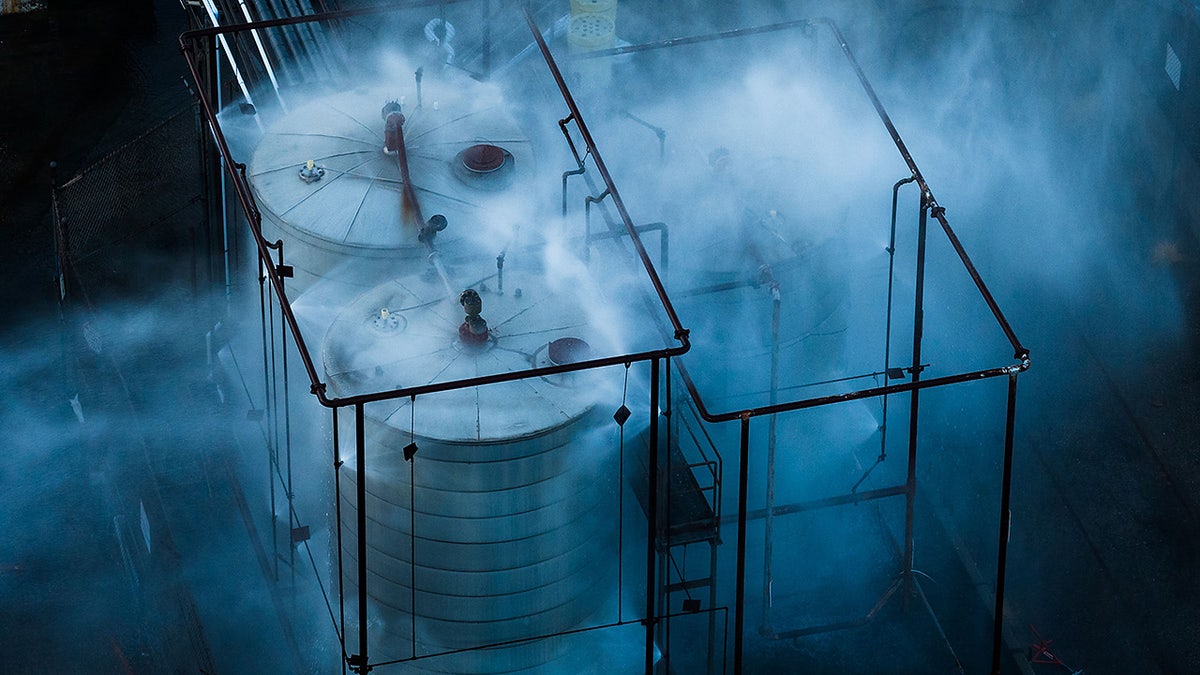
Emergency crews in Southern California launched a critical overnight operation at an aerospace facility to address a nearby chemical tank issue. The primary tank’s internal temperature climbed to 90 degrees Fahrenheit, leading Governor Gavin Newsom to declare a state of emergency and order the evacuation of over 40,000 residents.
Efforts to Control the Situation
Orange County Fire Authority Incident Commander Greg Covey shared concerning news about the situation. The temperature gauge on the failing tank, obscured from drone cameras by cooling water, indicated a rise to 90 degrees. The temperature increased an average of one degree per hour since recording 77 degrees the previous morning.
Interim Chief T.J. McGovern and Covey warned of two catastrophic outcomes: the tank could fail, releasing between 6,000 and 7,000 gallons of dangerous chemicals, or it might undergo “thermal runaway” and explode, triggering reactions in nearby fuel and chemical tanks.
Preventive Measures
The mission aimed to neutralize a 15,000-gallon tank, reducing explosion risks if the adjacent 7,000-gallon tank detonates. Despite the rising temperatures, officials proposed a potential third outcome to avert disaster. Using a heavy, continuous water deluge, they hope to slow down the hardening of the volatile chemical from the outside, preventing an explosion.
Covey noted that the tank’s void space might absorb pressure from the curing process, averting an explosion. Crews are also preparing contingency plans if the tank fails and spills. They are setting up diking and damming measures to divert fluids into a commercial holding area, keeping toxic chemicals from storm drains, river channels, and the ocean to prevent environmental disaster.
“Letting this thing just fail and blow up is unacceptable to us,” Covey asserted, highlighting nationwide expert consultations on the crisis.
Official Response and Public Safety Measures
Governor Newsom declared a state of emergency, mobilizing resources for the site. The California Governor’s Office of Emergency Services has been active for over 24 hours, working with state agencies to support communities and ensure public safety. The emergency originated Thursday night due to a methyl methacrylate (MMA) leak at the GKN Aerospace facility in Garden Grove. Initially, cooling measures managed the situation, allowing residents to temporarily return home.
However, by Friday morning, the crisis escalated significantly. By Friday evening, crews successfully used a “water curtain” to stabilize temperatures temporarily, giving experts time to find solutions. Covey assured that efforts would continue to mitigate risks and ensure the safety of residences and the environment.
Evacuation Measures
Garden Grove Police Chief Amir El-Farra announced an expanded evacuation zone, directing displaced families to various emergency centers. Health officials warned of severe risks if the tank ruptures. Dr. Regina Chinsio-Kwong from the Orange County Health Care Agency cautioned that rising temperatures could produce toxic vapors, posing risks to respiratory health and causing eye, nose, and lung irritation.
Chinsio-Kwong emphasized that evacuation zones ensure safety against chemical exposure, whether through leak hardening or vapor release. Representative Derek Tran confirmed close monitoring of the situation with local and federal disaster relief officials. Tran stated that he is in contact with FEMA and the EPA, although they have not yet responded to inquiries.
This situation remains fluid, and updates will follow as new information becomes available.
Leave a Reply