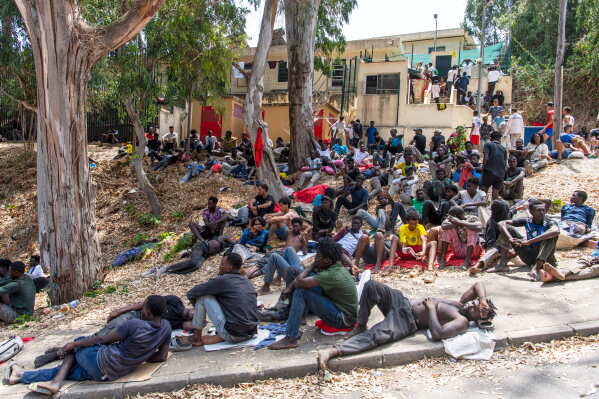
Spain has erected a 500-meter barrier along its sea border with Morocco, after a large number of migrants entered its territory in Ceuta. The border installation followed the deaths of 67 migrants, lost either by drowning or in a stampede to cross a breakwater.
Spanish Prime Minister Pedro Sánchez criticized some EU leaders who demanded Spain’s suspension from the Schengen zone, calling their reactions biased. Despite the border breach, Sanchez emphasized that over 50,000 migrants who crossed into Ceuta returned shortly after.
Spanish soldiers found weary migrants arriving at Tarajal beach in Ceuta on Saturday and escorted them back. Interior Minister Fernando Grande-Marlaska assured that lawlessness and security threats would not be tolerated. He maintained that, despite the occurrences, Morocco remains a reliable partner for Spain.
Meanwhile, 22 EU leaders urged a coordinated response to prevent illegal entries into the EU. In a letter addressed to EU officials, they demanded urgency from the EU’s Irish presidency to convene a ministerial meeting. They insisted that the perception of illegal entry being permissible could destabilize efforts on the EU’s migration policy.
In response, Sánchez asked for an urgent conference among EU interior ministers, recommitting to the shared responsibility over EU borders. Italian Premier Giorgia Meloni expressed intentions to reinforce border controls on entries from Spain.
Amid ongoing tensions, numerous migrants returned to Morocco. Many shared their experiences of harsh conditions and degrading treatment on the Spanish side of the border.
Some migrants expressed disillusion after spending days without food or shelter. They recounted struggles over resources and confrontations with law enforcement. Individuals like Ouail Lamzeiz and Salah Eddine El Arrage highlighted their desperation and eventual decision to retreat.
Along with migrants, Ceuta’s residents experienced disruptions. Mohamed Abdelatif, a resident, acknowledged the impact of the incidents on local tranquility. City infrastructure showed signs of unrest with vehicles burned and the atmosphere tense.
Efforts to normalize life continue, but the path to resolution remains complex as migrants like Mohamed Hatri insist on staying despite challenges.
Report contributions came from areas including Fnideq, Morocco, Barcelona, Spain, and Athens, Greece.
Leave a Reply