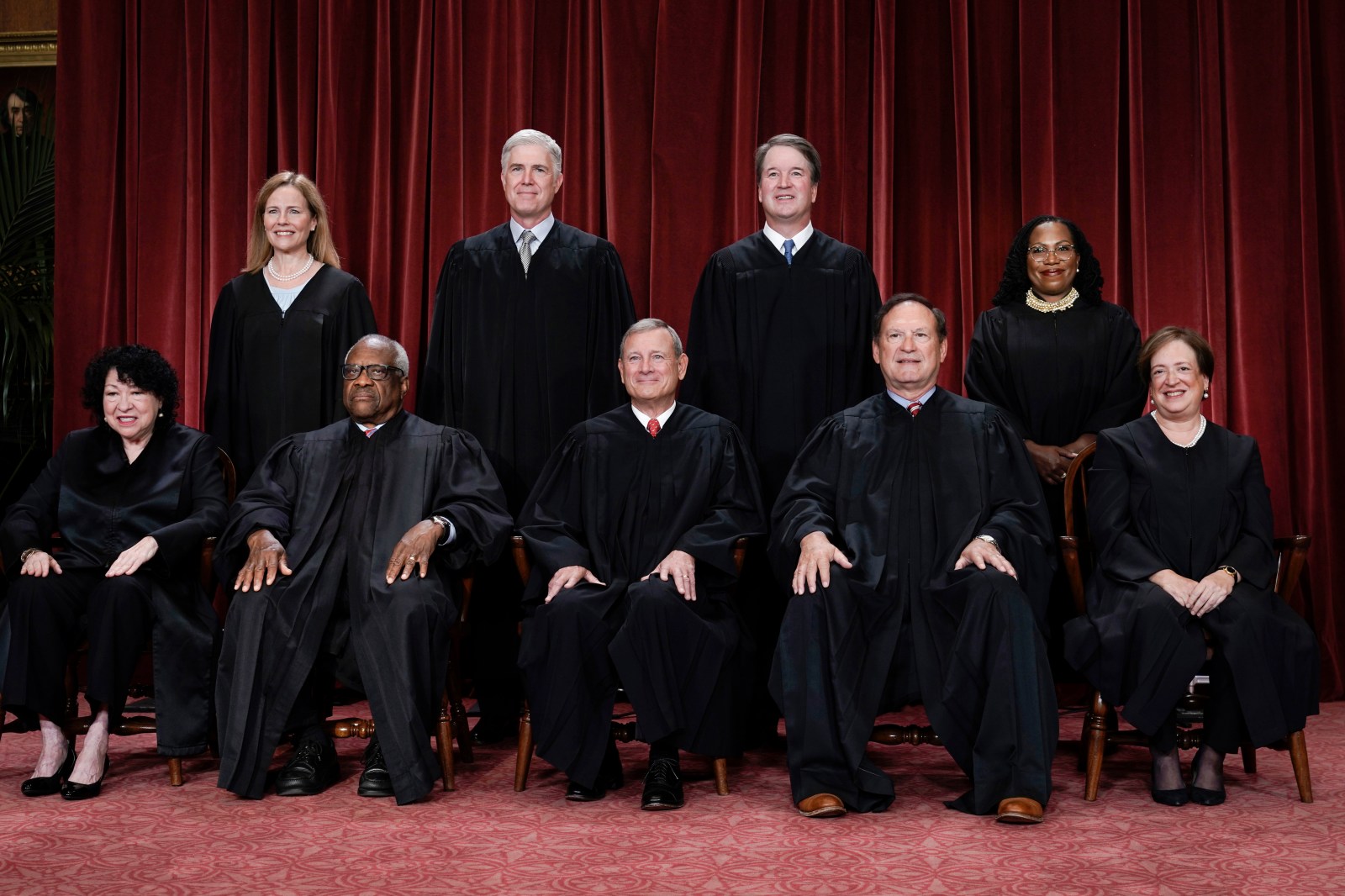
Supreme Court Justice Elena Kagan recently spoke about President Donald Trump’s presence during the oral arguments of a crucial birthright citizenship case earlier this year. Trump’s attendance marked a significant occasion as it was the first known instance of a sitting president attending such a session. Despite the unprecedented nature, Kagan described it as a “non-event” during a judicial conference, indicating that it did not influence the court’s operations.
Context and Details of the Case
The birthright citizenship case revolved around the administration’s attempts to limit the citizenship rights granted under the Fourteenth Amendment. This amendment states that individuals born in the U.S. are automatically citizens. On June 30, the Supreme Court ruled in a 6-3 decision against Trump’s executive order to restrict this longstanding interpretation.
Chief Justice John Roberts, who authored the majority opinion, reinforced that children born in the U.S. are citizens at birth. His opinion echoed the court’s earlier stance from the 1898 decision in United States v. Wong Kim Ark, which maintained this principle.
Trump’s Tariffs and Court’s Ruling
Another major decision came in February regarding Trump’s imposition of tariffs under the International Emergency Economic Powers Act (IEEPA). The court ruled 6-3 that the statute does not permit the president to implement tariffs unilaterally. The decision was a notable refutation of Trump’s economic strategies, as tariffs were a significant component of his agenda.
Despite the ruling, Trump continued to pursue tariffs against various nations. Following the decision, he criticized the Supreme Court, including justices he appointed, describing them as “disloyal.”
Public Confidence in the Court
Recent surveys underscore declining public confidence in the Supreme Court. A YouGov/The Economist poll showed only 36 percent approval among Americans. Moreover, a significant portion of the public perceives the court as too conservative.
These findings are consistent with trends indicating skepticism towards the court’s handling of critical issues like abortion and immigration. Justice Kagan, while addressing these concerns, emphasized that the court operates independently and without bias towards current administrations.
“I don’t see this as a court that is just like, ‘We’re just going to rubber stamp what the current administration does.’ You know, quite the opposite.”
Both the birthright citizenship and tariffs cases illustrate the court’s role in checking executive actions, reaffirming its function as an independent branch of government.
Leave a Reply