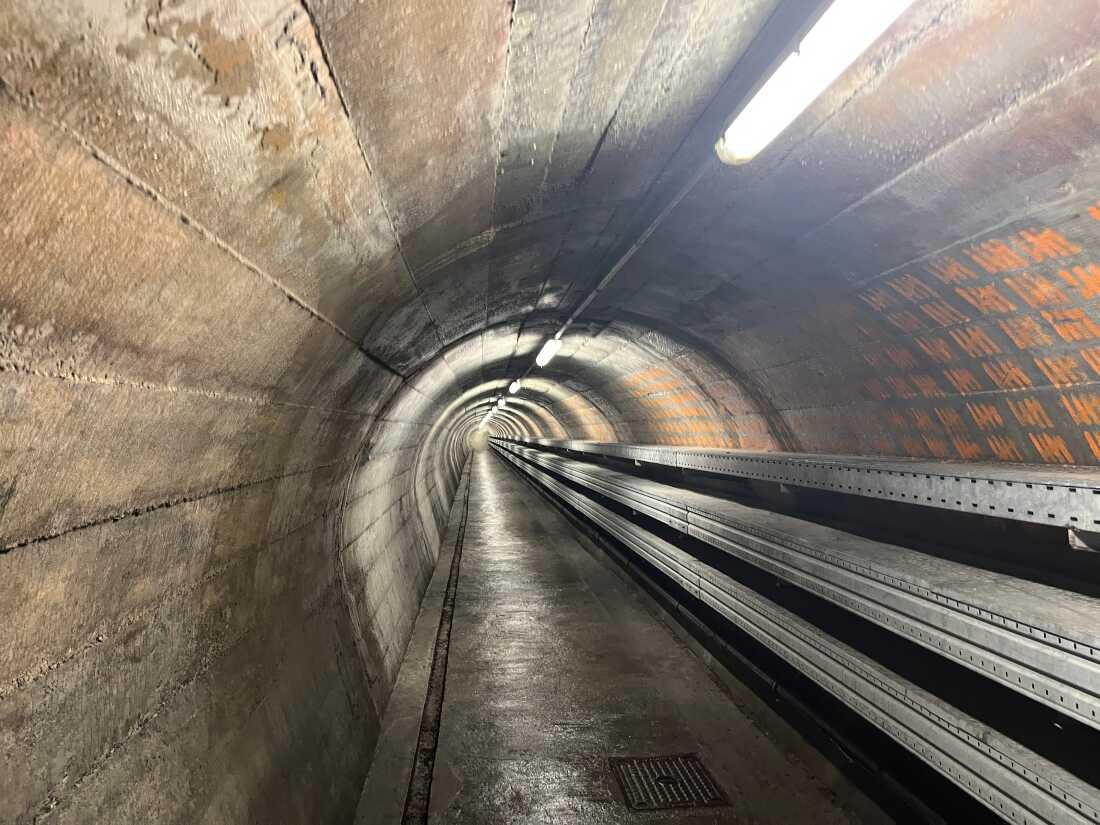
The Sonnenberg nuclear bunker in Lucerne, Switzerland, is a remarkable structure situated inconspicuously in a children’s playground. Built during the Cold War, this bunker can host 20,000 people, shielding them from nuclear threats. Zora Schelbert, a guide, reveals that a historic vision saw a third of Lucerne’s population protected here. The entrance showcases a reinforced blast-proof door leading to a narrow tunnel descending into the depths.
Switzerland, known for neutrality, anticipated nuclear risks despite probabilities of direct attacks being low. To counter potential fallout effects from neighboring countries, the bunker was equipped with diesel generators, ensuring operation for two weeks. Determining the length of stay inside depends on the external crisis’s nature. Schelbert notes current global conflicts affirm temporary sheltering becomes necessary.
Switzerland chose to enhance bomb shelter networks post-Cold War, ensuring each citizen access to safety spots. Over 370,000 shelters exist nationwide. Daniel Jordi, of the federal civil protection office, reflects on 2011’s parliamentary debates about the shelters’ fate. Japan’s Fukushima disaster convinced lawmakers to preserve this system, safeguarding citizens against unforeseen nuclear threats.
Every residential building must either incorporate a bunker or contribute funds to communal shelters. Swiss citizens pay initial fees for construction and upkeep, pegged between $1,700 and $3,500. When peace prevails, these bunkers serve diverse purposes, becoming wine cellars, saunas, or storage spaces.
Silvia Berger Ziauddin, an expert in Swiss bunker history, offers a tour beneath the University of Bern. Bomb bunkers reflect Switzerland’s long-standing role as a tranquil haven amid global turmoil. This tradition dates back to WWI, extending through WWII’s island metaphor and today’s nuclear shelter narrative.
Educational initiatives immerse Swiss students in civil defense. Students dedicate a week exploring the bunkers, drawing structures, viewing defense films, and spending nights inside. Berger Ziauddin observes that children’s illustrations manifest safety and family bonds amid upper-tier chaos, persistently shaping their imagination.
However, the authentic bunker experience differs markedly from these visual representations. Inside the Sonnenberg bunker hospital, vintage decor complements facilities for surgical procedures. Yet, limited amenities led to reduced capacity from 20,000 to 2,000 in 2002. The bunker, with bunk beds and integral facilities, now aids asylum seekers and the homeless, though contention exists about its suitability.
While never serving its intended purpose of nuclear protection, annual investments ensure the preservation of Switzerland’s comprehensive bunker system. Despite criticism from support groups and protests from some residents, this legacy persists, ready for emergencies.
Report contributions came from Esme Nicholson in Berlin.
Leave a Reply