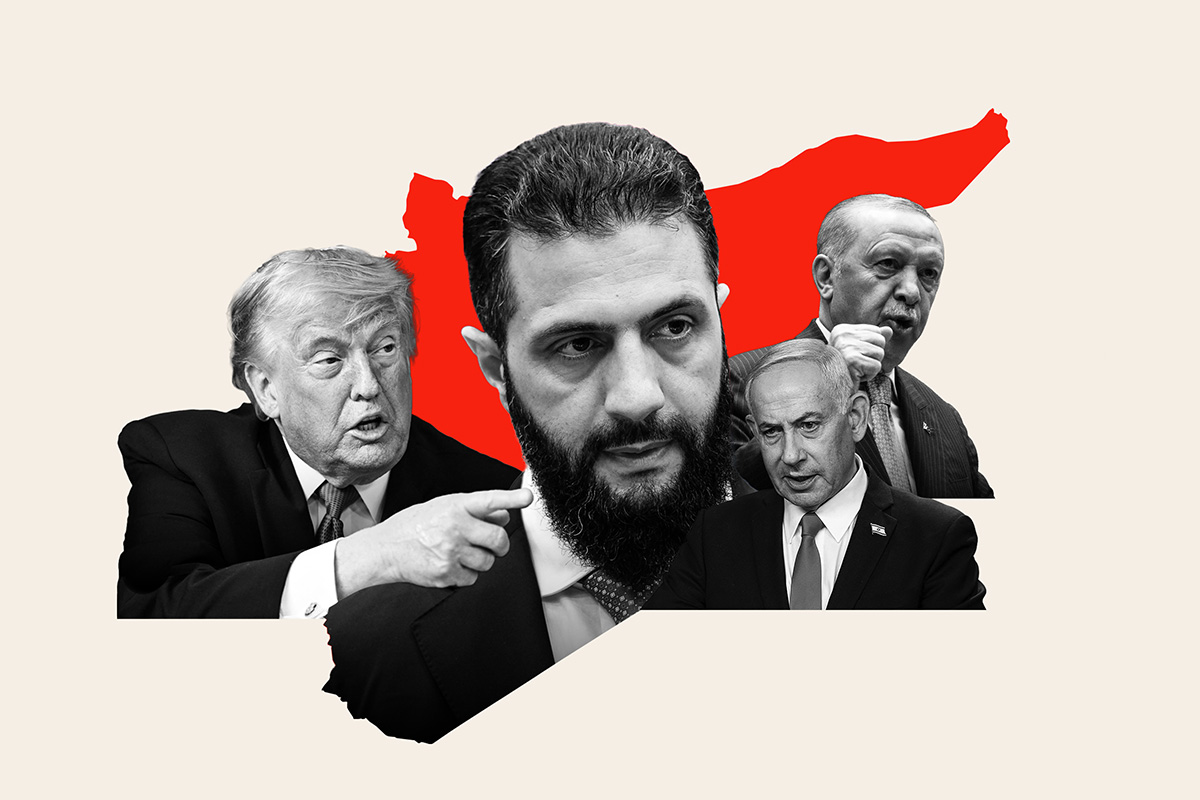
The United States and Iran have settled into a tenuous truce, with Syria’s new leadership facing challenges amidst regional rivalries and pressures from US policies. President Ahmad al-Sharaa, who took power in Syria in December 2024, is navigating a path between economic recovery within Syria and external pressures.
Having risen to leadership following civil unrest and the ousting of Iran-aligned Bashar al-Assad, Sharaa has worked toward stabilizing Syria domestically. However, external dynamics are placing this stability under threat.
Regional Tensions and Allies
On one side, Sharaa is confronted by Israeli Prime Minister Benjamin Netanyahu’s hostility. Netanyahu has consistently aimed to destabilize Sharaa’s position from the outset. Meanwhile, Turkey, under President Recep Tayyip Erdogan, supports Sharaa, having contributed to his ascent through military and political backing.
Compounding these regional challenges, US President Donald Trump has indicated interest in leveraging Syria as a strategic partner against Hezbollah, Iran’s ally in Lebanon.
Syrian diplomat Bassam Barabandi has shared that while many Syrians distrust Hezbollah due to its support for Assad, the country is wary of becoming directly involved in such confrontations.
Barabandi emphasized a desire for regional stability without exacerbating conflict.
U.S. Involvement and Policy Shifts
Trump’s commentary on Syrian involvement in Lebanon has sparked interest. Beyond mere military suggestions, Trump praises Sharaa for leadership achievements in his country’s reconstruction.
Despite past associations with militant groups, Sharaa’s current engagements with Trump highlight a significant shift in US-Syria interactions.
The recent memorandum involving the US and Iran includes a broader cessation of hostilities, adding layers to Syria’s precarious position.
Sharaa has cautiously responded to Trump’s suggestions with calls for peaceful resolutions and institutional support in Lebanon.
Historical Context and Consequences
Syria’s historical involvement in Lebanon is fraught with challenges. Jeffrey, a former US special representative to Syria, underscores that Syria must remain neutral in current Lebanese strife to prevent further escalation.
Former interventions and civil unrest influence present-day dynamics, where sectarian tensions could be intensified by external military engagements.
Role of Israel and Turkey
Israel’s military actions against Syria persist, with Netanyahu doubting Sharaa’s intentions. While Trump offers rhetorical defense to Sharaa, regional conflicts continue.
Turkey’s Erdogan sees Israeli operations as potential threats, equating Israeli actions as more concerning than Iran’s influence.
Sharaa balances diplomacy with regional powers, maintaining stability despite complex pressures. Yet, the enduring balancing act is fragile.
Outlook and Strategic Considerations
Analysts like Nicholas Heras indicate Sharaa’s need to carefully navigate regional dynamics, ensuring US support while managing internal concerns.
Israel’s electoral politics further impact strategic considerations, with Netanyahu’s focus on votes potentially driving conflict escalation.
Frederic Hof notes the delicate diplomatic dance Sharaa must maintain with global powers to ensure regional stability.
The strategic interplay between Trump, Netanyahu, and Erdogan shapes Syria’s future prospects, with Sharaa’s leadership hinging on maintaining positive relations and preventing provocations.
Sharaa’s adaptive strategies aim at avoiding confrontation, while safeguarding Syria’s progress towards lasting peace and reconstruction amidst regional complexities.
Leave a Reply