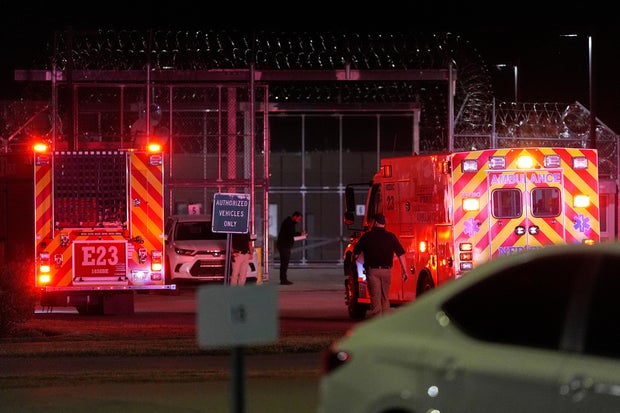
Christa Pike, the sole woman on Tennessee’s death row, was the focal point of a failed execution attempt in a Nashville chamber. Despite receiving two doses of a lethal drug, she survived the procedure. This incident highlights ongoing issues with lethal injections in Tennessee and elsewhere in the U.S.
Steve Ferrell, Pike’s attorney, expressed concern over the state’s execution protocol. “All of this was predicted, and the court did nothing,” Ferrell stated during a news conference. Pike, 50, was sentenced for the brutal 1995 murder of her classmate Colleen Slemmer and is noted as the youngest woman on death row in contemporary times.
Following the attempted execution, the extent of Pike’s injuries was uncertain. Her legal team reported she was alive and receiving emergency medical care. A physician mentioned the possibility of traumatic brain injury to CBS partner BBC News.
Pike maintained consciousness and could be heard snoring despite receiving the drug pentobarbital.
Her survival adds to the arguments against capital punishment. United Nations human rights chief Volker Turk cited the failed execution as evidence of the system’s cruelty and unresolved fair trial issues.
Tennessee Governor Bill Lee called for a comprehensive review of the incident and halted an upcoming execution.
Troubled Execution History
Pike’s experience is not unique in Tennessee. Earlier this year, the planned execution of Tony Carruthers was halted due to similar IV issues. Despite multiple attempts, an IV line could not be established. Carruthers’ legal team claimed his experience constituted cruelty, raising constitutional concerns, though the court denied their motion to halt the execution.
The situation for Carruthers mirrors other failed executions across Alabama, Arizona, Florida, Oklahoma, and Texas.
Past and Present Protocol Issues
Tennessee resumed executions in 2025 after reviewing its lethal injection process. Previously, the review found drugs hadn’t been tested for impurities, prompting changes to the injection protocol. Now, the sole drug used is pentobarbital.
The Tennessee Department of Correction stated they followed established procedures during Pike’s execution. They emphasized the effectiveness of the chemical in past executions.
Secrecy and Legal Challenges
Execution protocols are often kept secret, complicating legal challenges. This secrecy, along with difficulty securing lethal drugs due to pharmaceutical companies’ withdrawal, has fueled execution mishaps.
Pike’s attorneys had forewarned about protocol issues, which appeared justified following the failed execution attempt.
Pike expressed apprehension about the execution process in a letter to her spiritual adviser. “I’m nervous about the process,” she wrote upon learning her clemency petition had been denied.
The legal team criticized the execution attempt, citing improper vein access, drug degradation, and lack of emergency care as contributing factors to the failure. These issues were highlighted as inherent problems within a system shrouded in secrecy.
Leave a Reply