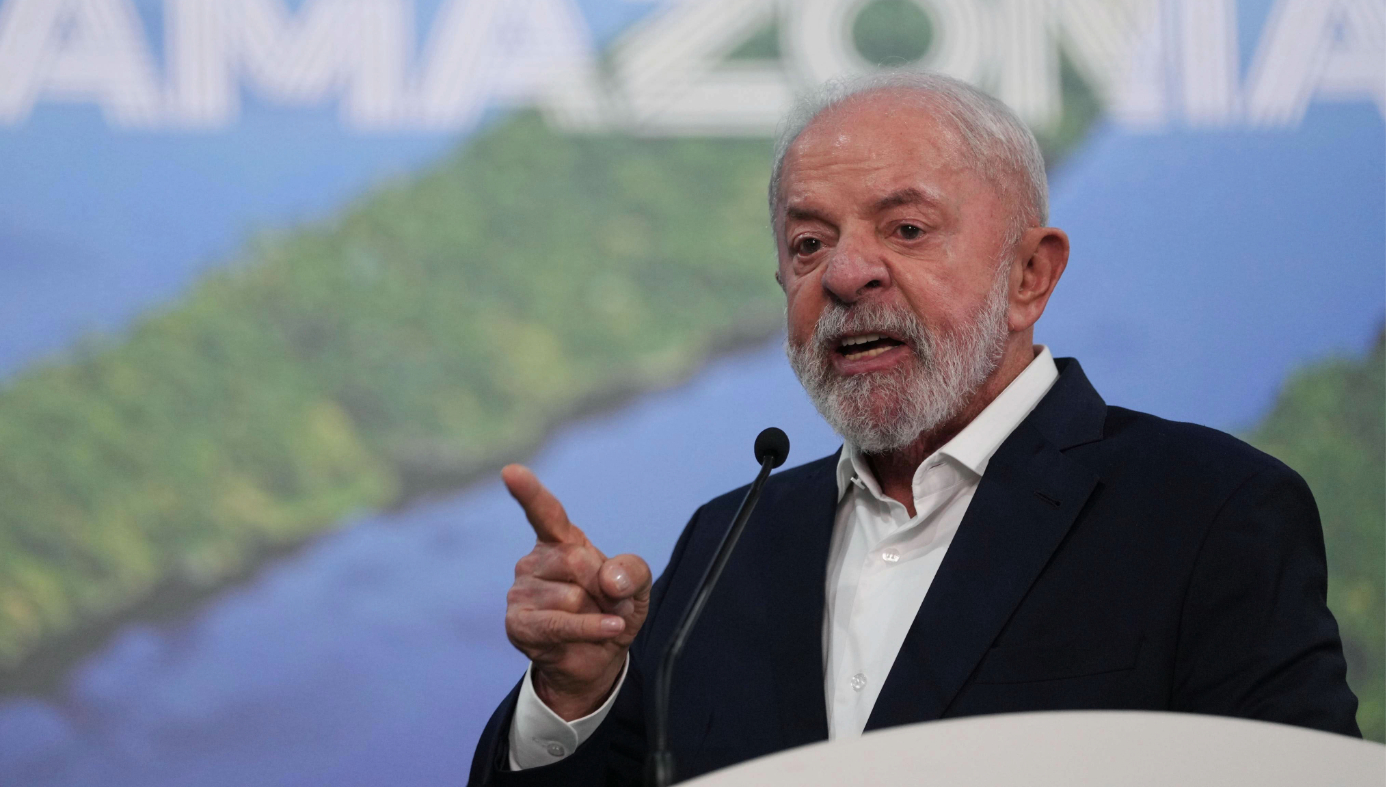
Brazil stands at a pivotal crossroads as its largest nation in Latin America approaches an election that could tip the scale in regional politics. President Luiz Inacio Lula da Silva seeks a fourth term, facing scrutiny and potential shifts in international alliances.
The emergence of President Trump’s revitalized Monroe Doctrine has played a significant role in shaping recent elections in countries such as Colombia, Peru, Honduras, Costa Rica, and Chile. However, Brazil’s decision will serve as the ultimate test of this doctrine’s impact.
Cuba, Nicaragua, and Venezuela’s leftist regimes provide a backdrop to Lula’s campaign, illustrating the potential consequences of similar policies in Brazil. Despite tensions between the U.S. and Brazil, Trump made attempts to improve relations by extending a gesture of goodwill towards Lula, though the chemistry from their brief September 2025 meeting was short-lived.
Further complicating relations, in May, Secretary of State Marco Rubio designated Brazilian criminal organizations Primeiro Comando da Capital and Comando Vermelho as foreign terrorist groups. This decision, as interpreted by Lula, signals a threat of U.S. military intervention similar to actions taken against Venezuela’s Nicolas Maduro.
In July, the strain intensified when Rubio announced new tariffs on Brazilian imports, stressing Lula’s unfavorable economic policies for both Americans and Brazilians. Lula’s response was to galvanize support with a patriotic stance, although this approach is losing traction as electoral challenges mount.
President Javier Milei allied with Lula’s opponent, Senator Flavio Bolsonaro, escalating diplomatic tensions. Lula expelled the Argentine ambassador amid critical bilateral trade worth $31 billion. Concurrently, Lula’s ties to China, his primary trading partner, continue to grow, showcasing Brazil’s strategic global alliances.
Domestically, Lula enjoys popularity due to his social programs in sectors such as health, education, and housing. Yet, his security policies remain a critical weakness, influencing voter sentiment across Latin America.
Lula’s alignment with China, Russia, and Iran emphasizes the geopolitical stakes of the upcoming election. His support for regimes in Cuba, Nicaragua, and Venezuela faces scrutiny amid human rights concerns.
The new Monroe Doctrine’s challenge is to either reinforce its traditional alliances within the Americas or witness a victory by Lula, thereby increasing the influence of global powers like China and Russia in the hemisphere.
Arturo McFields, the author of this analysis, is a journalist exiled from Nicaragua. He brings his experience as a former ambassador to the Organization of American States and a graduate of the National Defense University’s Security and Defense Seminar.
Leave a Reply