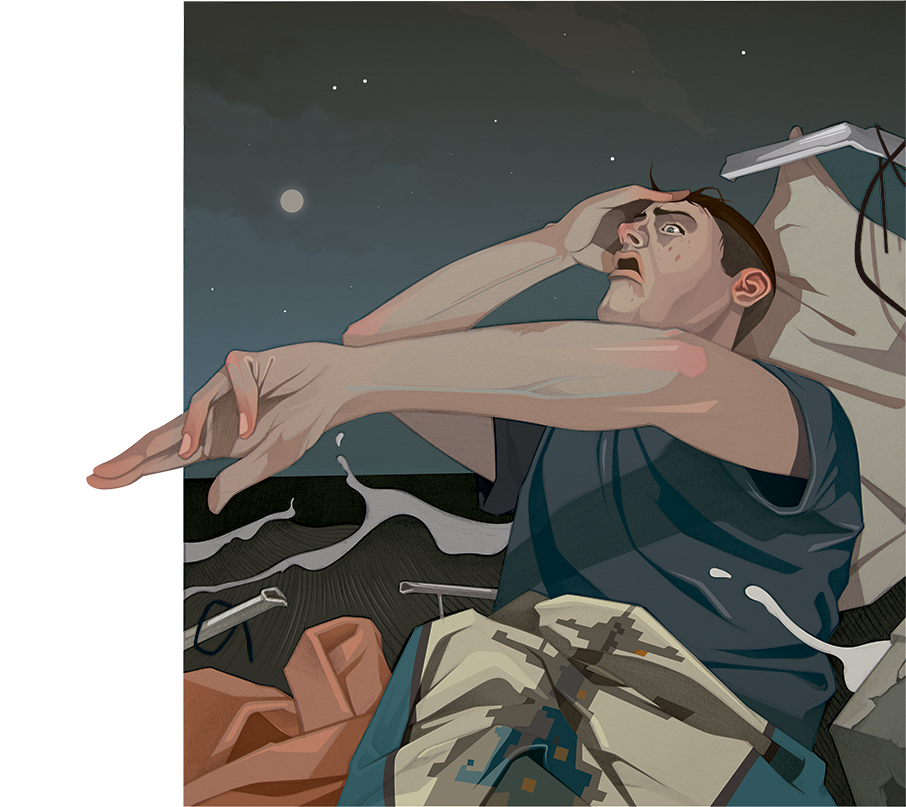
Early on June 17, 2017, Alexander Vaughan, a petty officer on the Navy destroyer USS Fitzgerald, awoke to chaos. A cascade of seawater poured into his sleeping quarters after a collision, leaving him and others at risk of drowning. Vaughan acted quickly, helping his fellow sailors escape Berthing 2, a compartment home to 35 men, through a narrow escape hatch.
The Fitzgerald had been hit by the cargo ship MV ACX Crystal off the coast of Japan, causing a damaged steel hull and flooding that threatened to sink the vessel. The force of the collision cut a large gash in the destroyer, flooding thousands of gallons of water into the ship and causing pandemonium among the crew. At the same time, the Fitzgerald’s captain, Cmdr. Bryce Benson, was trapped in his cabin, hanging above the Pacific, bleeding and dazed.
How the Collision Happened
The Fitzgerald had been on a mission to the South China Sea. Its crew was exhausted and understrained, contributing to the ship’s vulnerability and eventual collision. At the time of impact, the crew in charge had little experience navigating the busy shipping lanes where they faced traffic from multiple vessels.
Investigations indicated significant failures in leadership, training, and equipment readiness within the 7th Fleet, to which the Fitzgerald belonged. This fleet is crucial as a frontline defense against nuclear threats and maritime aggression. Despite this strategic importance, the Fitzgerald had failed numerous readiness tests, its systems were outdated, and many crew members lacked essential experience.
The Immediate Aftermath
The situation aboard the USS Fitzgerald was dire following the crash. Berthed sailors faced deadly flooding, but thanks to preparations and the swift actions of several crew members, including Vaughan and his bunkmate Tapia, most escaped the flooded compartment. Still, seven sailors drowned. The ship had lost power and communications, and with only limited steering capability, rescuing and maintaining the ship’s stability were immediate priorities.
Response and Rescue Efforts
Rescue efforts involved Japanese coast guard vessels, and Breau, the ship’s damage control assistant, led the battle against flooding using portable pumps and a bucket brigade due to main system failures. Control was eventually restored enough to limp the ship back to Yokosuka, Japan.
Back at port, Navy divers retrieved the bodies of the missing sailors. Among the deceased, some were young sailors engaged to be married or expecting the birth of their first child. The sailors were given a dignified send-off as their bodies were returned to the U.S.
Navy Accountability and Investigations
The aftermath spurred investigations and accountability drives within the Navy. Senior commanders and leaders faced criticism for failing to address ship readiness and training deficiencies. Part of the blame fell on the culture of risk management and the pressures of maintaining strategic operations despite readiness setbacks.
Legal and Leadership Repercussions
In response, the Navy conducted a series of investigations resulting in disciplinary actions against several officers and sailors. Some faced legal charges, including negligent homicide for certain officers, although these charges were later scaled back. The repercussions included the dismissal and censure of senior officials within the Navy hierarchy.
Benson and other involved sailors have struggled with the aftermath, dealing with trauma and ongoing legal battles. Benson, diagnosed with post-traumatic stress disorder, has taken personal responsibility for the tragedy considering his command role, emphasizing the bottom line of responsibility he carried as captain.
Reflection and Lessons Learnt
The events surrounding the USS Fitzgerald collision remain a sobering tale of the paramount importance of preparedness, leadership, and accountability within the Navy’s operating environments. While the immediate crisis was managed with bravery and resilience by the crew, broader systemic failures underscored the need for continuous review and improvement to prevent such tragedies from recurring.
Leave a Reply