American innovations have played a significant role in transforming the nation into a global superpower. The country’s inventions touch various aspects of modern life, from the lightbulb to the airplane, medical breakthroughs, and the internet age. A key factor in enabling these inventions is the United States patent process.
U.S. Patent System
The U.S. Constitution established an intellectual property clause in 1788, and the first patent statute was signed by George Washington in 1790. This created a system that encouraged both individual and national growth. Eric S. Hintz, a historian at the Lemelson Center, highlights the democratic nature of early patent laws, which allowed patents to be granted to women and free Black people long before they had the right to vote.
By 2026, more than 12,650,000 patents had been issued by the U.S. Patent and Trademark Office. These patents provide inventors with government protection for a limited time, after which their inventions enter the public domain, promoting further innovation.
Agricultural Advancements
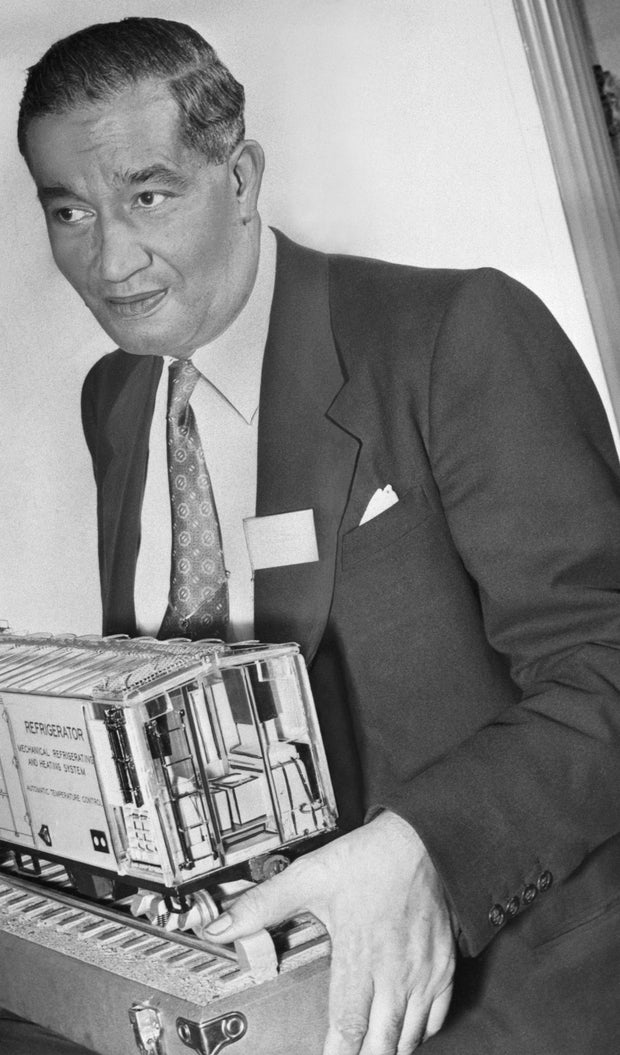
America’s patent process spurred innovation in agriculture. Eli Whitney’s cotton gin doubled raw cotton production each decade in the 19th century. The invention of practical power looms by Francis Cabot Lowell made Lowell, Massachusetts, a textile hub. Cyrus Hall McCormick revolutionized farming with a mechanical reaper, and Frederick McKinley Jones further enhanced agriculture with his refrigeration system for trucks.
Transportation Evolution
Early American transportation was limited to walking, horse-drawn carriages, and sailing. Inventors like John Fitch and James Rumsey revolutionized transportation by developing steamboats that moved upstream using steam power. The railroad industry later expanded rapidly, covering nearly 30,000 miles by the 1850s. The Wright brothers’ successful flight in 1903 laid the foundation for modern air travel, with their sister Katherine Wright playing a crucial role in their journey.
Electricity and Innovation
Electricity transformed life by breaking the reliance on daylight. Charles F. Brush installed the first electric street-light system, providing safety and enabling around-the-clock factory operations. Thomas Edison’s work on the lightbulb and electrical power systems marked a pivotal point in U.S. innovation.
Instantaneous communication developed further with the improvement of Alexander Graham Bell’s telephone by Edison, leading to innovations such as the phonograph and long-distance calls.
Manufacturing Impact
Manufacturing transitioned from artisanal crafts to scaled-up operations, driven by labor theory and the assembly line. Innovations in manufacturing led to mass production techniques used in creating items like the Colt Revolver and Henry Ford’s Model T.
Energy and Fuel
America’s reliance on oil began with Edwin Drake’s oil well in 1859, leading to the petroleum age. Despite the rise of alternative energy sources, oil remains a crucial part of global affairs.
Medical Progress
Medical innovations have significantly improved American lives. The germ theory of disease led to vaccinations, and collaboration during World War II resulted in mass production of penicillin. Medical advances continued with developments in vaccines, surgery, pharmaceuticals, and imaging technology.
Computing Revolution
Herman Hollerith’s punch card system enhanced census data processing. Computing became integral during World War II and evolved with technologies like the Electronic Numerical Integrator and Computer. IBM played a significant role in advancing computer systems.
Compact computing emerged with Jack S. Kilby’s integrated circuit, leading to the personal computing revolution of the 1980s. The invention of the smartphone further transformed computing, making technology portable.
Visual Media and Photography
Photography and motion pictures provided means to capture and present reality, becoming essential tools for storytelling and evidence. Innovations like the television exploded in popularity, connecting people globally.
American innovations have undeniably shaped modern life, driven by a robust patent system and visionary inventors.
Leave a Reply