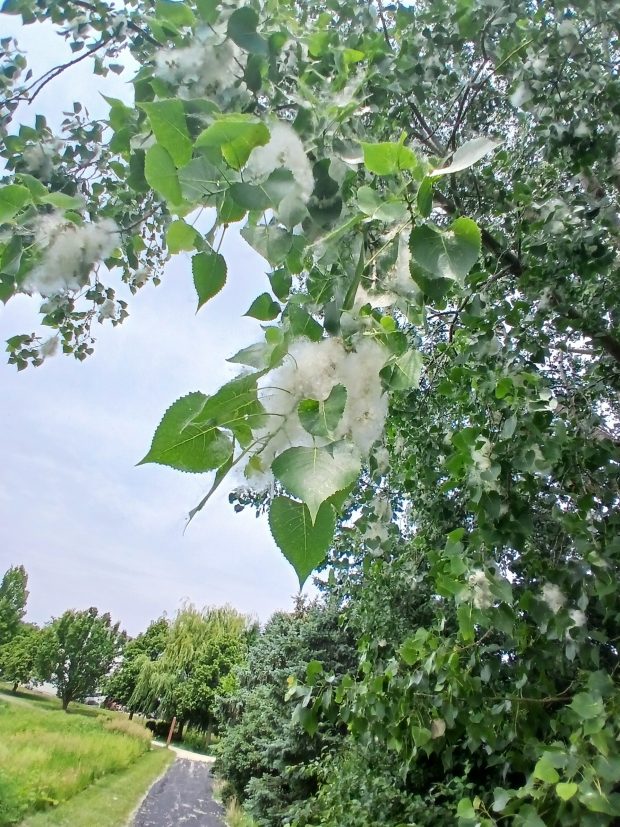
As a child, the sight of tiny cotton fluffs dancing in the June breeze evoked thoughts of snow. These fluffs, however, were seeds from the eastern cottonwood tree, known for its ability to disperse seeds far and wide. Witnessing this yearly phenomenon sparks a whimsical sense reminiscent of youth. On a recent venture, I attempted to catch some of these seed snows, transforming my journey into a nostalgic quest.
Eastern cottonwoods, identifiable by their 3- to 7-inch triangular leaves with tiny, rounded teeth, are among nature’s fast growers. These trees belong to the poplar family and can reach an impressive height of 100 feet or more, living over a century. An illustrious example stands in Ogle County, Illinois, at 122 feet and is believed to be around 200 years old. Another cottonwood variant, the swamp cottonwood, found only in Southern Illinois, distinguishes itself with larger leaves and smaller stature.
Cottonwoods thrive near water bodies, often along rivers and lakes, with young trees sporting greenish-gray bark and older ones exhibiting furrowed, grey bark. Their limbs, like those of the quaking aspen, respond dramatically to a breeze due to long leaf stalks. The trees commence seed production around ten years, with peak seed dispersal at thirty years. Only female cottonwoods produce the cotton, starting in spring with flowers on dangling stems known as catkins. Male catkins release pollen, carried by the wind to fertilize female flowers. Seeds emerge then, borne upon white hairs called pappi, aiding their flight through air and water.
Cottonwood seeds evoke strong associations for some, like Bill Richmond from Palatine, who sees them as heralds of summer’s onset in northeastern Illinois. Despite their charm, not everyone appreciates the mess or the sneezes attributed to these trees. Scientific observations clarify that allergy sufferers likely react to pollen from other species, like the oak. Cottonwoods also present practical challenges; their shallow roots can clash with septic systems and infrastructure. Brittle wood leads to easy limb breakage, posing risks during storms. Some municipalities prohibit planting them on public land, recognizing their lesser quality compared to other native trees.
In managed forest areas, groups such as Lake County Forest Preserves and the Forest Preserves of Cook County manage cottonwoods to foster biodiversity. Historically, Native Americans utilized cottonwood bark and roots for sustenance and ritual, while modern uses include crafting of pulpwood, utensils, and sticks for frozen treats.
Beyond practical utility, cottonwoods are vital habitats; Baltimore orioles, blue herons, and even bald eagles nest within them. This year, a notable event occurred when eaglets hatched in Chicago within a cottonwood. Other wildlife, like rose-breasted grosbeaks and beavers, rely on the tree for nutrition and stability. The roots serve an ecological role, mitigating streambank erosion, proving cottonwoods’ valuable position within natural adjoining environments such as Ryerson and Wright Woods.
Eastern cottonwoods, though at times misunderstood, stand as essential players in our ecosystem. Their flavor of magic is as potent as any mighty oak’s, entwined intricately within the natural fabric.
Leave a Reply