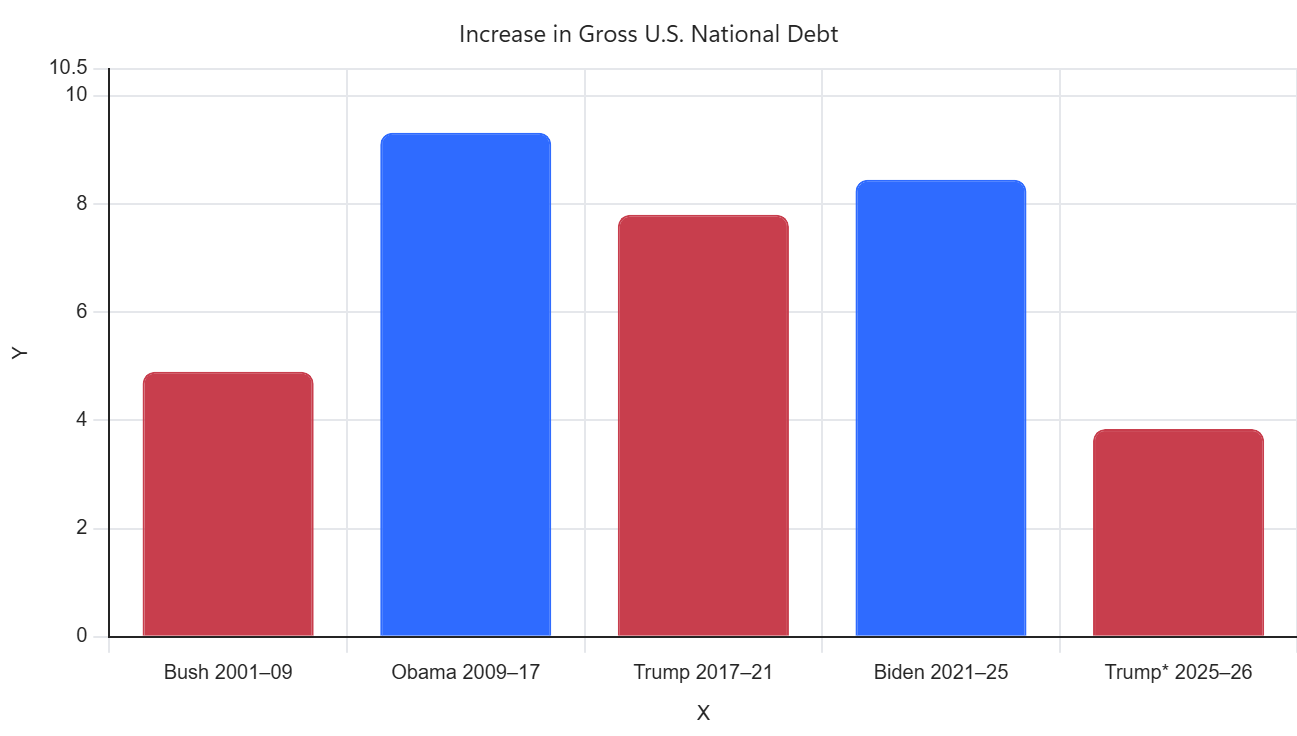
The United States recently reached a significant milestone with its gross national debt surpassing $40 trillion for the first time. The debt now stands at approximately $40.05 trillion, as reported by data from the Treasury Department. This figure is more than double the $19.95 trillion recorded when Donald Trump began his presidency in January 2017. Federal borrowing has rapidly increased under both Republican and Democratic leadership due to wars, recessions, tax cuts, and emergency spending.
Significance of the $40 Trillion Mark
The milestone of $40 trillion in national debt represents the total public debt outstanding, commonly known as gross federal debt. This includes roughly $32.27 trillion in debt held by investors and about $7.78 trillion in intragovernmental holdings, such as Treasury securities held by federal trust funds. Paying interest on these obligations remains crucial as the government continues to fund programs like Social Security, Medicare, Medicaid, and defense.
According to Treasury figures, interest payments have almost reached $1.2 trillion for the fiscal year 2026, making interest one of the largest federal spending categories. The Congressional Budget Office projects that debt held by the public will climb from around 101 percent of gross domestic product in 2026 to 120 percent by 2036.
Debt Growth by Administration
The debt grew by about $11.6 trillion during Trump’s two terms combined, with roughly $7.8 trillion added during his first term and about $3.84 trillion since he returned to office in January 2025. Under Joe Biden, the debt increased by approximately $8.4 trillion in four years. Barack Obama’s presidency saw a rise of about $9.3 trillion over eight years, while George W. Bush’s period in office experienced a debt increase of around $4.9 trillion.
Experts emphasize that these figures reflect the debt levels during each presidency but do not imply that each president directly caused the increase. Factors like recessions, wars, and emergencies substantially influence federal borrowing.
“It is not about one administration, but a combination of multiple administrations. Crisis spending, whether it was the massive bailouts during the GFC or COVID-era spending, increased deficits significantly,” Kevin Thompson, CEO of 9i Capital Group, told Newsweek.
Biden’s Presidency
Biden witnessed the largest four-year dollar increase, about $8.45 trillion. However, the percentage increase, roughly 30.5 percent, was smaller than those under Bush, Obama, and Trump’s first term. Interest payments have now surpassed defense spending, increasing the burden on the income used to service the debt.
Obama’s Presidency
Obama’s presidency marked the largest dollar and percentage increase in debt across a full term, with approximately $9.32 trillion, or 87.7 percent, over eight years. His first term alone saw an increase of $5.81 trillion, largely due to the financial crisis he inherited.
Bush’s Presidency
During Bush’s tenure, the debt grew approximately 85.5 percent, from $5.73 trillion to $10.63 trillion, driven by wars and the onset of the 2007-2009 financial crisis.
Trump’s First Term
The debt rose from about $19.95 trillion to $27.75 trillion during Trump’s first term, a 39.1 percent increase. The Tax Cuts and Jobs Act of 2017, reducing the corporate tax rate, was a significant factor, along with pandemic-era borrowing.
Biden’s Efforts and Future Projections
During Biden’s first term, the debt rose from approximately $27.75 trillion to $36.21 trillion, the largest four-year dollar increase. His administration continued pandemic recovery spending and enacted infrastructure and clean-energy subsidies, further raising the debt. Financial analysts warn that without spending or tax reforms, the debt could reach $50 trillion in six years. The CBO estimates public-held debt could equal 120 percent of GDP by 2036.
“Congress bears the most responsibility because Congress passes the legislation that determines federal spending and taxation,” stressed Thompson.
In the coming years, addressing the national debt will require balancing spending and revenue to prevent the debt from expanding unmanageably.
Leave a Reply