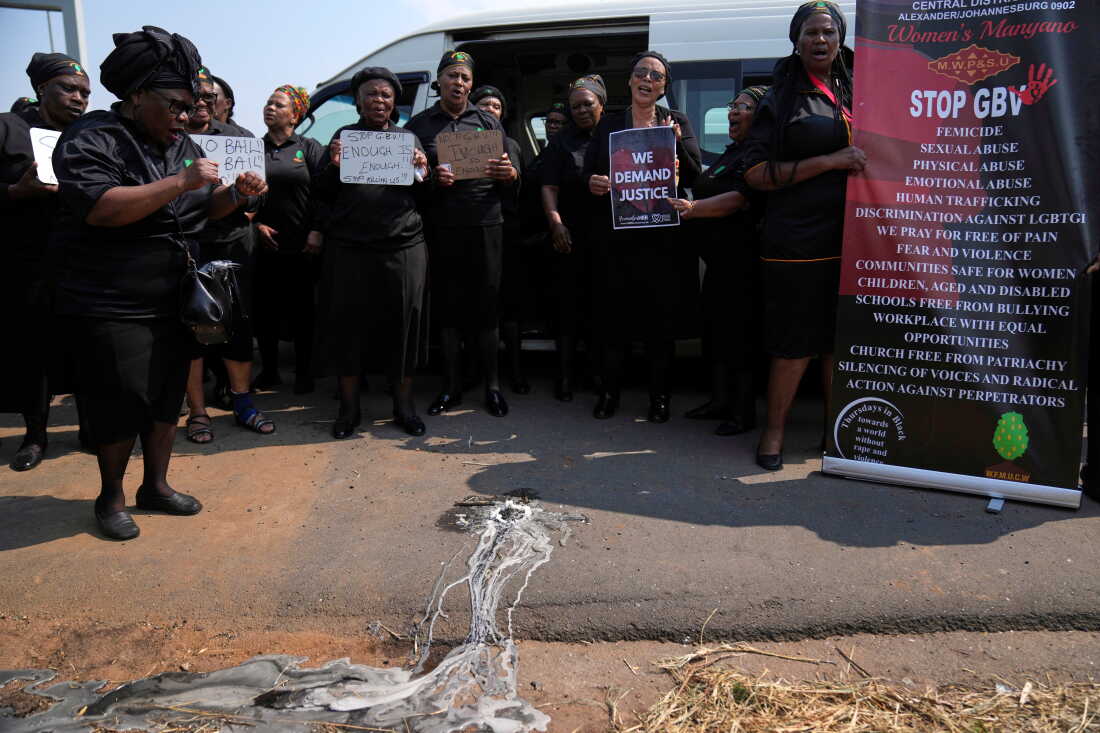
Members of a women’s church group gathered to sing near a melted candle at the site where a woman’s body was found the previous week in Kempton Park, South Africa, east of Johannesburg. They paid their respects on Thursday, September 17, 2026. Their actions highlighted a deep-seated issue.
Elizabeth Moselakgomo, a 38-year-old manager, mother, and avid runner, disappeared after her routine jog near the Johannesburg airport. Her unrecognizable, half-naked body was discovered five days later. Moselakgomo is only one of nine women reportedly slain in the area recently, many of whom were sexually assaulted.
Even in South Africa, known for its high rates of gender-based violence, over 100 reported rape cases and approximately 15 women killed daily, the recent murders have shocked the public. Police are investigating a possible serial killer and cautioning women against walking or running alone. This warning has caused backlash from women on social media, demanding police take responsibility for public safety rather than burdening women with altering their movements.
President Cyril Ramaphosa has vowed exhaustive efforts in finding the perpetrators. However, many believe the government’s actions fall short, despite gender-based violence and femicide being declared a national disaster in 2025. Shenilla Mohamed, Amnesty International’s South Africa Director, voiced frustration over the lack of safety and security for women.
“Women are tired of platitudes. We want to know what is going to be done to make women and children feel safe.”
Protests have erupted in Kempton Park and Cape Town, with women fiercely stating their grievances. In Moselakgomo’s honor, running clubs nationwide organized tribute runs for her and other victims. Participants, dressed in black, shared a moment of silence before their run.
Shari Maluluke, a 26-year-old runner, expressed the distressing reality of gender-based violence. Maluluke remarked on the constant threat faced by women, describing her country as a prison limiting her freedom.
Interviewed women consistently reported feeling unsafe. Didi Tsitsi shared the precautionary measures women took daily, citing failures in government and society as contributors to femicide.
Tsitsi pointed to societal issues, including what men are taught about masculinity and unresolved apartheid legacies. Academic research supports this notion, suggesting deep-rooted issues from the era may contribute to the crisis in masculinity and entrenched patriarchal attitudes.
Leave a Reply