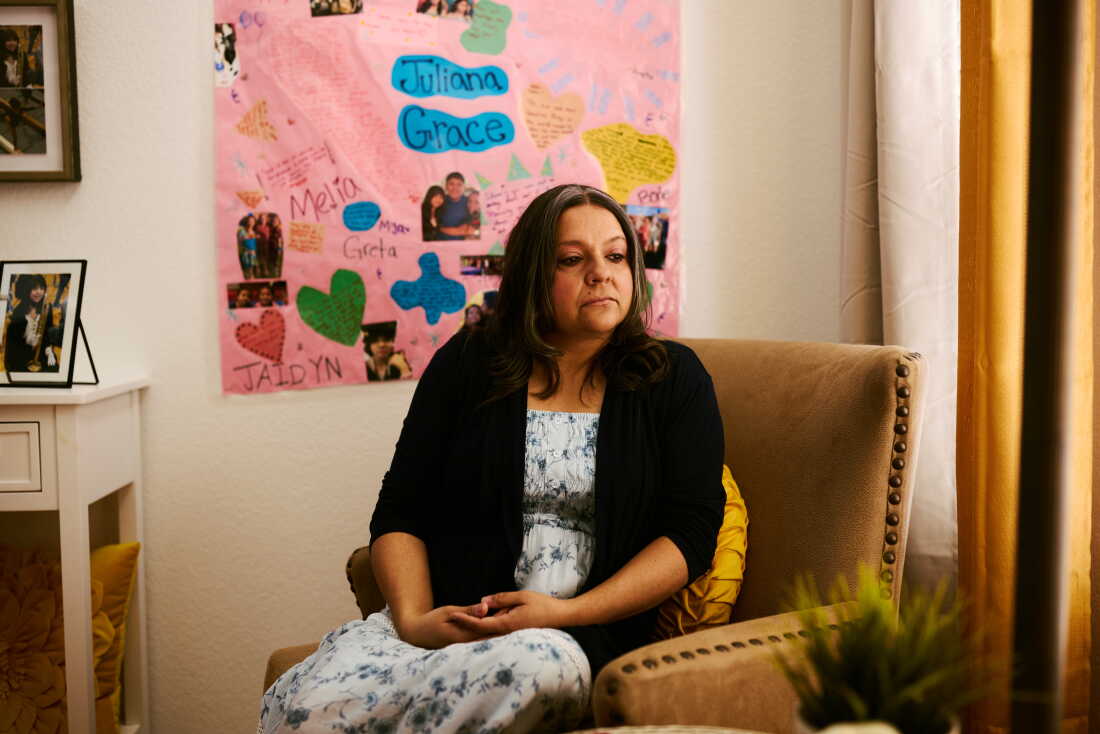
In Thornton, Colorado, Cynthia Montoya reflects on her daughter Juliana’s life within the confines of their home filled with her memories. Juliana began interacting with AI chatbots at 13, and by the next year, she tragically took her own life. A forensic analysis revealed alarming chat interactions on Juliana’s phone, where chatbots exposed her to unsolicited sexual content.
If you or someone you know is experiencing a crisis, call or text 9-8-8 to reach the Suicide & Crisis Lifeline.
Initially resistant to the inappropriate content, Juliana began engaging with terms introduced by the chatbots. Montoya described this as “extreme sexual abuse.” She discovered her daughter also shared her mental health struggles with another chatbot. The chatbots involved were made by Character.AI. The company faced lawsuits, settling some, including with the Montoya family, in January 2026.
Aware of the danger, Montoya aimed to prevent similar tragedies by advocating for legislation to make chatbots safer for minors. However, many state bills on chatbot regulation were heavily influenced by tech industry inputs, potentially exempting popular chatbots from strict regulations. By 2026, at least 75 lawsuits targeting AI developers for chatbot-related harm, many involving children, had been filed.
Cases like Adam Raine, a teenager who ended his life in 2025 after receiving assistance from OpenAI’s ChatGPT to write a suicide note, highlight the vulnerability of young users. Families of affected children, including those of Sewell Setzer III and Jonathan Gavalas, have taken legal actions against AI developers, like Character.AI and Google’s Gemini.
While federal laws on AI are absent, some states have introduced legislation modeled on California’s SB 243 of 2025. These bills are seen as industry-friendly, potentially creating loopholes for popular developers. Critics, including victims’ advocates, argue the legislation lacks stringent measures to keep children safe.
Colorado’s attempt to draft an AI chatbot protection bill involved minimal contribution from Montoya, despite initial promises of her input. Montoya expressed concern over multiple exemptions within the bill that could benefit prominent tech companies. This criticism is shared by various stakeholders aware of similar legislation across other states.
The chatbot bills circulating across numerous states share language and exemptions that could shield companies from liability. Some describe these bills as having the “AI industry’s fingerprints,” allowing corporations to circumvent responsibility for safeguarding minors.
In Hawaii, Rep. Trish La Chica reported Google-initiated legislation, suspected to benefit the company with favorable terms. Similar efforts were noted in multiple states, with Google lobbyists actively participating in legislative discussions.
By 2026, chatbot regulations were enacted in states like Idaho, Georgia, and Oregon. However, Arizona’s Governor Katie Hobbs vetoed a proposed bill, citing concerns over excessive protection for tech companies over children.
Despite Montoya’s passionate testimony highlighting failures in the Colorado bill, it was signed into law. Montoya expressed dismay, believing the new law provides a false sense of protection and complicates efforts for effective legislation. Her advocacy continues as she strives to strengthen legal safeguards against AI chatbot-related harms.
Leave a Reply