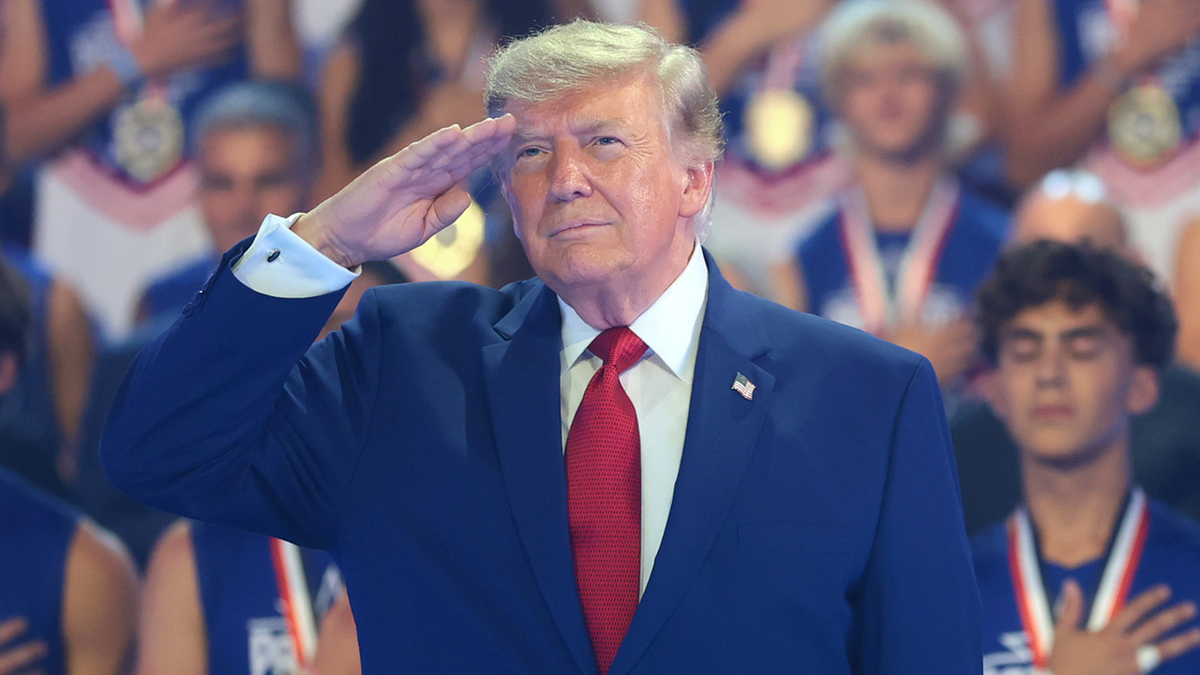
President Donald Trump addressed questions on Tuesday night about the possibility of running for a third presidential term in 2028. When asked by a reporter at Joint Base Andrews in Maryland, Trump remarked that “the law is very strong” against such a move. “Everybody asks me that question, and you know that the law is very strong on that,” Trump stated. “I’d love to run, but the law is very strong.”
This inquiry emerged during a conversation following an event at the Patriot Games. Trump noted that attendees were urging him to pursue a 2028 run, saying, “No, everybody wants me to do it, but the law is very strong.”
The restriction that prevents such a run is found in Section 1 of the 22nd Amendment to the U.S. Constitution. It states unequivocally that no individual can serve more than two terms as President. The amendment was ratified by the states in February 1951 after Franklin D. Roosevelt’s four-term presidency, which deviated from the traditional two-term precedent set by George Washington.
The amendment was established to reinforce the norm of limiting presidents to two terms, respected since George Washington’s time.
Trump’s comments reflect a pattern of both jest and consideration regarding a third term. During the White House Correspondents’ Dinner on July 24, Trump humorously referenced the possibility, saying, “Just like my presidency, the second time is always better. It’s always better. And the third time will be better yet. I’m only kidding.”
In an interview on March 30, 2025, Trump offered a more serious perspective to NBC’s Kristen Welker. He stated that he was not joking about a third term, suggesting a possible scenario where Vice President JD Vance might run for President with Trump as his running mate. If Vance won and resigned, Trump, as Vice President, could potentially seize the Presidency.
This tactic, however, faces significant legal challenges. Many constitutional scholars argue it would infringe upon the 22nd Amendment. Deborah Pearlstein, a law professor at Princeton University, informed The Washington Post that the 12th Amendment “closes the door” on such a strategy. It clarifies that individuals ineligible for the Presidency are also ineligible for the Vice Presidency.
While Trump explores interpretations of constitutional provisions, experts remain steadfast in the view that current laws firmly limit a third term. Any attempt to bypass these restrictions would likely meet with considerable legal obstacles.
Leave a Reply