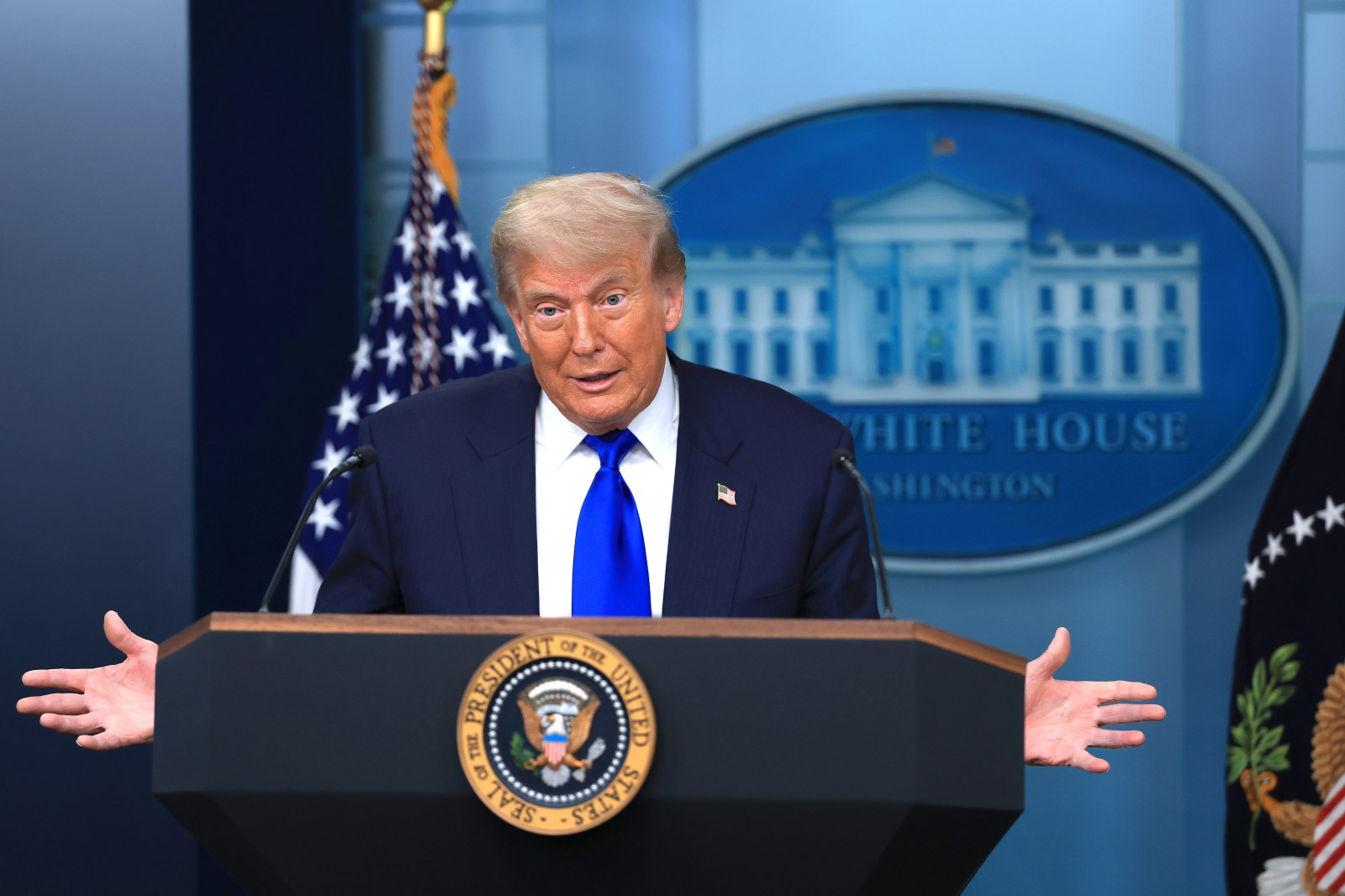
President Donald Trump recently criticized the U.S. Supreme Court, accusing the justices of making “faulty, political, and ridiculous decisions” on tariffs and birthright citizenship. He claimed these rulings have cost the United States “trillions of dollars.” This marks another public attack from Trump on the high court following major defeats related to his second-term policies.
In a post on Truth Social, Trump argued the court lacked the “courage to MAKE AMERICA GREAT AGAIN.” He stated the decisions had damaged the country’s economy and altered citizenship processes. “Over the last 6 months, with their faulty, political, and ridiculous decisions on TARIFFS and Birthright Citizenship, they have cost the United States of America Trillions of Dollars, and forever damaged the way people become Citizens of our great Country,” Trump wrote. Newsweek reached out to the White House for comment.
Why It Matters
The post targets significant legal setbacks of Trump’s presidency. In February, the court ruled the International Emergency Economic Powers Act did not authorize Trump to impose extensive global tariffs. This decision forced the administration to unwind the policy and issue refunds to importers. Alternative tariff authorities, like Section 301 of the Trade Act of 1974, were pursued to impose tariffs of 10 to 12.5 percent on imports from 60 U.S. partners. These tariffs now face legal challenges.
According to customs officials’ documents filed with the U.S. Court of International Trade, cited by the Financial Times, the Trump administration has paid approximately $100 billion in tariff refunds to importers. This accounts for roughly 60 percent of the $166 billion businesses have estimated to pay in tariffs.
The court also delivered a setback in June by upholding a broad interpretation of birthright citizenship and rejecting Trump’s efforts to limit automatic citizenship for children born in the U.S. to parents unlawfully or temporarily present in the country. This decision relied on longstanding Fourteenth Amendment interpretations regarding the Citizenship Clause.
Conservative Justice Clarence Thomas dissented, expressing doubt about the court’s interpretation enduring. Despite originating from a conservative-majority court with three Trump appointees—Neil Gorsuch, Brett Kavanaugh, and Amy Coney Barrett—the rulings stood. Trump claimed the decisions harmed the economy and immigration policy. “It has been a sad chapter in the life and times of America, but we will prevail!” the president wrote.
The Birthright Citizenship Fight Continues
The administration pursues other means to restrict birthright citizenship and address “birth tourism.” A recent federal court ruling blocked the enforcement of a new Trump administration order limiting birthright citizenship. The ruling confirmed that children born in the U.S. to unlawfully or temporarily present parents are protected by the Fourteenth Amendment. U.S. District Judge Deborah Boardman, appointed by President Joe Biden, affirmed: “The Supreme Court has spoken: Children in the certified class are ‘citizens at birth.’ … The President must follow it.”
The Supreme Court’s June ruling, authored by Chief Justice John Roberts, declared birthright citizenship applies to “every free-born person in this land.” Though defeated, the administration issued directives to prevent foreign nationals from giving birth in the U.S. to secure citizenship for their children. This strategy followed the Supreme Court’s disapproval of their policies.
Trump and allies have shown little sign of dropping the issue. Recently, new executive orders targeting birth tourism emerged and future litigation, legislation, and judicial nominations were discussed to maintain the debate. This includes efforts to influence future judicial candidates.
What Happens Next
Trump’s statements do not announce new legal actions or policy initiatives, but they reflect his frustration with rulings curtailing two high-profile initiatives. While the administration seeks legal alternatives for tariffs and immigration, these court decisions remain significant constraints.
The White House has not indicated whether Trump will seek additional legislative or legal remedies in response to either ruling.
Newsweek’s reporters and editors used Martyn, our AI assistant, for this story’s production.
Leave a Reply