President Donald Trump has defended the financial impact of the war on Iran, emphasizing that weapons production can be sustained indefinitely. He accused his predecessor of allocating more munitions to Ukraine during its conflict with Russia.
“We have virtually unlimited amounts of Mid to High Grade Ammunition, far more than we could ever use for this, or for any other War, that could improbably take place,” Trump wrote on Truth Social. “We are producing Munitions at levels never seen before. We are stockpiling and preparing for any contingency. We are taking them for ourselves, the U.S.A., rather than selling them to others, but the sales to Allies will soon again, begin.”
Trump continued, “Also, please let it be known, that the Biden Administration gave far more Munitions away to Ukraine, at no cost to them, whatsoever, than we have used in Iran. Hundreds of Billions of Dollars was given to Ukraine and NATO, free of charge, that Europe would have paid for — If they were only asked, but we will be asking for that money, though somewhat belatedly!”
“It is clear that the United States is increasingly overstretched between these two conflicts,” said Christopher Chivvis, a former U.S. intelligence official now at the Carnegie Endowment for International Peace.
Analysts argue that U.S. defense capacity is strained. This leaves a gap for adversaries like China and Russia.
Chivvis remarked, “Trump’s statement that U.S. capacity is ‘virtually unlimited’ sounds fictional for any relevant time horizon. His decision to go to war with Iran has worsened the situation.”
Newsweek did not receive a comment from the Department of War for publication. However, in a previous statement, Pentagon Spokesman Sean Parnell emphasized, “America’s military is the most powerful in the world and has everything it needs to execute at the time and place of the President’s choosing.”
More Weapons for Ukraine, Higher Costs for Iran
From February 2022 to the end of Joe Biden’s administration, the U.S. committed $66 billion in security assistance and around $130 billion in other forms of aid to Ukraine. This was detailed by the Department of Defense, renamed the Department of War under Trump.
How Many (and What Kind of) Weapons Did the US Send to Ukraine?
The U.S. sent over 4 million artillery shells, hundreds of thousands of mortar rounds, and thousands of missiles and precision weapons. Equipment sent includes 40 High Mobility Artillery Rocket Systems (HIMARS), 12 National Advanced Surface-to-Air Missile Systems (NASAMS), and other military hardware.
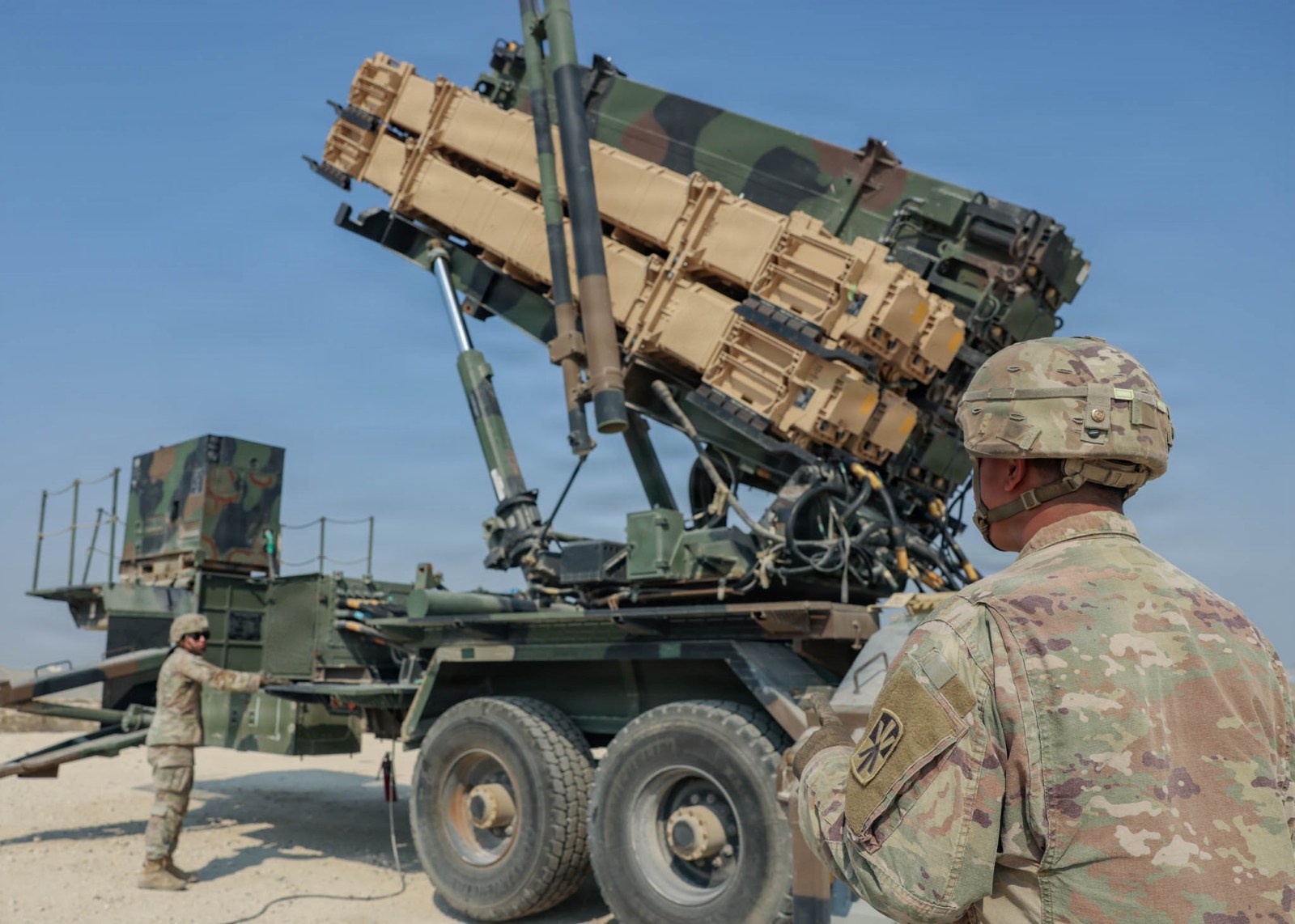
U.S. military involvement in Iran resulted in firing approximately 1,000 Tomahawk cruise missiles and 1,100 Joint Air-to-Surface Standoff Missiles (JASSM). Estimates show high usage of Patriots and other missile systems in the initial days of the Iran conflict.
The war in Iran has consumed costly precision weapons quickly. This rate of expenditure challenges the ability to meet defense needs elsewhere.
“The vast majority of U.S. weapons provided to Ukraine has no crossover with those expended in Iran,” said Mark Montgomery, a retired U.S. rear admiral.
Montgomery pointed out that rate of Patriot system use differs markedly between the conflicts.
The Iran conflict’s financial toll is significant. Defense Secretary Pete Hegseth reported that the war had cost the U.S. around $37.5 billion by late July, with requests for $70 billion more. Group estimates place total expenses above $100 billion when including various economic impacts.
Americans Have Died in Both Wars
The nature of the conflicts differs. In Iran, the U.S. has directly engaged. Since the conflict began, there have been 18 U.S. military deaths reported. In Ukraine, aid is given to a partner state, and volunteer casualties include 118 Americans, despite no official combat deaths reported.
Analysts like Jennifer Kavanagh warn of rising U.S. military casualties if conflicts persist. “The United States has enough munitions to continue fighting in Iran for some time,” Kavanagh said, “yet defensive needs and supply for Ukraine create constraints.”
Continuing weapons expenditure affects future military readiness. “Right now, the United States could not resource a major war with China or Russia,” Kavanagh concluded. “The longer conflicts in Iran and aid to Ukraine continue, the longer it will be before the U.S. military is ready for another major conflict.”
Contact Newsweek editors on this story: Jason Lemon and Gray R. Thomas.
Leave a Reply