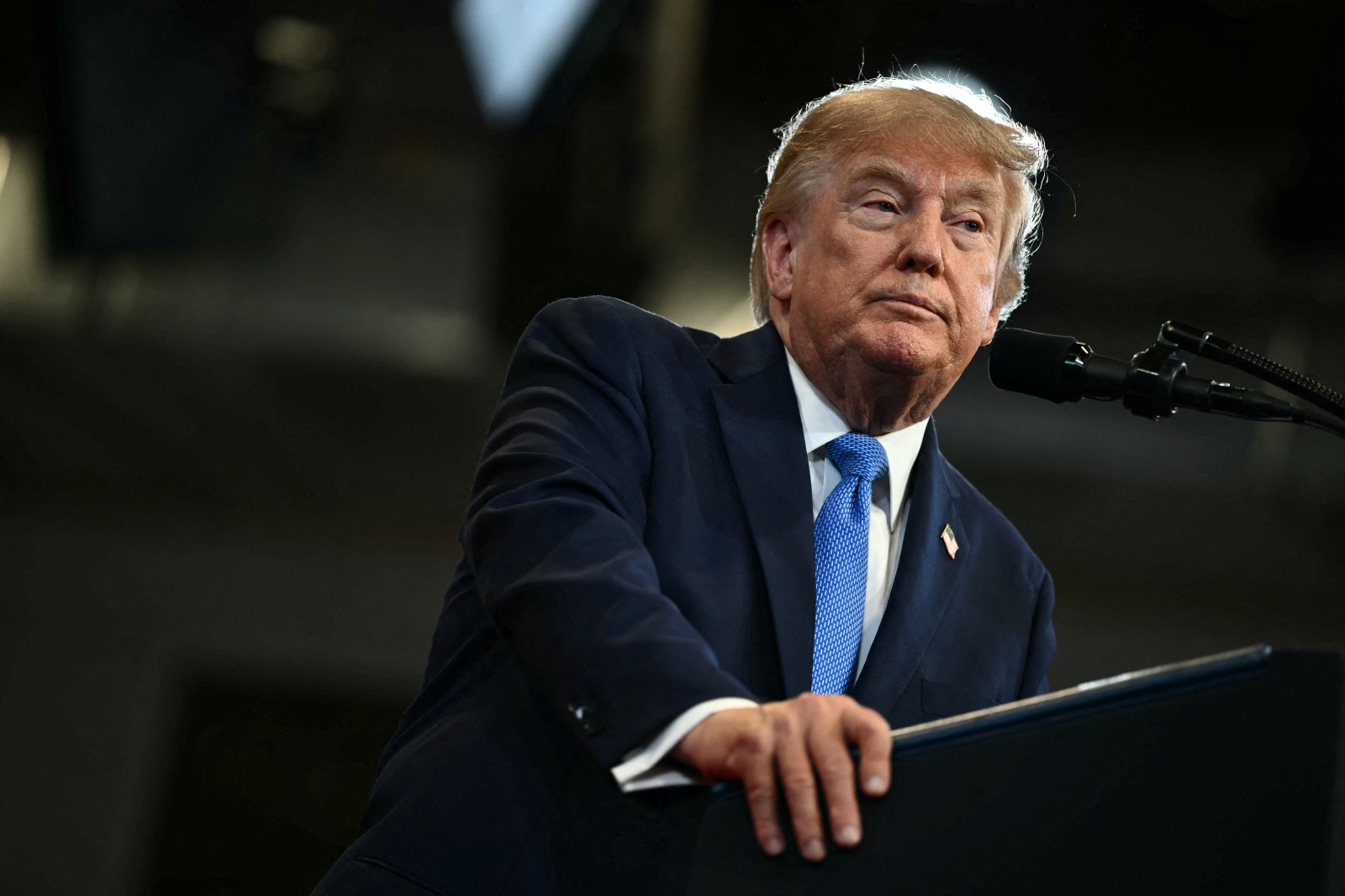
With less than three months until the midterm elections in November, President Donald Trump’s approval rating is struggling in most states. Only a few reliable Republican strongholds continue to show positive ratings for his job performance. Nationally, as of August 19, 35 percent of voters approve of his performance, while 59 percent disapprove. This results in a net approval rating of -24, according to Civiqs’ ongoing tracking poll of registered voters. The poll has collected 124,759 responses since Trump began his second term on January 20, 2025.
State-by-State Analysis
Trump faces significant disapproval in all seven battleground states he carried during the 2024 presidential election. With the control of Congress at risk in November, even minor changes in voter support could substantially affect critical midterm contests. States where Trump previously enjoyed positive ratings, such as Indiana and Mississippi, now rate him negatively.
The White House often dismisses low approval ratings, citing Trump’s 2024 election victory as evidence of public support.
Implications for Midterms
The president’s party usually loses seats in midterm elections
Given Trump’s unpopularity across much of the country, Republicans are striving to maintain their narrow majorities in the House and Senate. Democrats aim to secure enough seats to gain control of Congress, allowing them to block Trump’s agenda during the remainder of his term.
Where Trump Remains Popular
According to Civiqs, Trump has the highest net approval rating in Wyoming, where 56 percent approve and 35 percent disapprove, resulting in a net rating of +22.
- North Dakota: +18 (56 percent approve, 37 percent disapprove)
- South Dakota: +9 (51 percent approve, 42 percent disapprove)
- Alabama: +6 (49 percent approve, 43 percent disapprove)
- Idaho: +9 (50 percent approve, 41 percent disapprove)
- West Virginia: +13 (52 percent approve, 39 percent disapprove)
- Arkansas: +8 (51 percent approve, 43 percent disapprove)
- Oklahoma: +7 (50 percent approve, 43 percent disapprove)
- Montana: +4 (48 percent approve, 44 percent disapprove)
Indiana and Mississippi previously showed positive ratings, but Trump’s ratings fell in late June and May, respectively.
States with Declining Approval
Even in states where Trump retains high approval, these figures represent a decline from the start of his term. He began with +46 in Wyoming, +30 in North Dakota, +27 in South Dakota, and +24 in Alabama.
Where Trump Faces Disapproval
Trump’s lowest ratings are concentrated in Democratic strongholds. Hawaii showcases the lowest net approval at -60, with 18 percent approving and 78 percent disapproving.
- Vermont: -54 (20 percent approve, 75 percent disapprove)
- Maryland: -52 (21 percent approve, 73 percent disapprove)
- Massachusetts: -48 (24 percent approve, 71 percent disapprove)
- California: -43 (26 percent approve, 69 percent disapprove)
- Connecticut: -41 (27 percent approve, 68 percent disapprove)
- Washington: -43 (26 percent approve, 69 percent disapprove)
- Oregon: -40 (28 percent approve, 68 percent disapprove)
- New York: -39 (28 percent approve, 67 percent disapprove)
Impact on Battleground States
Trump continues to struggle in all seven swing states he carried in the 2024 election, posing a threat to Republicans in key midterm races.
- Arizona: -13 (41 percent approve, 53 percent disapprove)
- Georgia: -23 (35 percent approve, 58 percent disapprove)
- Michigan: -22 (36 percent approve, 58 percent disapprove)
- Nevada: -21 (36 percent approve, 58 percent disapprove)
- North Carolina: -16 (39 percent approve, 55 percent disapprove)
- Pennsylvania: -19 (37 percent approve, 56 percent disapprove)
- Wisconsin: -17 (39 percent approve, 56 percent disapprove)
Even in Florida, where Trump previously had strong support, his net approval is -11, with 42 percent approval and 53 percent disapproval.
Midterm Implications
Trump’s ratings may negatively affect Republican candidates in the upcoming elections, according to Costas Panagopoulos, a political science professor at Northeastern University.
“Presidential approval ratings are a reliable predictor of midterm outcomes,” he stated.
Panagopoulos noted that net disapproval might detrimentally influence Republican candidates. Other factors, such as partisan composition, are critical but may not be enough to prevent some losses, possibly providing Democrats with majorities in Congress.
Grant Davis Reeher, a political science professor at Syracuse University, described the situation as “grim” for Trump. Traditionally, a president’s approval impacts midterms, which serve as referendums on their initial two years in office.
Reeher observed that these elections often result in “buyer’s remorse,” except for 2002 post-9/11 circumstances. Despite Democrats facing brand challenges, Reeher expected them to perform well and potentially reclaim the House.
White House Response
Amid inquiries about polling, White House spokesperson Davis Ingle emphasized the mandate from the nearly 80 million Americans who backed Trump, underscoring his agenda.
Ingle affirmed Trump’s achievements, claiming historical progress domestically and globally.
For inquiries, contact Newsweek editors John Fitzpatrick and Shakeema Edwards.
Leave a Reply