President Trump’s Views on Wind Turbines
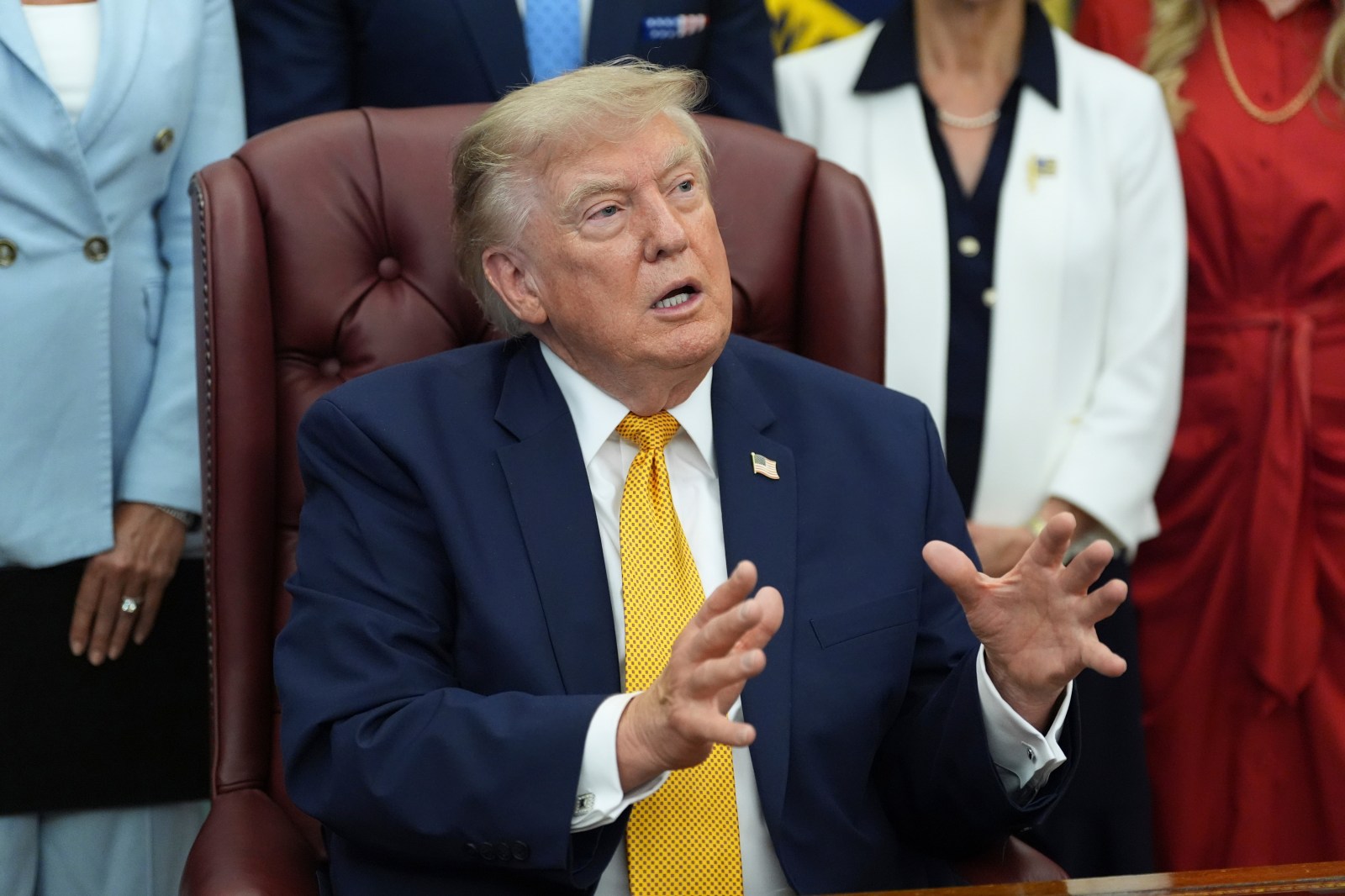
President Donald Trump has persistently criticized wind turbines. He describes them as unsightly, costly, and harmful to wildlife. Trump’s preference is fossil fuels and alternative energy sources. His criticism resurfaced recently in the Oval Office, highlighting Europe’s economic challenges. This speech aligns with his long-standing opposition to wind turbines, a common theme in his rhetoric.
His opposition dates back to issues surrounding an offshore wind farm near his golf course in Scotland. His stance evolved into a campaign against wind energy in general. During his second term, Trump enacted executive actions to slow U.S. wind projects. Newsweek has contacted the White House for comments.
When Did Trump Begin Opposing Windmills?
Trump’s criticism of wind energy began in the mid-2000s with plans for an offshore wind farm near Trump International Golf Links in Scotland. He argued it would damage the coastal landscape, affect tourism, and diminish his resort’s value. Despite his public and legal opposition, the Scottish courts approved the project. This conflict marks the start of Trump’s ongoing critique of wind power.
His criticism intensified during the 2016 presidential campaign, targeting wind energy as part of his broader attacks on climate policies. Trump considers turbines detrimental to scenic landscapes, tourism, and wildlife. He claims they are inefficient and costly to maintain. He frames wind power as a misguided component of climate and energy policies, favoring fossil fuels.
Trump’s Wind Turbine Timeline
- 2006: Trump acquired land in Aberdeenshire, Scotland, and opposed a planned offshore wind farm for its potential impact on views and tourism.
- 2011-2015: He challenged the Scottish wind project through lawsuits yet ultimately lost.
- 2012: Trump’s public criticism of wind power became more frequent, targeting its appearance, economics, and environmental effects.
- 2015-2016: During his presidential campaign, he criticized wind energy while supporting expanded oil and gas production.
- 2017-2021: Throughout his first term, Trump criticized turbines and rolled back climate and clean-energy initiatives.
- 2019: Trump made a widely discredited claim that wind turbine noise could cause cancer.
- 2021-2024: Out of office, Trump continued attacking wind energy, pledging to reverse Biden’s renewable policies.
- 2025: Upon returning to office, Trump signed actions to slow new offshore wind projects, facing criticism from renewable sectors.
- 2026: Trump continues opposing wind turbines while discussing energy policies.
Impact on Federal Energy Policy
Trump’s criticism affects energy policy and climate debates. His first term focused on fossil fuel expansion while rolling back environmental regulations. Despite this, wind development persisted. After his return to office in 2025, Trump sought to halt new offshore wind projects and imposed stricter federal scrutiny. Supporters claim these measures aim to boost energy independence and fossil fuel production, while critics argue they stifle renewable investment and infrastructure.
Wind Turbines in the U.S.
The U.S. is second only to China in wind power capacity. It has about 77,000 turbines across 45 states, Guam, and Puerto Rico, contributing nearly 160 gigawatts of capacity. Texas leads in numbers, followed by other plains and Midwest states. Wind energy now significantly contributes to U.S. electricity.
Fact Checking Trump’s Wind Turbine Claims
- Claim: ‘Noise causes cancer.’ No credible evidence links wind turbine noise to cancer. Public health experts dismiss this claim.
- Claim: Turbines kill ‘all the birds.’ Turbines do impact birds, but far less than other human-related causes.
- Claim: Wind turbines are ‘ugly’ and impact the environment. Visual impacts are subjective. They lack direct greenhouse gas emissions unlike fossil fuels.
- Claim: Wind energy is inefficient and unreliable. Though variable, experts find wind a reliable electricity source with grid management.
- Claim: Wind energy is too expensive. Costs vary, but wind is one of the lowest-cost new electricity sources due to technological improvements.
Benefits of Wind Energy
Wind energy is a rapidly growing U.S. electricity source. It generates power without burning fuel, reducing direct emissions. Wind diversifies the energy mix, reduces foreign fuel reliance, and creates jobs in manufacturing and maintenance sectors. Offshore projects near coastal regions can meet high demand. Expansion reduces carbon emissions and offers long-term energy security, although it presents challenges like infrastructure needs.
Contact Newsweek editors: Samantha Beech and Edward T. Cummins.
Leave a Reply