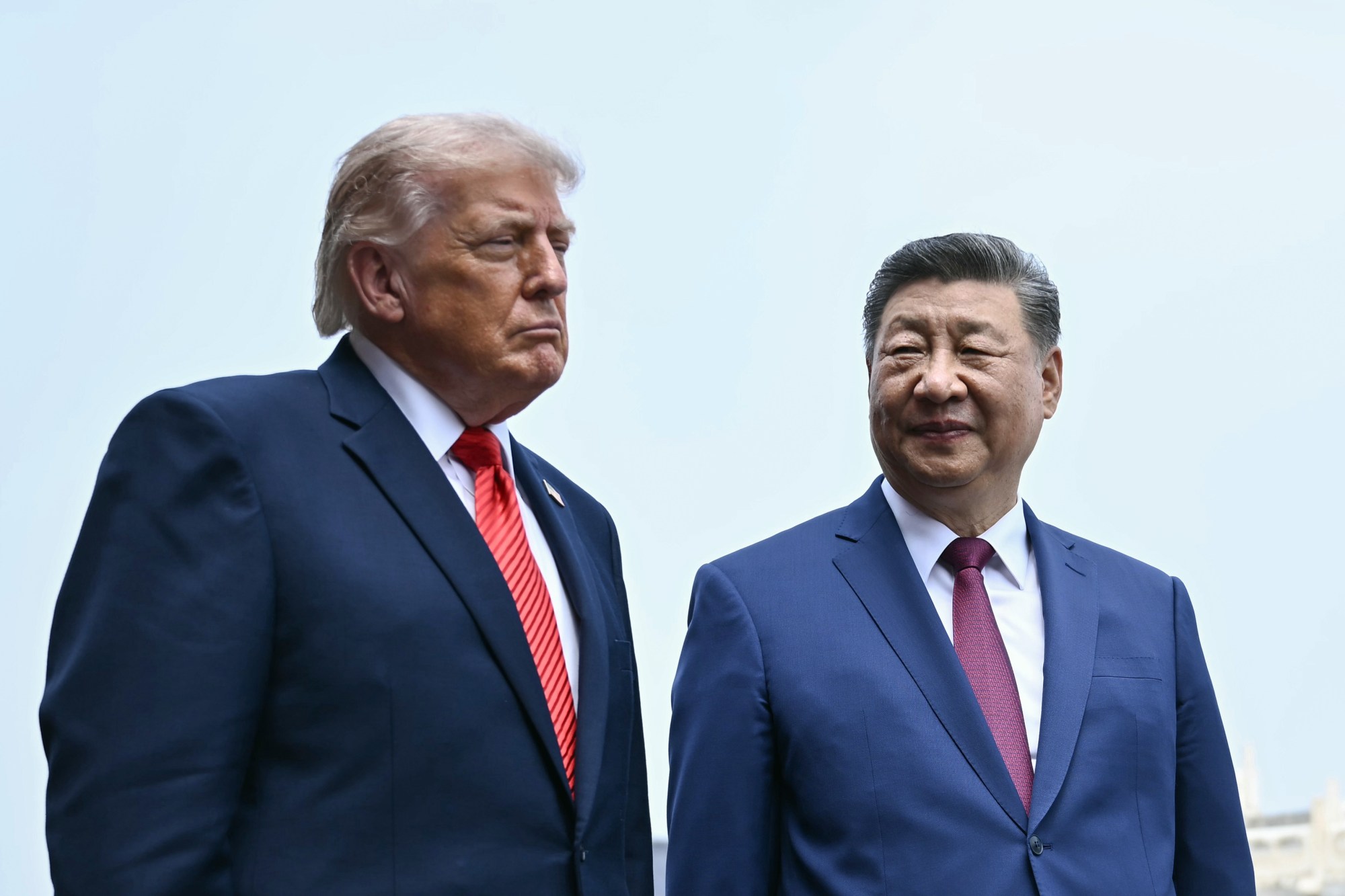
The upcoming summit between U.S. President Donald Trump and China’s President Xi Jinping in Washington is set to have significant international implications. Holding the meeting in the U.S. rather than China provides a slight advantage to American interests and future global security.
Historically, U.S. presidents, like Richard Nixon and Jimmy Carter, have made concessions to China regarding Taiwan. Nixon’s actions in 1972 led to Taiwan’s derecognition, formalized by Carter. In 1998, Bill Clinton, despite advice to the contrary, announced the ‘three nos’ policy concerning Taiwan.
For Trump, meeting on home soil could provide a negotiating benefit as midterm elections loom. However, this advantage is minor and could quickly vanish if Trump seems desperate for trade deal success to bolster Republican prospects.
While Trump’s focus will be on reaching a beneficial trade agreement, Xi might aim for a concession that weakens the U.S.’s commitment to Taiwan’s defense. Such a move could exaggerate Trump’s political vulnerabilities, as Xi has already hinted at the need for caution regarding Taiwan.
Trump has avoided responding to these veiled threats, choosing to highlight his positive relationship with Xi, much like during the COVID-19 pandemic. However, this has previously led to disappointment when it became clear that Xi misled Trump about the pandemic’s risks, resulting in significant U.S. casualties.
As Xi arrives in Washington, Trump may consider a bold strategy. He could propose a resolution ensuring peace and security in the Taiwan Strait. Trump could challenge Xi to renounce any force against Taiwan in exchange for Taiwan’s promise not to declare formal independence for the next decade or until Xi’s tenure ends.
In exchange, Taiwan would maintain its current state of de facto independence with U.S. military support. Trump could further assert that the U.S. would recognize Taiwan’s independence if China used force, reversing China’s ‘independence means war’ stance.
Joseph Bosco, a former China country director for the Defense Department and nonresident fellow at the Institute for Corean-American Studies, suggests that this decisive commitment could end the strategic ambiguity policy first set during Clinton’s presidency.
Leave a Reply