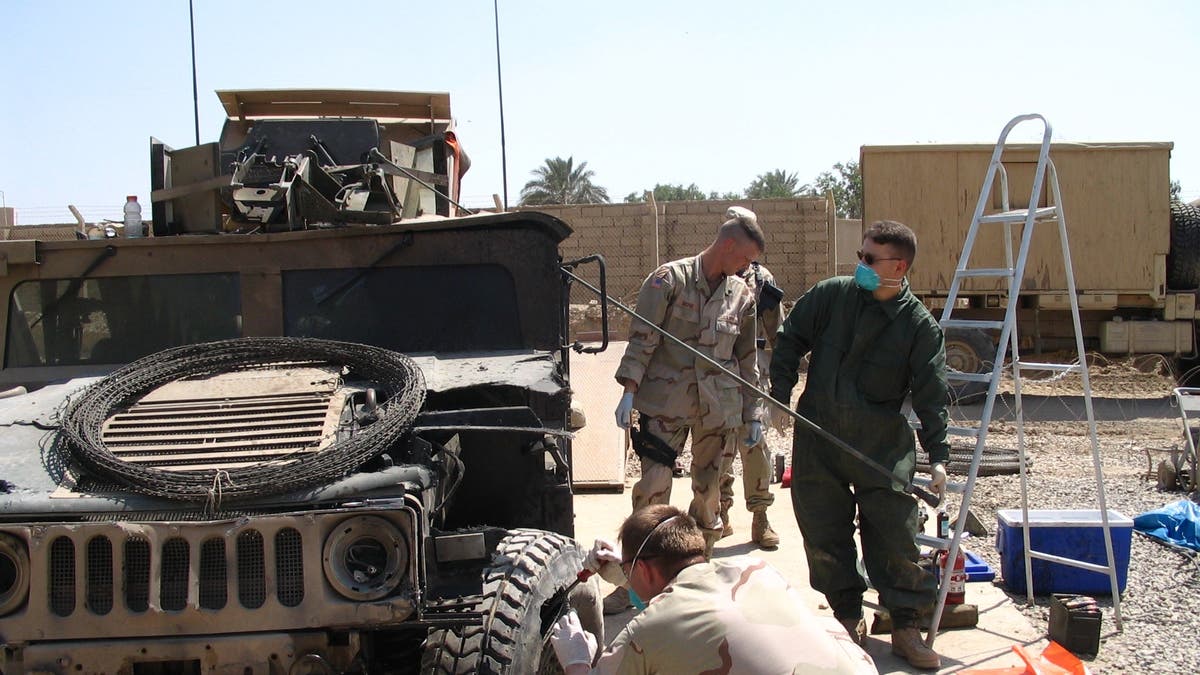
The story begins nearly two decades before the latest conflict with Iran. An explosively formed penetrator ripped through a U.S. Army vehicle on a Baghdad road. It killed Staff Sgt. William Brooks and severely injured Sgt. (Ret.) Robert Bartlett. Bartlett described the gruesome attack and his struggle for survival: “It cut me in half from my temple down through my jaw.” He recounted dying three times and spending four years in recovery.
The weapon was part of a larger Iranian conspiracy. This involved arming and training proxies to target American troops in Iraq. Federal court findings confirmed Iran’s role. Iran either manufactured or supplied the weapons used in these attacks. These cases involved hundreds of U.S. victims. Judges determined that the attackers received training or directives from the Islamic Revolutionary Guard Corps. As Bartlett stated, “When you’re blown up, you don’t know what’s hit you.” He learned later about the source of the attack.
This tragic narrative links Bartlett to two families of fallen soldiers. Capt. Shawn English and Maj. Stuart Wolfer were also victims of Iranian-supplied weapons. English died from an explosively formed penetrator in 2006, and Wolfer was killed by a rocket in 2008.
Capt. Shawn English, a father of three, was killed when an Iranian device hit his vehicle. His widow recalls his understanding of the threat posed by these weapons before his death. He was working on a military transition team with Iraqi forces when an explosive struck. His last conscious message was a farewell to his family, a testament to his love for them.
Maj. Stuart Wolfer, a father of three daughters, died during an exercise session when a rocket struck his gym. His sister, Beverly Wolfer Nerenberg, shared her emotional struggle to talk about her brother even 18 years later. Wolfer’s family keeps his memory alive for his daughters, remembering him as a brother who deeply understood and loved his family.
Both families and Bartlett pursued legal actions against Iran. The courts found Iran liable for supplying weapons and supporting Iraqi militia groups. Despite the victories, Iran has not voluntarily paid the judgments. Tricia English pointed out that the U.S. troops were targeted by a nation they were not at war with.
Bartlett joined the litigation as a tribute to those who didn’t return. He felt an obligation to honor their memory and uphold the truth. He stated, “I’m not doing justice if I don’t fight for them and their families.” This case used the terrorism exception to the Foreign Sovereign Immunities Act. It allowed American victims to sue state sponsors of terrorism.
The judgments highlighted Iran’s role in funding and arming militia groups. These groups targeted American forces with sophisticated weapons. The courts challenged the notion of an organic Iraqi insurgency. They exposed a broader Iranian proxy warfare strategy.
For the families affected, the continuous conflict with Iran is personal and enduring. Beverly Wolfer Nerenberg said, “This war began a long time ago.” Families called for accountability from successive U.S. administrations. They recall the deep impact of Iranian actions within American borders.
For those impacted by Iranian attacks, justice remains elusive. Bartlett emphasized the importance of confronting this history, saying, “You can’t add to truth and you can’t take away from it.” The truth is measured not only in court judgments but also in personal losses.
Leave a Reply