U.S. stocks experienced a downtrend on Wednesday due to speculation regarding potential interest rate hikes by the Federal Reserve this year. Such increases aim to manage inflation but often slow economic growth and decrease investment values.
The S&P 500 index dropped by 1.2%, erasing earlier gains, after projections showed that nine out of eighteen Fed policymakers expect at least one rate increase this year. The Dow Jones Industrial Average, initially up by 280 points, fell by 507 points, marking a 1% decrease. The Nasdaq composite decreased by 1.3%.
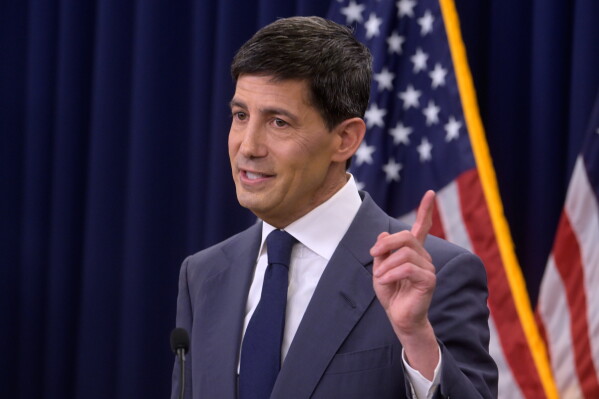
Chairman Kevin Warsh, a key figure at the Fed, refrained from predicting where interest rates might be at the end of 2026. During his first press conference as the head of the central bank, Warsh mentioned considering changes in the Fed’s communication with financial markets and the public. One immediate change was the removal of ‘forward guidance’ hints in Fed statements regarding interest rate directions.
Warsh emphasized that Wall Street should respond to economic data like inflation and employment reports based on their impact on stock and bond prices, rather than predicting Fed reactions. This strategy includes potential adjustments to the Fed’s quarterly projections on rates, the economy, and inflation. Despite these insights, market reactions were unsettled, with stocks swinging after Fed projections were released. Warsh noted a lack of strong conviction behind these projections. Meanwhile, the Fed announced its decision to maintain the federal funds rate, consistent with previous meetings this year.
The bond market saw increasing Treasury yields, with the 10-year Treasury yield rising from 4.43% to 4.49%, affecting mortgage and loan rates. The two-year Treasury yield also rose from 4.05% to 4.21%, reflecting adjusted expectations for Fed actions. The probability of a rate increase by the end of this year, as measured by CME Group data, rose from 59.5% to 84% overnight.
Global concerns about inflation have already pressured bond yields, affecting investment values across markets. In the stock market, companies like SpaceX, Microsoft, Amazon, and Nvidia saw declines, overshadowing positive growth by La-Z-Boy, which reported better-than-expected profits and revenue due to new store openings. The S&P 500 fell 91.25 points to 7,420.10, while the Dow Jones dropped to 51,492.55, and the Nasdaq composite closed at 26,021.66.
A report on Wednesday indicated better-than-expected retail revenue growth in May, suggesting consumer spending might support the economy despite inflation concerns. However, high inflation contributes to greater financial anxiety among U.S. consumers.
Oil prices stabilized following earlier declines, driven by optimism over a potential U.S.-Iran agreement to resume global oil supply. Iran’s planned actions to reopen the Strait of Hormuz could allow oil tankers to transport crude from the Persian Gulf, potentially easing inflationary pressures. Brent crude oil increased by 0.7% to $79.55 per barrel, still below its recent highs of over $100 but above pre-war levels.
International stock indexes were mixed, with notable movements in South Korea’s Kospi, up 1.6%, and Hong Kong’s Hang Seng, down 0.7%.
Leave a Reply