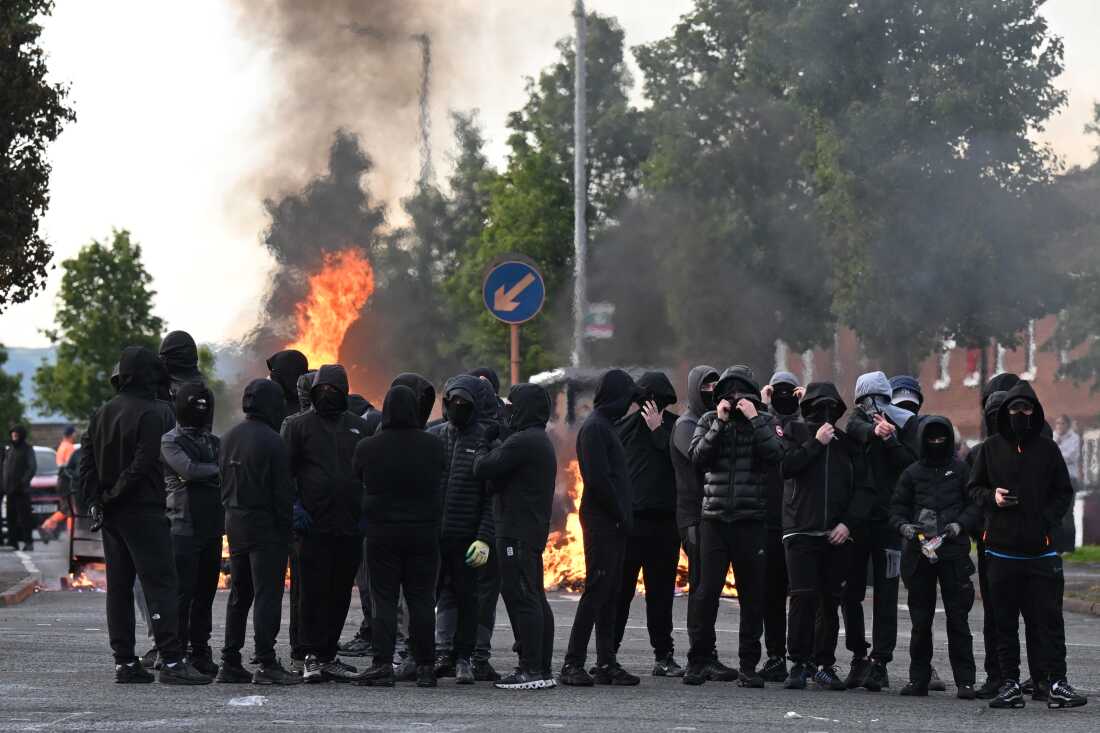
Youths gathered in front of burning barricades on Duncairn Gardens on June 9 in Belfast, Northern Ireland. This unrest has brought attention from those studying violent extremism in the U.S.
The violence followed the stabbing of Stephen Ogilvie, a 44-year-old, caught on video by a 30-year-old Sudanese man seeking asylum in the UK. Ogilvie survived but was seriously injured. The alleged attacker faces charges of attempted murder.
The stabbing sparked protests where masked, anti-immigrant mobs set vehicles and homes on fire in ethnic minority neighborhoods. Questions arise about the quick organization of participants and possible connections to neo-Nazi youth groups called “active clubs”.
“Effectively, they saw their model in action,” said Michael Colborne, journalist and researcher for Bellingcat. “They saw masked young men committing political violence in a model they emulate.”
Active clubs have grown across Western Europe and the U.S., organizing locally with transnational connections through digital platforms and conferences. Their activities revolve around mixed martial arts training. Unlike most who pursue combat sports to get fit or learn self-defense, these groups prepare explicitly for political violence.
A social media surge on active club accounts before and after the Belfast unrest suggests they may have orchestrated the attacks, according to reports in Wired. However, skepticism remains about their involvement, given Northern Ireland’s political history and anti-immigrant sentiment.
“Unfortunately, the UK is somewhat of a tinderbox,” said Sid Venkataramakrishnan, analyst at the Institute for Strategic Dialogue.
The Telegram account of a neo-fascist group, the Ulster Youth Club, fueled speculation that active clubs might have helped mobilize people. A post urged white men to act against non-whites.
The Ulster Youth Club’s account posted advice to protesters, recommending they avoid smartphones, wear hats, and cover tattoos. After the unrest, a related Substack account praised participants’ security tactics.
“Citizen journalists explicitly not welcome,” stated the Ulster Youth Club’s post, framing the violence for their audience.
Identifications of individuals affiliated with active clubs remain unmade. Experts note factors for rapid street mobilization have been developing long-term.
“Northern Ireland has a history of sectarian violence,” said Venkataramakrishnan, referencing Loyalist groups involved in past violent attacks.
The Influence of Sectarian Violence on Anti-Immigrant Movement
Violent anti-immigrant mobilizations have become annual in Northern Ireland. Instances include unrest in Belfast due to crimes against white UK residents, amplified by far-right figures online.
Elon Musk, among others, seized upon these crimes, advocating mass expulsion of non-whites. Online and offline, anti-immigrant networks promote rapid action efforts.
More insight into the influence of former paramilitary group members is needed. The Accountability Project, monitoring anti-immigrant networks, notes self-identified former Loyalist prisoners.
The older age of paramilitary veterans contrasts with young, masked arson attackers. Planning on Facebook suggests closed communication via apps like Signal, WhatsApp, or Telegram.
The group representative remains unnamed for public reporting. She wonders about connections between paramilitaries and social media networks mobilizing young people.
Northern Irish police investigation continues. Answers to these questions will be highly anticipated.
Leave a Reply