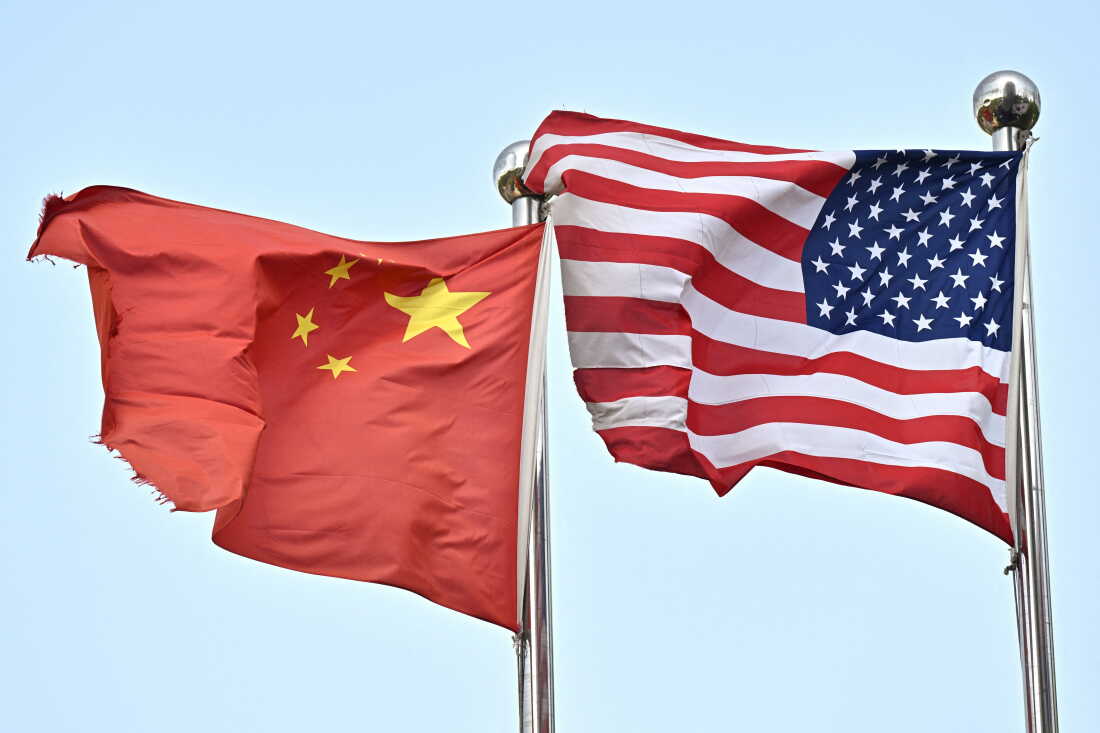
On April 17, 2025, the Chinese and US flags waved outside a technology company in Beijing, reflecting the intense competition over artificial intelligence (AI) between the two nations. Experts doubt President Trump and Chinese leader Xi Jinping can ease tensions when they meet in Washington next Thursday.
Recently, the Trump administration accused Chinese AI firms of intellectual property theft from US models, threatening sanctions. In response, Beijing criticized US chip export restrictions and accused Washington of adopting a “Cold War playbook” against Chinese AI efforts.
Despite limited prospects for compromise, former officials and policy experts note ongoing bilateral dialogues at a sub-national level, known as “Track Two” diplomacy. This informal approach involves private meetings and conferences, often hosted by think tanks or universities, aiming to foster understanding and develop policy recommendations.
“I think there is no more important topic that the U.S. and China should be talking about than AI,” said Sarah Beran, former US diplomat and incoming president of the National Committee on U.S.-China Relations.
Beran highlighted the challenges of discussing AI due to mutual distrust. “The fear of chokepoints, being held back, and AI being used as a cudgel on both sides means this is also one of the most difficult areas to talk about,” she explained.
Track Two diplomacy aims to build mutual understanding and suggest policies agreeable to both sides. It’s often used as a backchannel to explore ideas in a low-risk environment. This approach resumed military dialogues between China and the US after tensions over Taiwan in 2022.
Retired Air Force General Jack Shanahan emphasized that Track Two dialogues helped solidify an agreement ensuring humans control decisions regarding nuclear weapons usage, not AI.
Samm Sacks from Johns Hopkins University noted several substantive Track Two discussions in Shanghai and Beijing. She believes the US shares common ground with China on AI, despite official tensions over chip exports and intellectual property theft accusations.
“There is a sense of shared vulnerability and shared precarity created by AI,” Sacks observed, noting a perceptible shift on the Chinese side as AI technology advances.
Track Two dialogues provide a roadmap for understanding the contrasting priorities of the US and China. The US focuses on cyber vulnerabilities and AI control, while China emphasizes regime stability and hardware self-reliance. This divergence affects Track Two discussions, tempering expectations for concrete outcomes.
Scott Kennedy from the Center for Strategic and International Studies remarked that Track Two dialogues enhance awareness of each country’s red lines and decision-making processes. However, these initiatives require government support to be effective.
“This is the time where we need some leadership, and what we’re seeing is a vacuum,” Kennedy stated.
Sacks warned of the precarious nature of US-China disagreements over AI, potentially affecting Track Two diplomacy. She underscores the importance of governmental signals acknowledging AI safety concerns, including cyber and bio risks.
Some Track Two participants noted reduced engagement from the Trump administration compared to previous US administrations. Nonetheless, they remain vigilant for developments from the Trump-Xi meeting that might indicate a commitment to addressing AI concerns through Track Two talks.
Sarah Beran emphasized the need for confidence-building in these dialogues. “You need to build confidence on both sides that this is a safe space to talk about issues,” she stated. The National Committee plans further talks aligned with any joint statements made by the two presidents.
Leave a Reply