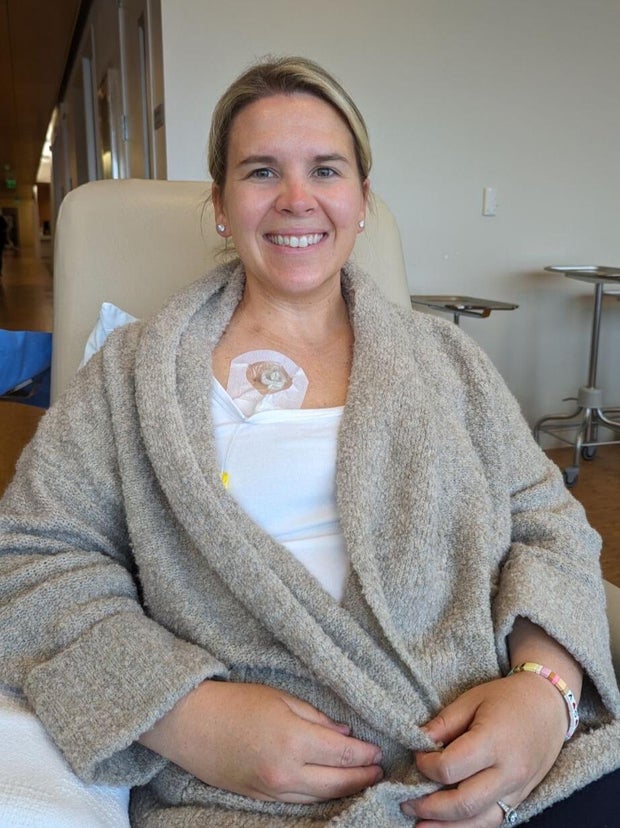
In May 2024, Amy Piccoli, a mother of three in Los Angeles, faced an unexpected health crisis. What began as a typical seasonal illness, a stomach bug brought home by her son, escalated into something ominous. After experiencing severe dehydration, Piccoli ended up in the emergency room. A CT scan revealed concerning spots on her liver and a mass in her colon.
Following a biopsy, Piccoli, aged 39, received a shocking diagnosis: Stage IV colon cancer. “I was in complete shock. I had no symptoms and no family history of cancer,” she said. The news left her and her husband overwhelmed with fear as they researched survival statistics over a long weekend.
An Uncommon Diagnosis
According to Dr. Robin Mendelsohn, a gastroenterologist at Memorial Sloan Kettering Cancer Center, late-stage colorectal cancer without symptoms is extremely rare. Typical symptoms include gastrointestinal issues, blood in the stool, and unexplained weight loss. Subtle signs like fatigue might also be overlooked as cancer symptoms.
After her diagnosis, Piccoli started treatment in June 2024. Genetic testing indicated potential benefits from immunotherapy, and it was added to her regimen. This combination of medications proved effective, causing significant tumor shrinkage that allowed for surgical removal of her colon tumor.
Liver Transplant as a Treatment Option
Despite successful colon surgery, Piccoli’s liver tumors weren’t removable. Dr. Zachary Dietch, a transplant surgeon at Northwestern Medicine, explained that chemotherapy alone would give her a mere 10% five-year survival rate. However, European data suggested that patients with a removed colon tumor and a liver transplant could see survival rates soar to 80%, as Dr. Satish Nadig from Northwestern’s Comprehensive Transplant Center shared.
The liver transplant procedure, though promising, is selective. Requirements include low recurrence risk and cancer confined to the liver. Only select patients qualify. Piccoli’s oncologist referred her to the program at Northwestern with Dr. Nadig overseeing.
In September 2025, an evaluation in Chicago showed her eligibility for a transplant from a living donor. A friend, Lauren Prior, matched as the donor. Piccoli underwent the transplant in December 2025.
A New Chapter Begins
The surgeries for Piccoli and Prior were smooth. Post-transplant, Piccoli spent three months in Chicago, adjusting to anti-rejection medication and monitoring for cancer recurrence. Despite the challenge of being away from her family, she felt the journey validated by the hope for a longer life with her children.
Piccoli returned to Los Angeles in March, noting the need for regular scans for five years to catch any early cancer signs. Dr. Nadig emphasized the low recurrence risk among suitable patients, remaining manageable locally if it occurs.
“It’s not a death sentence anymore,” Dr. Nadig explained. Piccoli felt anxious but hopeful as follow-ups continued to show no cancer traces. She looked forward to spending the summer with her children, now free from chemotherapy and frequent doctor visits. “While cancer is tough, it gives a new perspective. I’m excited to live with a fresh outlook and enjoy my time with my kids,” she reflected.
Leave a Reply