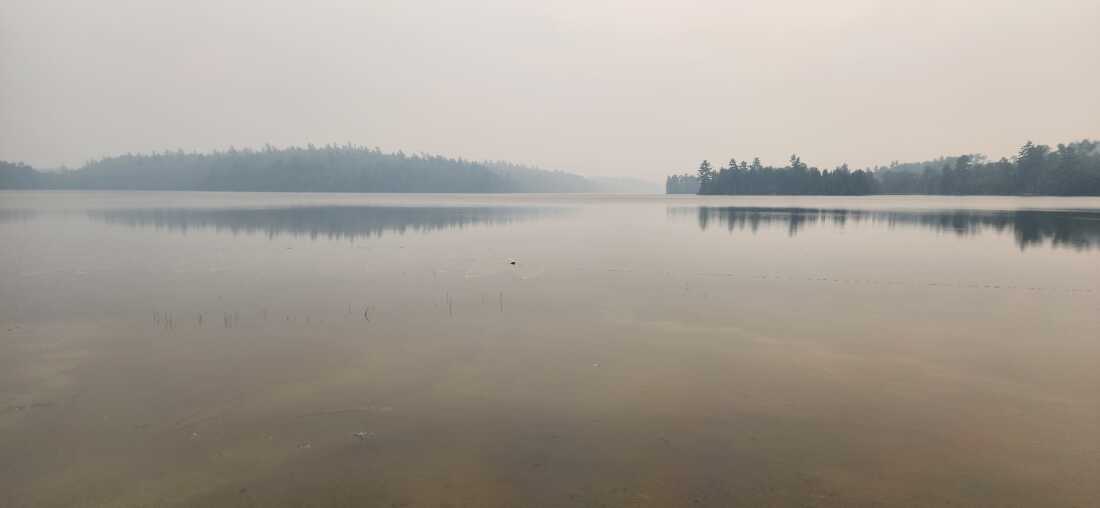
During July, wildfire smoke enveloped Camp Widjiwagan in Ely, Minnesota. Amidst this environmental backdrop, campers at Beauvoir Summer Camp in Washington, D.C., persisted in their summer activities. Seven-year-old Penelope relished transforming into a mermaid during pool time, her feet dangling in the water as she imagined herself swimming alongside dolphins. Friday featured free swim, with children playing energetically on kickboards and engaging with mini torpedo toys. Even the youngest campers indulged in the kiddie pool, delighting in their playful antics. Penelope and her friend Sam cherished pool time most.
NPR uses first names only when referring to minors. Smoke from wildfires kept the pool empty during a previous free swim, with campers staying indoors due to hazardous air quality. Earlier, extreme heat curtailed outdoor activities, as noted by Drew Mackay, director at Beauvoir School’s summer programs.
This summer brought intense weather patterns, including wildfires, floods, and heat waves. Fires in northern Minnesota and Canada covered the Midwest and Northeast with smoke. Deadly floods led to disaster declarations in Texas. July’s severe heat wave became known as the ‘new normal’ for Independence Day celebrations. The warming climate, primarily driven by fossil fuel combustion, is intensifying and increasing weather events. Families are experiencing these changes first-hand.
In Pennsylvania, Lauren Smith faced dangerous weather with her family. Extreme heat altered routine activities at their soccer camp, where temperatures hovered near 100 degrees Fahrenheit. Wildfire smoke confined them indoors. Continuous rain eventually provided some relief. Smith recalls urging her kids for an outdoor walk despite the rain, which her kids ultimately enjoyed.
The summer posed a challenge for school-aged children, who had already tackled COVID-19-induced isolation. Marion expanded hobbies like decluttering, baking, and painting acorns. When sunny days arrived, engaging them indoors became impossible. Summer was marked by anticipatory waiting for outdoor activities.
Kids today contend with not only pandemic disruptions but also severe weather changes. Parents, camp leaders, and school-aged children have noticed collective climate impacts. For Penelope, her summer seemed entirely altered. Her perspective on climate change encompassed perpetual environmental alterations.
Summer Camps Adapt to Changing Conditions
Summer camps offer a three-month reprieve from academic rigors. According to a 2024 Gallup survey, 55% of U.S. parents enrolled their children in structured programs during summer. Henry DeHart, CEO of the American Camp Association, underscores camp’s importance in developing skills like independence, problem-solving, and teamwork, which suit a future with increased AI influence.
Despite having robust safety frameworks for weather events, camps are noticing more frequent extreme occurrences than ever before. DeHart mentions that previous camps faced three to five days of over 105 degrees Fahrenheit; now, it could be double that number.
Camps nationwide varied in impacts. At the 160-acre Miakonda Day Camp in Ohio, Ellen Watkins and her team adapted their scouting program to the smoky atmosphere by shifting indoors and providing masks. Dryland swim exercises and inflatable archery replaced outdoor activities.
However, quick switches weren’t viable everywhere. At Camp Widjiwagan in Ely, Minnesota, evacuation was the only option. Images of submerged canoes captured widespread attention online, showing the camp’s measures to protect fragile vessels. Ben Hoffman, director of the camp, noted the unprecedented nature of submerging canoes.
Seventeen-year-old Eleanor Pitts experienced Camp Widjiwagan’s backpacking trip in Alberta, Canada. Her group was deeply bonded. The anticipated campfire celebration upon returning to base camp was thwarted by smoke, leaving them with unexpected emotions at trip’s end.
Pitts felt firsthand climate change’s reality during her Canadian journey, witnessing flooded rivers due to snow runoff. Her counselor emphasized the impact beyond wildfires. Her concern encapsulated a new era of altered camp dynamics driven by climate circumstances.
Mackay expressed that adapting to extreme weather is now integral to camp administration in D.C. Amidst environmental challenges, kids prioritize pool time.
Leave a Reply