Revival Efforts through Innovation
Anishinaabemowin, a language encompassing Potawatomi, Odawa, and Ojibwe, faces the threat of extinction. In the U.S., fewer than 10,000 people speak it, compared to approximately 25,000 in Canada. Danielle Boyer, from the Sault Ste. Marie Tribe of Chippewa Indians, is determined to prevent this loss.
The Birth of SkoBot
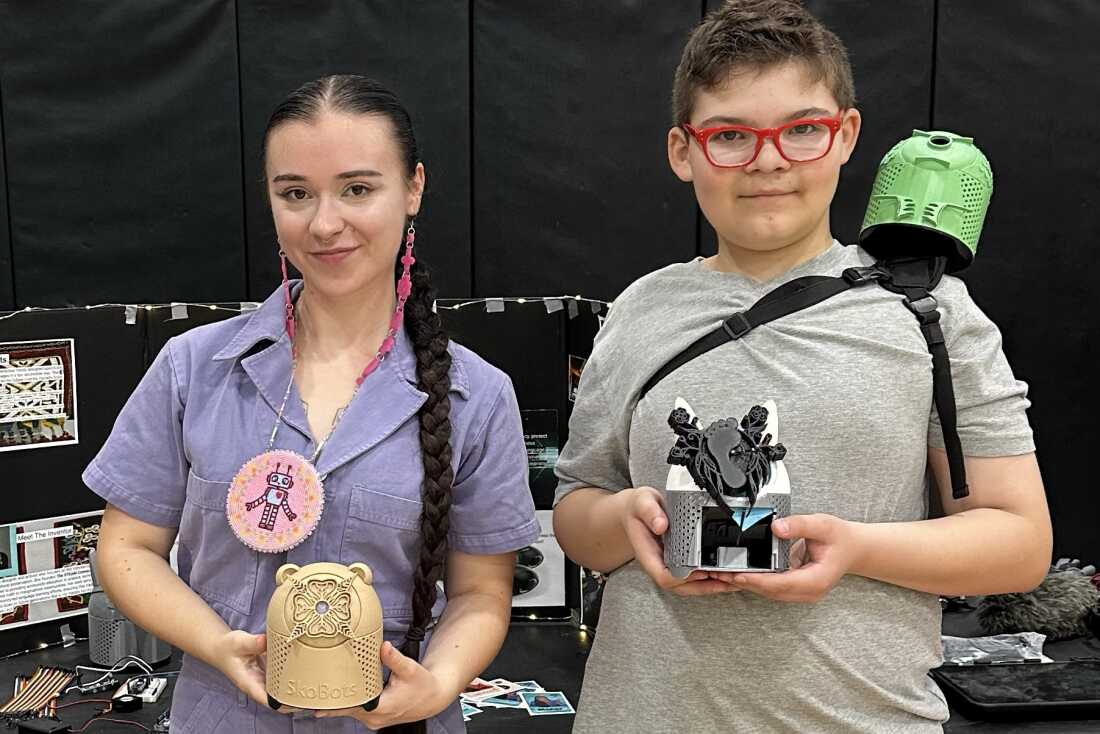
Boyer’s inspiration for SkoBot, a language-teaching robot, came from a Tickle Me Elmo toy. She noticed a gap in tools for learning Indigenous languages and sought to fill it. SkoBot teaches Anishinaabemowin by responding to queries like ‘What is bear?’ with the Anishinaabemowin word ‘makwa.’
Educational Benefits and Community Engagement
Boyer runs a nonprofit through which she mentors Native American children in creating their customized SkoBots. This initiative aims to spark their interest not only in their language but in science and engineering as well. Twelve-year-old Holden Hoy, for instance, created a SkoBot named Sabe, reflecting Ojibwe cultural teachings.
Ensuring Language Accuracy
SkoBots rely on pre-recorded audio responses rather than generative AI, preventing inaccuracies and preserving linguistic integrity. Boyer emphasizes that accurate language preservation is crucial since false representations can be harmful.
Cultural Connection and Family Influence
Holden’s interest has impacted his family; his mother Jocelyn Hoy sees SkoBot as a tool for learning and embracing their heritage. For Holden, retaining the language equates to preserving the culture, integral to the identities of Indigenous peoples.
Through SkoBots, Boyer aspires to deepen children’s connection to their language and culture while also educating them on ethical AI usage.
Leave a Reply