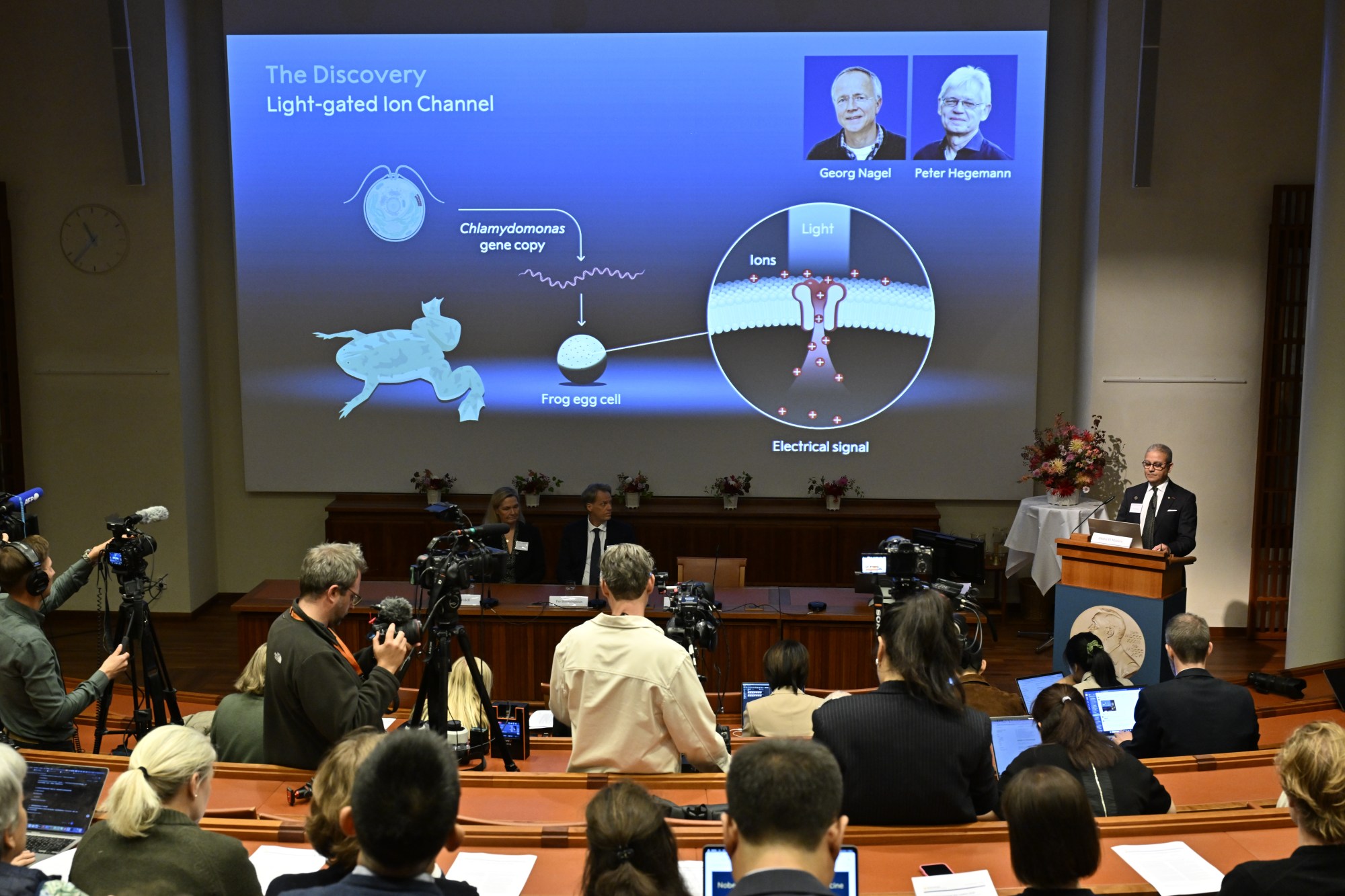
The Nobel Prize in Physiology or Medicine for 2026 has been awarded to Karl Deisseroth, Peter Hegemann, and Georg Nagel. These scientists have made significant advancements in understanding how the brain can activate or deactivate individual nerve cells.
The research focused on light-gated ion channels and optogenetics. This method has gained global recognition for its application in unraveling the complexities of the brain.
Karl Deisseroth is affiliated with Stanford University in California. Peter Hegemann works at Humboldt University in Berlin, and Georg Nagel is with the University of Würzburg in Germany.
Deisseroth, who often works late into the night, received the Nobel news while working at his home in Northern California. The call came from the Nobel assembly, interrupting his brief attempt at sleep.
Optogenetics has revolutionized the field of neuroscience. It involves using a protein that, when exposed to blue light, opens a channel to produce an electrical impulse. This protein, first studied in green algae, was identified by Hegemann and Nagel. Their discovery enabled the creation of light-controlled switches for nerve cells.
The breakthrough allows researchers to better understand neural pathways related to behavior and disease. Deisseroth applied this method to test on living mice, providing new insights into brain functions.
The Nobel Assembly described the technique as a way to “reveal the brain’s mysteries.”
The announcement at the Karolinska Institute in Stockholm marked the beginning of Nobel week. The prize includes 12 million Swedish kronor (approximately $1.2 million). Following the medicine award, the prizes for Physics, Chemistry, Literature, Peace, and Economic Sciences will be announced.
Last year’s winners investigated aspects of the immune system. The prestigious awards continue to recognize exceptional contributions to humanity.
Leave a Reply