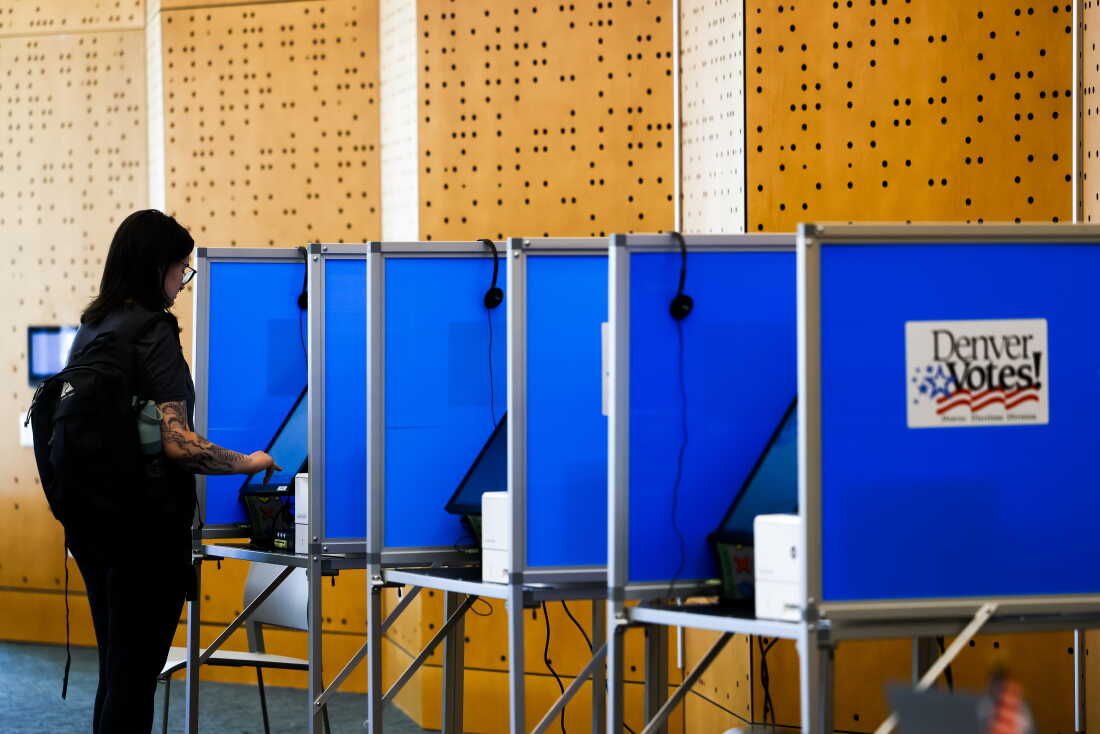
In Denver, as voters participate in the primary election at the Central Library, a prevalent concern among them emerges. Paul López, Denver’s clerk and recorder, oversees these elections and has noted a recurring question about federal agents’ potential presence at polling sites. He mentions, “Every single meeting I have, there’s somebody that asks the question, ‘What do we do if federal agents are at the polls?'”
Interference by federal agencies at polling places is illegal. Yet, as the Trump administration hints at deploying federal officers at these sites, López and other officials are making plans to counter and prevent such scenarios. Last week, López joined a coalition in filing a lawsuit focused on blocking federal officers from these locations. A separate coalition filed another lawsuit aiming to achieve the same goal.
NPR covers the latest lawsuit initiated by civil rights groups and unions. President Trump expressed willingness to deploy federal agents if required for maintaining the integrity of elections. Department of Homeland Security Secretary Markwayne Mullin recently mentioned that Immigration and Customs Enforcement (ICE) agents might serve warrants at polling places. Border czar Tom Homan assured there would be no “sweeping” of polling sites but questioned public concern over such a possibility.
DHS stated to NPR that ICE does not intend to conduct operations targeting polling places. However, they mentioned pursuing targeted enforcement if there is a public safety threat at a polling site. DHS emphasized that those operating within legal parameters have no reason for worry.
At a congressional hearing, FBI Director Kash Patel did not exclude the presence of FBI agents at the polls, though he assured adherence to the law. During recent primary elections, federal law enforcement activity was reported inside or near polling locations across different states. As elections near, DHS has increased efforts to identify non-U.S. citizens on state voter rolls or those who have voted in previous instances. Despite such efforts, noncitizen voting remains exceptionally infrequent.
The federal administration’s approach and ambiguous communication regarding agents at polling places influence voter perceptions. The University of California San Diego’s recent poll indicates that 40% of voters anticipate ICE presence at their voting locations. Voters of color prominently express fear of immigration authority scrutiny, potentially deterring their participation despite being U.S. citizens.
Paul López admits to encouraging voters that federal officer presence at polls should lead to arrests. “We have a solid plan, and any attempt to intimidate at the polls will not end well for perpetrators,” he cautions, referring to possible prison sentences for involved agents.
The federal lawsuit, which López supports, claims that deploying armed federal officers to polling places breaches federal law dating back to the Civil War era. Brian Netter, Democracy Forward’s legal director, denounces Trump administration declarations as a major deviation from established U.S. law.
Filed in Washington, D.C., the recent lawsuit argues that federal agent deployment suggestions violate the 1965 Voting Rights Act, which prohibits voter intimidation. The lawsuit critiques the administration’s searches for noncitizen voters, accusing immigration authorities of using erroneous methods and data, risking illegal detention of U.S. citizens, especially minorities.
This week, a whistleblower suggested that DHS’s Unlawful Voter Initiative progresses rapidly using unreliable data, reportedly marking U.S. citizens as ineligible. While the DHS defends its efforts as professional, they recently prosecuted individuals for alleged illegal voting. The lawsuit accuses the administration of creating a “climate of intimidation and fear,” impacting especially minority voters.
DHS denied racial profiling accusations as “disgusting.” The White House reiterated that Trump has not discussed deploying ICE at polling sites. Bethany Li of the Asian American Legal Defense and Education Fund criticized these efforts as reminiscent of civil rights era intimidation. The involved organizations encourage voters to assert their rights and participate in elections. Héctor Sánchez Barba of Mi Familia en Acción advises, “Know your rights, make a voting plan, and let your voice be heard.”
Leave a Reply