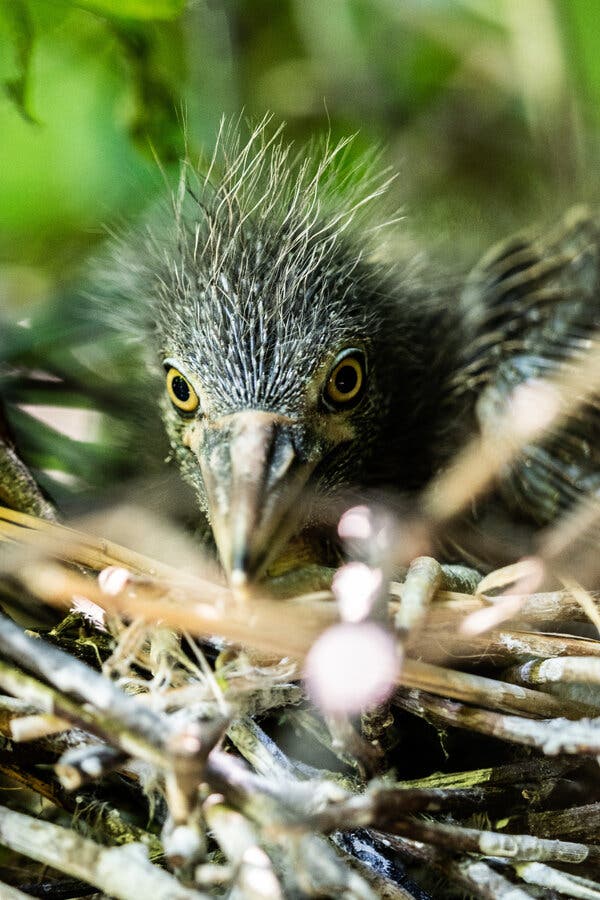
Black-crowned night herons are an iconic presence in New York, yet their future is uncertain. These birds, known for their muted colors and unique white tendrils, are considered quintessential New Yorkers. Dustin Partridge, the director of conservation and science at NYC Bird Alliance, describes them as fashionable explorers who love to stay out late.
Standing about two feet tall, these herons have been seen throughout various New York City areas such as Harlem green spaces, along the East River in Queens, and on Manhattan’s Lower East Side. It is rumored they enjoy feasting on local rats. Valerie Wald, a high school teacher, often observes their seemingly idle behavior in Central Park.
Despite their current presence, these stout birds face the threat of disappearing from the city within 11 years, potentially following in the footsteps of the passenger pigeon. This projection comes from a study by the NYC Bird Alliance, alongside the Cornell Lab of Ornithology and Rutgers University. The study suggests that the declining heron population requires more investigation, although possible factors have been identified. These include environmental toxins, climate change, human disturbances, and predation.
The situation highlights a broader issue: bird populations in North America have declined by about three billion since 1970. Even the New York/New Jersey Harbor area, home to the Northeast’s largest colony of nesting herons and egrets, has not been spared. From 2000 to 2022, there was a 27% decrease in nesting wading birds within the harbor. This decline is largely due to the sharp decrease in the black-crowned night heron population.
The NYC Bird Alliance, formerly NYC Audubon, emphasizes the need for continuous monitoring and conservation efforts to understand and address these challenges impacting the herons’ survival.
Leave a Reply