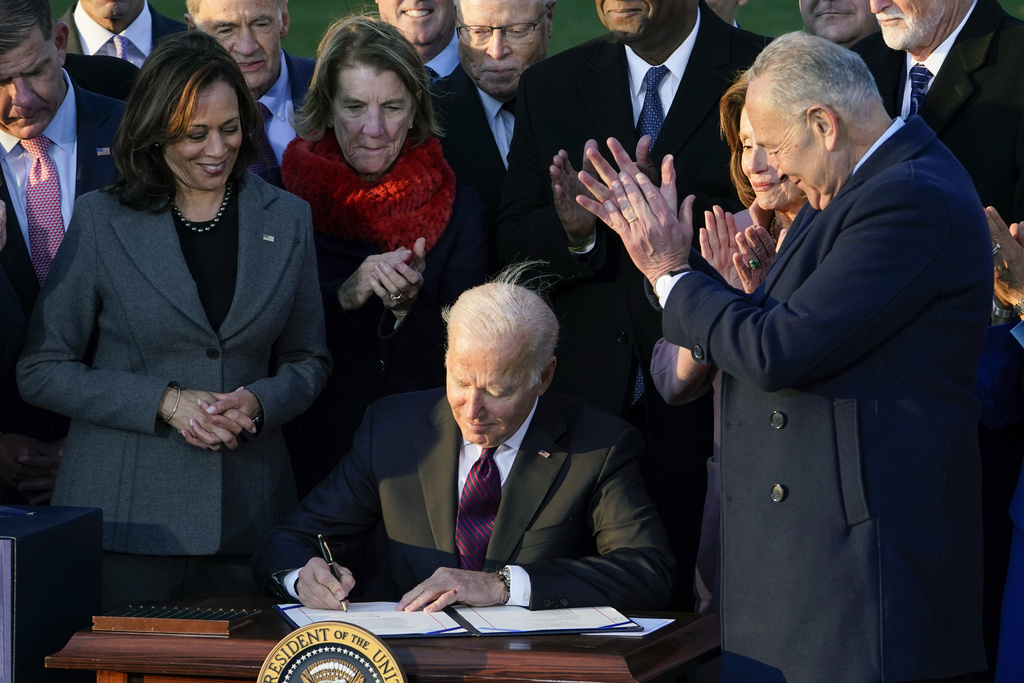
President Biden Signs Infrastructure Bill
President Joe Biden signed a $1.2 trillion bipartisan infrastructure bill into law on November 15, 2021. On February 27, 2024, the Biden administration plans to announce 17 projects to boost renewable energy for rural areas, especially Native American tribes. This initiative, costing $366 million, is funded under the infrastructure law.
The Inflation Challenge for Working Families
Working families face significant financial challenges. Grocery prices rise with every visit, and gas now costs over $4 per gallon. Air conditioner expenses surged during summer. Medical bills continue to climb, and housing costs keep increasing. Inflation moves faster than wage growth.
Political Maneuvers and Affordability
Both parties aim to make the 2026 election about affordability. Republicans are criticized for policies affecting oil prices and for spending on poorly trained ICE agents. Accusations of sweetheart deals for President Trump also arise. Actions perceived as worsening affordability include cuts to Medicaid, tariffs, and increased insurance costs due to lack of tax credits.
Critics argue Washington fails working families, leading to cynicism that Republicans exploit. They stoke social and cultural tensions to disillusion voters.
Democrats’ Legislative Achievements
Democrats in Congress have demonstrated economic delivery. In August 2022, Congress passed the CHIPS and Science Act and the Inflation Reduction Act. The former invested in American manufacturing and supply chains to reduce consumer prices. The latter targeted energy costs, healthcare expenses, tax filing ease, and ensured major corporations paid fair taxes.
These legislative efforts in just one month exceeded Republican achievements over nearly four years. The 117th Congress, recognized as highly productive, enacted key affordability laws. These included November 2021’s bipartisan infrastructure law, creating jobs and improving water, energy systems, and internet affordability for underserved areas.
Engagement and Evaluation
Democrats implemented the Make It In America plan to create jobs, reduce family costs, and develop critical infrastructure. Despite high living expenses, dismissing Congress is discouraged. Engagement and participation are essential.
Evaluate leaders by their actions in power. Reward effective governance and reject ineffectiveness.
Retrospective and Call for Action
Steny H. Hoyer, who represented Maryland’s 5th District and served as House majority leader, reflects on Congress’s progress and challenges. He sees consensus-building and commitment to improving lives as essential for delivering results.
A call is made for future Congressional leadership prioritizing collaboration over party division to meet the needs of Americans. As Hoyer retires, he stresses the importance of choosing leaders willing to work hard and fulfill the expectations of those they serve.
Leave a Reply