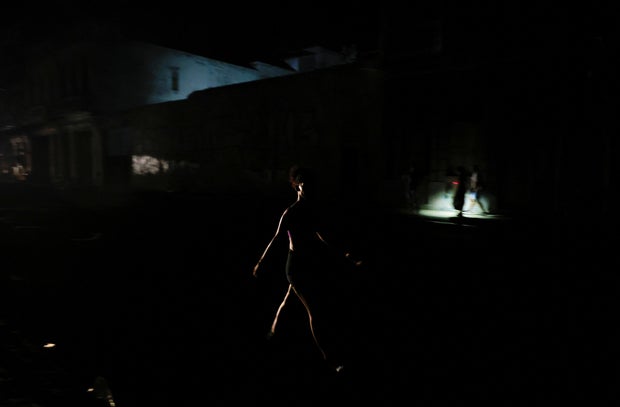
On July 7, 2026, Cubans faced widespread power outages as the island experienced its third nationwide blackout of the year. This situation has been exacerbated by a U.S. fuel blockade, creating significant challenges for Cuba’s energy sector. The country was already experiencing difficulties in maintaining its power supply before President Trump halted oil deliveries to Cuba in January, which depleted the country’s fuel reserves for electricity generation.
Union Electrica (UNE), Cuba’s state electricity provider, announced a comprehensive power shutdown impacting the entire island on Monday, leaving 9.6 million residents without electricity but offering no explanation for the outage. By early Tuesday, power was restored to more than 30 percent of the capital, encompassing 43 medical facilities and nine water distribution centers.
The occurrence marks the eighth blackout since late 2024. A Reuters photo captured a woman walking through Havana, which was left powerless, affecting 10 million people due to the collapse of Cuba’s electric grid. Lazaro Guerra, the Ministry of Energy and Mines director of electricity, acknowledged that the fuel shortage complexly impacts the recovery effort. He emphasized on state television that repair timelines remain uncertain.
President Miguel Diaz-Canel attributed the situation to U.S. sanctions policy against Cuba, alleging that the sanctions aim to provoke social unrest by restricting Cuba’s fuel access. He commended electrical workers for their efforts to restore the national electric system while facing an energy blockade that he termed as genocidal.
In response to fuel shortages, the government has imposed severe power restrictions, lasting up to 30 hours in parts of Havana and over 70 hours in some rural areas. This is an effort to conserve the limited available fuel. Meyboll Font, a 51-year-old social media community manager, described living under these conditions as agonizing. Her neighborhood in Havana receives only three or four hours of power daily, with uncertainty about when it will return.
A software programmer from a tourism startup expressed similar frustrations, stating, “We have no WiFi, no electricity, we can’t work.” Power outages are a long-standing issue in Cuba, where outdated Soviet-era plants desperately need repair.
The blackouts have increased since the fuel blockade began. The Cuban government has struggled to maintain the electricity grid due to the inability to run generators. Since January, only one oil tanker from Russia has been permitted to dock in Cuba, following pressure from Washington to end six decades of communist rule in Havana.
Mr. Trump views the U.S. strategy in Venezuela, which resulted in the overthrow of President Nicolas Maduro and establishment of a pro-U.S. government, as a potential model for Cuba. However, Cuba has stated it will not negotiate its political system and is prepared to resist any invasion.
The U.S. blockade and extensive sanctions on Cuba and companies engaging in business with Cuban entities have brought the nation, already experiencing a longstanding crisis, to the brink of collapse. Essential supplies such as food, drinkable water, and medications are scarce. Some elective surgeries have been postponed, prompting the United Nations to warn of a humanitarian emergency. Meanwhile, transportation has nearly ceased.
In June, Cuba introduced a broad package of free-market reforms aimed at reducing state control over the economy. Despite these efforts, the U.S. State Department dismissed the reforms, calling them superficial. Trump remains steadfast in pursuing significant economic and political reforms, which he believes are necessary for true investment and political freedoms for Cubans.
While Cuba and the U.S. have engaged in discussions, Cuban Foreign Minister Bruno Rodriguez reported little progress in resolving the diplomatic deadlock. On Monday, Havana accused Washington of obstructing a United Nations debate on the oil blockade and associated sanctions.
Leave a Reply