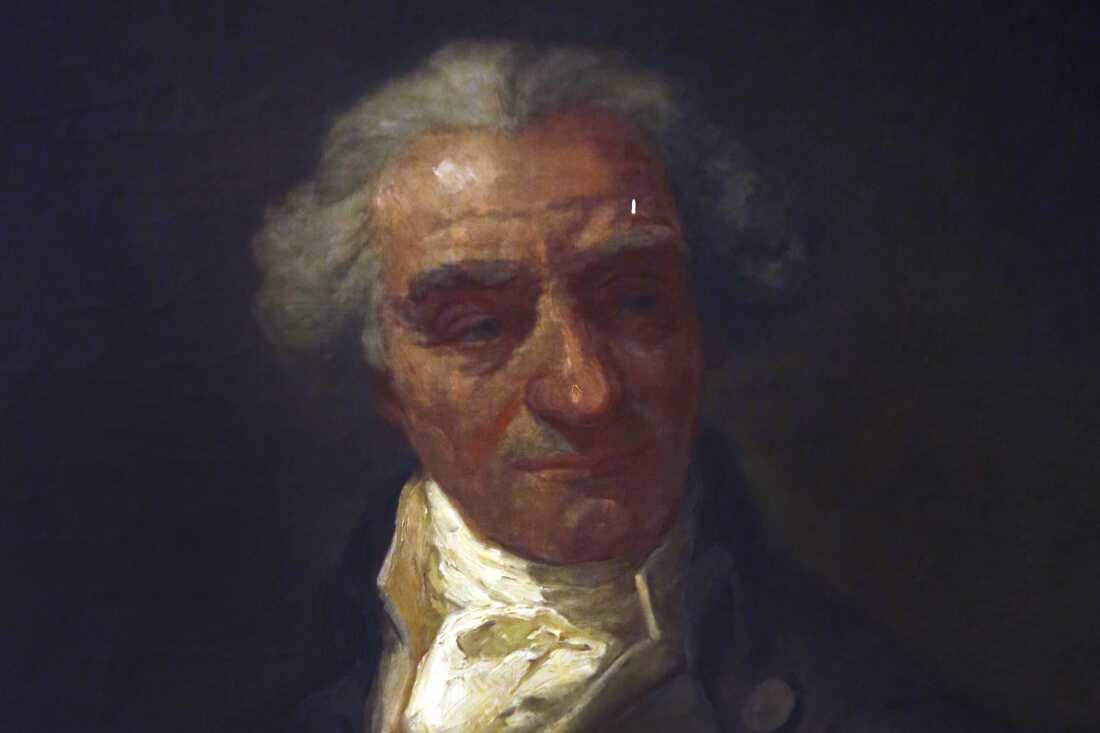
In a hallway at the State House in Boston hangs a portrait of Governor Elbridge Gerry. Known for his 1812 redistricting plan, Gerry unintentionally contributed the term “gerrymander” to our language. This article is part of NPR’s series on the etymology of common words.
Though not as famous as Samuel Adams or John Hancock, Elbridge Gerry was a significant figure in American independence. Despite being a vocal supporter of independence from Great Britain, he was one of three delegates who refused to sign the United States Constitution because it initially lacked a Bill of Rights.
Gerry served as the second vice president under President James Madison but passed away in office after less than two years. Historian and author David O. Stewart describes Gerry as a fervent individual during the Revolutionary War. Although small and slight in stature, Gerry had a reputation for tenacity as noted by John Adams.
While Gerry’s name might not be as well-remembered as others, his legacy lives on through the phrase “gerrymandering.” This refers to the manipulation of voting district boundaries to confer an advantage to a particular political group.
The Birth of Gerrymander
In 1812, as governor of Massachusetts, Elbridge Gerry signed a redistricting bill manipulating state senate boundaries to benefit his Democratic-Republican Party. This led to the creation of the term “gerrymander” after a newspaper cartoon depicted the district as a monstrous shape resembling a salamander.
Doug Harper, founder of the etymology dictionary etymonline.com, explains that the word “gerrymander” originated from a visual image from the cartoon, which was published with the term.
A Word with Lasting Impact
Though gerrymandering is not unique to Gerry, his term remains relevant in today’s political landscape. Examples of oddly shaped districts continue to illustrate the practice, such as Pennsylvania’s “Goofy kicking Donald Duck” and Illinois’ “earmuffs.”
In the broader context of language, “gerrymander” joins other eponyms like “boycott” and “shrapnel.” These words derive from people’s names, underscoring how historical figures leave unintended marks in language.
Doug Harper notes that while few today might link Gerry directly to gerrymandering, his legacy persists even if obscured by time and mispronunciation.
Despite Elbridge Gerry’s significant role in America’s formation, his association with gerrymandering remains his most enduring impact 250 years later. Historian David O. Stewart suggests that being remembered, even for unexpected reasons, holds significance.
Leave a Reply