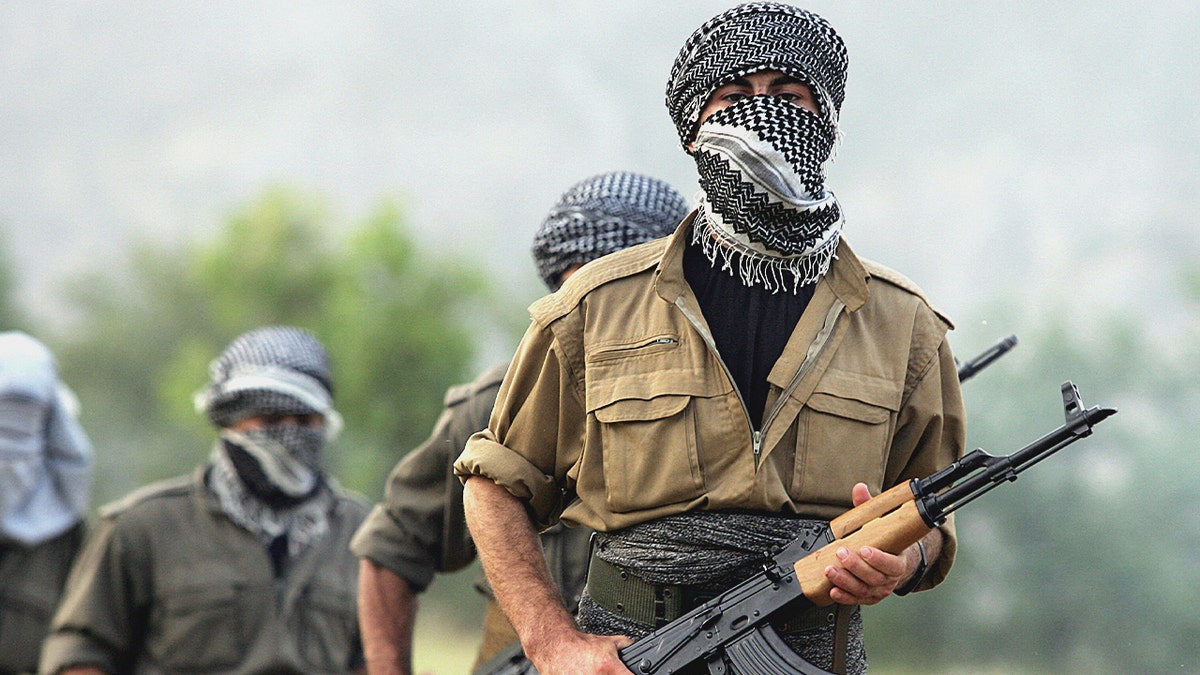
Iran’s Islamic Revolutionary Guard Corps (IRGC) is dealing with increasing violence in the Kurdish-majority areas in the west of Iran. This escalation raises concerns that a persistently tense Kurdish insurgency might be growing more active. This development emerges as fragile negotiations between Iran and the United States continue.
Kurdish opposition groups are significant beyond Iran’s borders. Recently, they were seen as a means of applying pressure on Iran during the U.S.-Israel conflict with Iran. Now, some Kurdish representatives are worried about being left vulnerable as Washington and Tehran return to tense diplomatic discussions.
Iranian security forces have faced multiple attacks across western and northwestern Iran recently. Reports indicate four Iranian security personnel were killed and others injured in two separate assaults on Tuesday, according to analysis by Seth J. Frantzman and cited by Iraq’s Shafaq News.
In Paveh, Iran, an armed attack resulted in two IRGC members’ deaths and injuries to two others, according to Tasnim News. This Iranian border city in Kermanshah Province experienced what was termed an ‘armed terrorist attack’. Similarly, in Baneh, a police checkpoint was attacked, leaving two police officers dead and three individuals, including a young girl, injured.
The Paveh attack was claimed by Xore Heva, meaning ‘Sun of Hope’. This group stated they retaliated against Iran’s suppression of protests following the 2022 death of Mahsa Amini, a Kurdish woman who died after morality police detained her for allegedly breaking hijab regulations.
The Kurds are among the largest ethnic groups without a state in the Middle East, living across Iran, Iraq, Syria, and Turkey. In Iran, many reside in mountainous western and northwestern regions, where Kurdish opposition groups accuse Iran of political repression, forced assimilation, and military crackdowns. The Iranian government regards armed Kurdish factions as threats, especially groups like PJAK, which have consistently clashed with the IRGC.
Jino Victoria Doabi, a representative from the Kurdish-led human rights organization Hiwa, expressed concern about potential escalation in the region, citing the growing geographic spread of the clashes.
‘It looks like this could be an escalation,’ Doabi said, noting the spread of conflict.
Doabi emphasized Kurdish frustration over the IRGC’s ability to target Kurdish regions and oppose groups without repercussions.
‘The Kurdish people in Iran are dissatisfied with the IRGC’s attacks on Kurdish parties and fighters, seeing no external reaction,’ Doabi stated.
These latest tensions coincide with Iran’s engagement in a memorandum of understanding with Washington, drawing criticism in Iran. President Masoud Pezeshkian stated that Supreme Leader Mojtaba Khamenei approved the U.S.–Iran agreement, receiving assurances of Iran’s rights being respected.
However, within Iranian opposition circles, there is skepticism about any agreements with Iran, with Kurdish parties believing such deals might reinforce the current regime.
‘Kurdish parties do not believe in deals with this regime, fearing they strengthen it,’ Doabi said. Anger persists over perceived decades-long systemic repression in Kurdish areas.
Currently, scrutiny on Kurdish groups includes the Party for a Free Life in Kurdistan (PJAK) and its armed wing, the East Kurdistan Defense Units (YRK). Reports from IranWire indicate the IRGC launched attacks on YRK positions around Marivan, prompting what YRK described as defensive actions.
Earlier reports in 2026 suggested Kurdish opposition groups could clash with Iran during the U.S.–Israeli conflict. Israel supported Iranian Kurdish militias in plans to seize Iranian regions, as reported by Reuters. However, Kurdish commanders were reportedly frustrated by the lack of a clear U.S. or Israeli strategy, limiting their engagement.
Regional reports also indicated Turkey’s influence over U.S. plans to support Kurdish opposition against Iran, with allegations of leaked information leading to changes in those plans.
Despite the violence, clear evidence of a coordinated insurgency remains lacking. However, the spread of clashes, claimed involvement by Kurdish factions, and opposition to renewed U.S.–Iran discussions indicate that Iran’s western regions may continue as a pressure point as the nation navigates internal control and diplomatic endeavors.
Leave a Reply