The next phase of negotiations to end the conflict in Iran is set to begin on Sunday, coinciding with ongoing clashes in Lebanon and uncertainties surrounding the Strait of Hormuz.
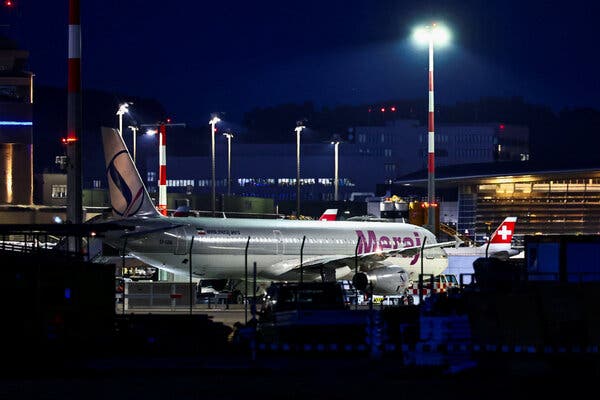
An Iranian delegation landed at Zurich International Airport in Switzerland on Saturday. The delegation includes prominent figures like Gen. Mohammad Bagher Ghalibaf, Tehran’s lead negotiator and speaker of the Iranian parliament, and Abbas Araghchi, the foreign minister.
Vice President JD Vance arrived in Switzerland Sunday morning to participate in talks aimed at refining the preliminary agreement for ending the war in Iran. His plan is to stay for a day or two. Vance leads a team featuring President Trump’s special envoys Steve Witkoff and Jared Kushner, who are already in Switzerland.
Pakistan, acting as a mediator in the peace process, announced that technical discussions would commence on Sunday, with Pakistani and Qatari mediators. Pakistan’s delegation includes Prime Minister Shehbaz Sharif and Field Marshal Syed Asim Munir, the army chief.
The timing of these talks is delicate. The ongoing conflict in Lebanon, involving Israel and Hezbollah—an Iran-supported militant group—poses risks to efforts aimed at broader peace and unimpeded shipping in the Strait of Hormuz. The U.S.-Iranian talks were initially scheduled to start on Friday but were delayed due to continued fighting in Lebanon.
Iran criticized Israeli attacks as breaches of the agreement. On Saturday, Iran stated it had closed the Strait of Hormuz in retaliation, though the U.S. military reported that maritime activity continued and insisted Iran does not have control over the strait.
The negotiations encompass several complex topics. The interim agreement from President Trump left the future of Iran’s nuclear program for later talks, omitted discussions on Iran’s missile program, and did not ensure free passage through the Strait of Hormuz, a critical maritime trade route.
Esmail Baghaei, Iran’s foreign ministry spokesperson, mentioned to state media that the trip’s purpose was to check on compliance with the commitments. He emphasized negotiations on a final deal would only start if Iran sees the U.S. honoring the agreement.
Tehran accuses the U.S. of failing to meet commitments, particularly concerning mitigating hostilities between Israel and Hezbollah, which continued exchanging fire despite a Friday cease-fire announcement in Lebanon. The U.S.-Iranian agreement advocates for cease-fires everywhere, including Lebanon, but neither Israel nor Hezbollah have signed it.
Vance expressed hopes for progress on both the nuclear issue and Lebanon cease-fire, acknowledging potential Iranian topics for discussion.
Reporters Sanam Mahoozi, Zolan Kanno-Youngs, and Yan Zhuang provided additional reporting.
Leave a Reply