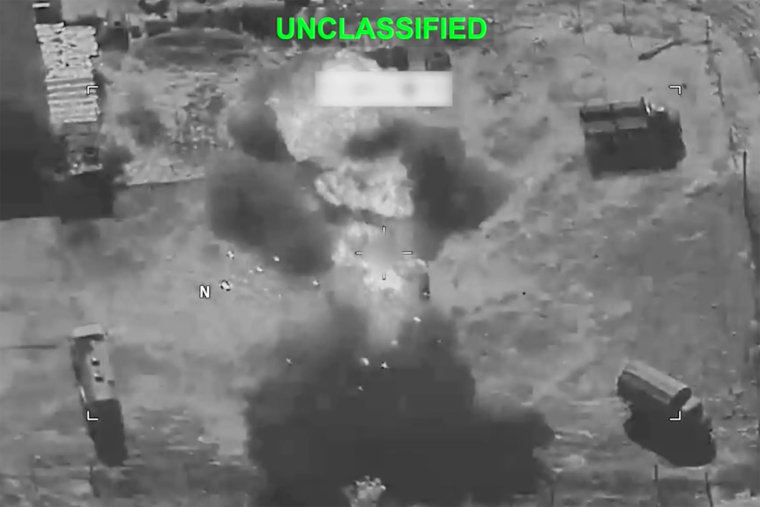
On Thursday, Iran pledged to ‘punish’ the United States after the American military executed a ‘heavy wave of strikes’ overnight, responding to an attack by Tehran on U.S. forces in the Middle East.
This renewed conflict broke a brief calm, during which both sides explored diplomatic efforts to prevent further escalation. President Donald Trump announced that the U.S. would respond forcefully after an attack on an American base in Jordan. Meanwhile, the Revolutionary Guard Corps (IRGC) indicated the conflict wouldn’t end, asserting that ‘the aggressor will be punished today’ following U.S. actions.
Jordan reported intercepting Iranian attacks, while Kuwait indicated an Iranian strike on a Chinese company’s building, resulting in one death. New developments suggested the conflict was widening, involving more nations and increasing regional and global stakes.
After Saudi Arabia joined U.S. efforts against Iran-backed militants, Egypt confirmed a drone attack causing fires on two natural gas vessels at Damietta port. Although unclear who conducted the drone strike, such an attack by Iran would significantly expand the conflict’s scope, affecting key U.S. allies and highlighting potential threats to global energy supplies.
Trump, when queried on the possibility of Iranian involvement, mentioned he had been briefed and described the situation as ‘a little more of the same.’ He further vowed aggressive U.S. action, stating, ‘we’re going to be hitting them very hard because it’s our turn to hit them.’
According to reports, Trump expressed strong language against Iran in a phone call after the Tuesday attack. U.S. Central Command later announced a ‘heavy wave of strikes against Iran,’ targeting Revolutionary Guard Corps facilities like military centers, missile and drone sites, and maritime capabilities. Strikes occurred in multiple Iranian cities, with casualties reported on the island of Qeshm in the Strait of Hormuz.
This waterway has become central to the conflict, impacting 20% of the world’s oil trade before the conflict disrupted shipping. U.S. struggles to counter Tehran’s influence have made the region a focal point in peace discussions.
Following the collapse of an interim deal, there was cautious optimism about diplomacy which soon dissipated amid rising oil prices, with Brent crude at about $90 per barrel. Data showed that a Qatar-managed LNG tanker successfully traveled from the Persian Gulf into the Gulf of Oman through the Strait of Hormuz, marking a notable passage since conflict escalation. Four more ships followed along the Iranian route.
Over a recent period, about 59 tankers or cargo ships passed through the Bab el-Mandeb Strait, illustrating ongoing maritime activity despite heightened tensions.
Leave a Reply