A federal judge in Minnesota dismissed the Trump administration’s lawsuit against the state’s sanctuary immigration policies. The ruling dealt a setback to efforts aiming to compel state and local authorities to aid federal immigration enforcement.
This legal battle involved the use of the Supremacy Clause to challenge Minnesota’s sanctuary policies. These policies prohibit local officials from detaining immigrants solely based on ICE requests, limit cooperation with federal immigration enforcement and restrict data sharing regarding driver’s licenses and immigration information with ICE.
The Justice Department argued that these restrictions hindered ICE operations illegally. However, Chief U.S. District Judge Eric Tostrud ruled states have the constitutional right to determine their participation in immigration enforcement. Tostrud’s opinion, extending to fifty-six pages, dismissed the claims against Minnesota, Minneapolis, St. Paul, and Hennepin County, stating the challenged laws apply only to state and local officials, not the federal government.
“They do not command the federal government or its contractors to act. They do not forbid the federal government or its contractors from acting. They do not control how the federal government or its contractors undertake their work,” Tostrud wrote. “Rather, they regulate how state and local officials perform their duties.”
Eric Wessan, from the Iowa Solicitor General’s Office, believes this ruling conflicts with an earlier Eighth Circuit decision. That decision supports stronger federal intervention against state laws obstructing federal immigration enforcement. Wessan highlighted that existing Eighth Circuit precedent found certain state laws obstructed federal efforts, resulting in preemption.
The Justice Department contended that Minnesota’s laws conflict with federal immigration statutes by limiting ICE’s ability to detain individuals, restrict data sharing with federal authorities, and inhibit local official participation in immigration enforcement. Tostrud countered, asserting the anti-commandeering doctrine of the Tenth Amendment presented a constitutional issue.
This doctrine specifies Congress can regulate individuals, not states. Thus, according to Tostrud, the federal government cannot obligate states to use their personnel and resources for federal regulation.
Wessan agreed states cannot be forced to assist federal efforts but identified the more complex question surrounding voluntary cooperation bans.
“States are not required to help the federal government enforce federal immigration law,” he noted. “Whether States can ban cooperation when certain actors (states or municipalities want to) is a harder question, and probably depends on the specific state and state laws.”
Tostrud rejected the argument that Minnesota’s non-cooperation with ICE constituted obstruction of federal immigration enforcement. He emphasized that not aiding does not equate to blocking.
“Refusing to help is not the same as impeding,” Tostrud wrote.
Wessan argued this legal debate detracts from addressing the broader immigration crisis.
“The country is facing an immigration crisis,” he said. “Rather than figuring out the fine line between impeding and refusing to help, Minnesota should appreciate the federal government’s willingness to help with the illegal immigration crisis—and the waste, fraud, and abuse that accompanies it.”
Minnesota leaders defended the sanctuary policies, suggesting these policies encouraged immigrants to cooperate with local law enforcement while being assured they won’t face immigration consequences.
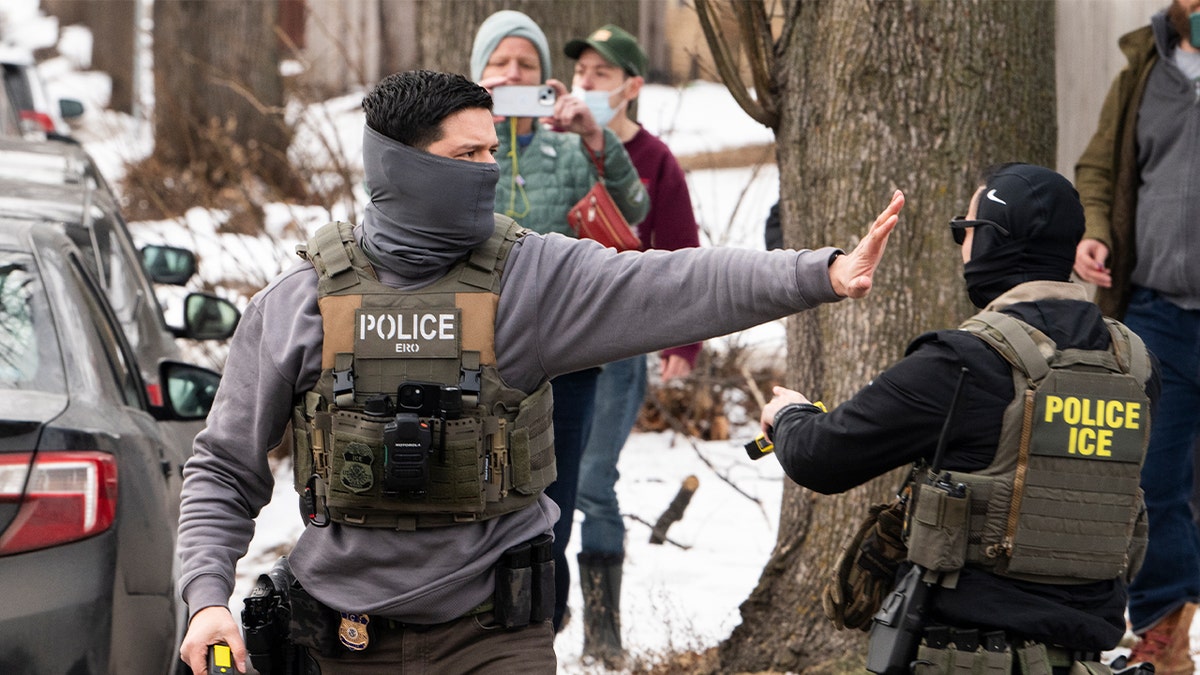
The legal dispute follows heightened immigration enforcement attempts in Minnesota, including Operation Metro Surge, an ICE initiative focused on increasing federal enforcement in the state, triggering protests and attention nationwide.
Operations intensified following the shooting deaths of Renee Good and Alex Pretti, leading to scrutiny of Minnesota’s immigration stance and President Trump’s reassignment of Homeland Security leadership.
Trump administration’s border czar, Tom Homan, asserted less need for large-scale ICE operations if Minnesota officials cooperated more.
“Cooperation with local authorities, especially jails and prisons, will give federal agents better access to people in the United States illegally. This would then lead to fewer federal law enforcement [agents] on Minnesota streets,” Homan said.
Monday’s ruling reflects ongoing challenges to similar sanctuary policies in multiple states pursued by the Trump administration.
Fox News Digital sought comments from the White House and the Justice Department.
Elaine Mallon writes for Fox News Digital and Fox Business, focusing on national politics.
Leave a Reply