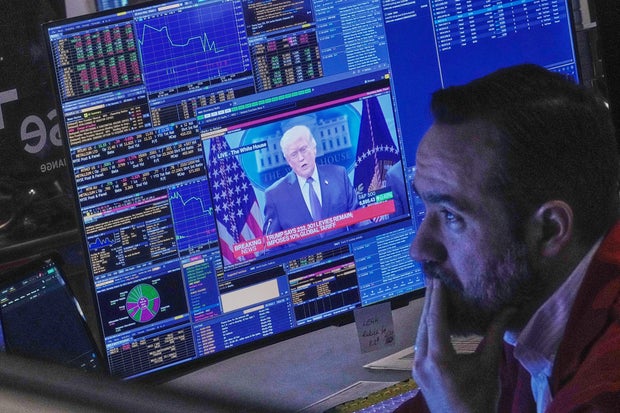
Washington – President Trump’s investment accounts conducted transactions valued between $212 million and $695 million in stocks over the first three months of the year. This activity has drawn criticism from ethics experts and Democrats in Congress due to its unprecedented nature.
CBS News has presented the data from the president’s latest financial disclosure using an interactive dashboard. The disclosure reveals that President Trump’s accounts completed 2,346 purchases and 1,296 sales from January 6 to March 30, 2026. The values are presented in a range, reflecting the disparity in transaction sums.
Democratic Senator Elizabeth Warren of Massachusetts has called for an investigation into potential insider trading. Criticism focuses on the timing and volume of the trades, with some experts questioning the strategy behind such extensive activity. The Trump Organization asserts that neither the president nor his family influences the portfolio, which is managed by independent investment managers.
Details of Trades
CBS News organized thousands of transactions from the president’s disclosure form, known as OGE Form 278-T. Federal officials must report securities transactions over $1,000 within 45 days. President Trump’s document lists 3,642 transactions across 1,026 firms and funds, with tech companies and exchange-traded funds (ETFs) topping the list.
Microsoft, Amazon, Meta, Netflix, Oracle, and AMD were frequently traded, with totals between 17 and 22 trades each. The overall purchase value ranged between $126 million and $399 million; sales were valued between $86 million and $296 million.
Most transactions were valued between $15,001 and $50,000, with 998 purchases and 393 sales in this range. The highest trade value range included four sales from Microsoft, Amazon, Meta, and a Vanguard ETF.
Timing Concerns
Some trades coincided with policy moves, raising questions about timing. On January 6, 2026, the president’s financial managers bought Nvidia stock valued between $500,001 and $1,000,000. The following week, the administration relaxed export controls on Nvidia AI chips.
President Trump praised Palantir Technologies and the drugmaker Eli Lilly after his accounts purchased stocks, adding to timing concerns.
Senator Warren alleges that the trades enrich President Trump by exploiting his position. Experts argue that the sheer volume of trading obscures insights into insider information.
Legal and Ethical Implications
Stock trading by a sitting president is legal, but raises ethical questions. Presidents are exempt from conflict of interest laws that bind other officials.
Most modern presidents placed assets in a blind trust to avoid conflicts of interest. President Trump chose not to do this, leading to concerns about whether he has insight into these trades and their impacts on his holdings.
Senator Warren questioned Treasury Secretary Scott Bessent about investigating the trades, but Bessent deflected, citing the role of outside managers.
Legislative Responses
There is rising scrutiny over active trading among government officials. Proposed bills like the Restoring Trust in Public Servants Act aim to ban officials from owning and trading stocks.
The HONEST Act, sponsored by Senator Josh Hawley, proposes to ban stock trading by members of Congress, the president, and vice president. Although the bill progressed out of a Senate committee, it remains stalled.
Leave a Reply